
Winter Home Decor Ideas Without Christmas: Cozy Looks That Last All Season
Winter is the longest season of the year in many parts of the USA, and your home should feel warm and welcoming through all of it. The good news is that you do not need a Christmas tree, red ribbons, or holiday ornaments to make your home feel cozy in winter. With the right winter home decor ideas, you can build a calm, warm look that feels right in December, still feels fresh in January, and carries you all the way into February.
The secret is to decorate for the season, not for one holiday. Think soft textures, warm light, natural greenery, and wood tones that feel like a quiet walk through a snowy forest. These winter home decor ideas work in a small apartment or a large family home, and most of them cost very little. You can start with one corner, like your sofa or your entryway, and add more touches as the weeks go by.
In this guide, you will find simple, practical ideas for every room. We will cover layered textiles, cozy lighting, natural greenery, warm wood, a welcoming entryway, gentle scents, budget friendly swaps, and how to keep the whole look going long after the holidays end. Everything here is easy to try, and nothing needs special skills or tools.
Warm Layered Textiles: The Heart of Cozy Winter Decor
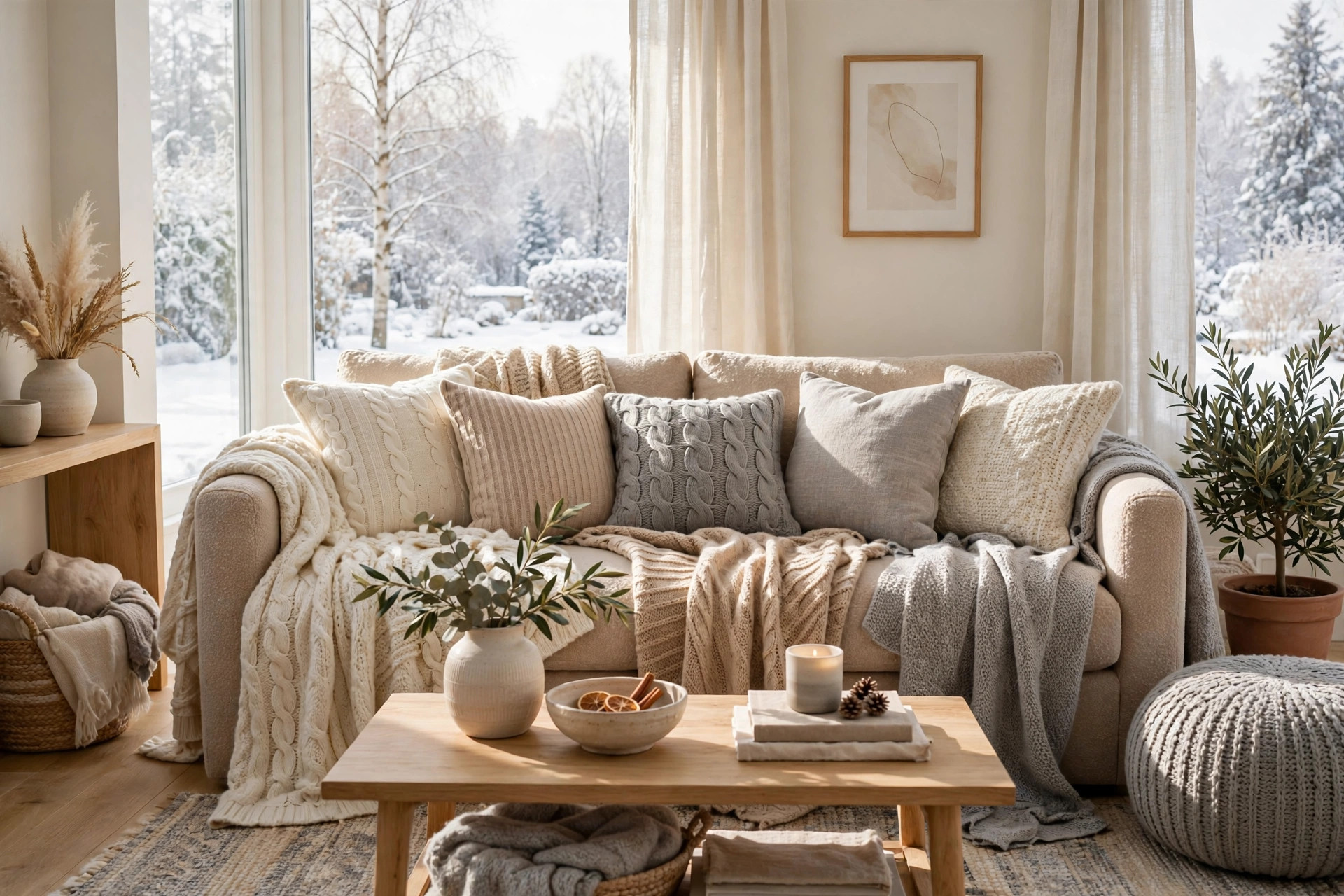
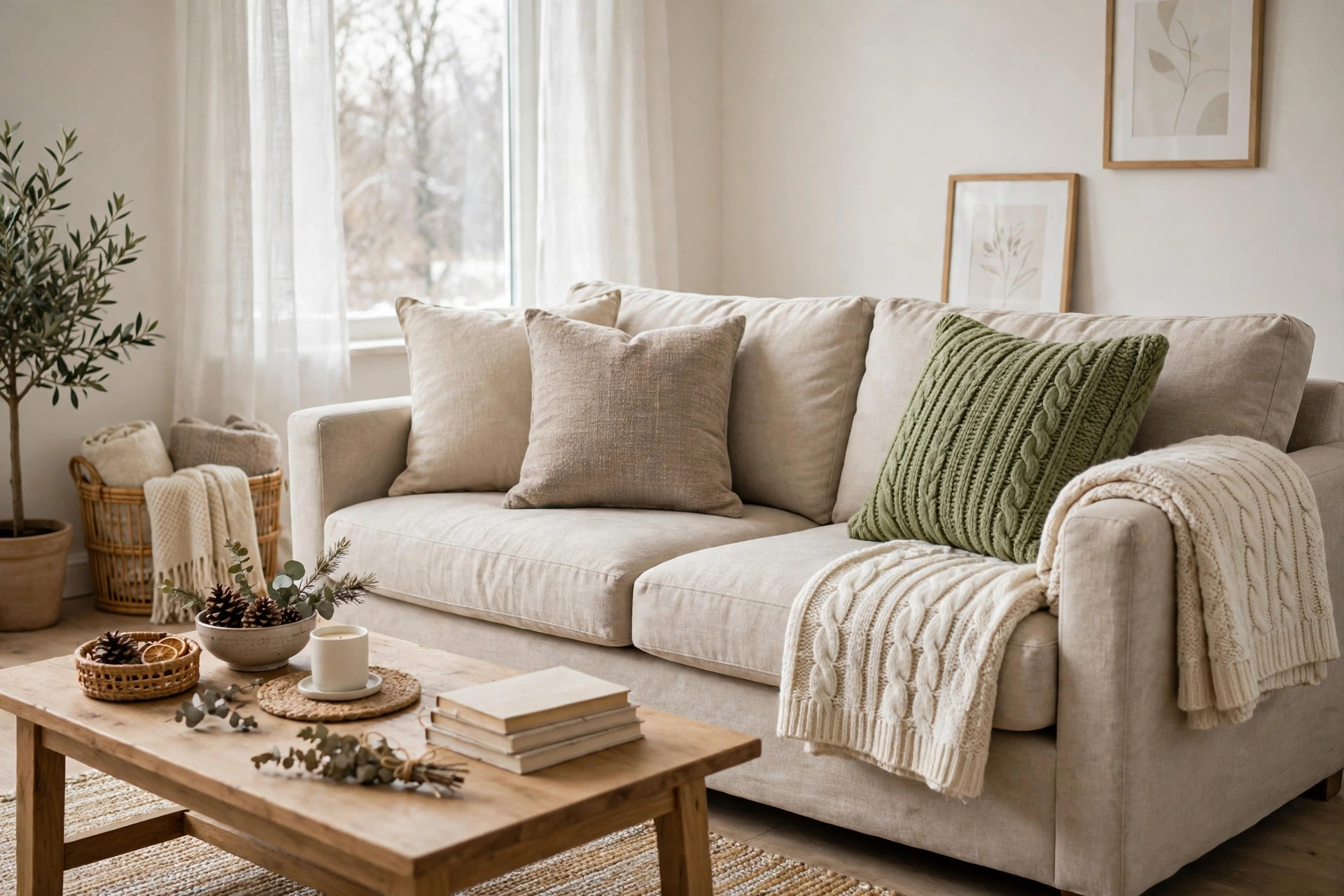
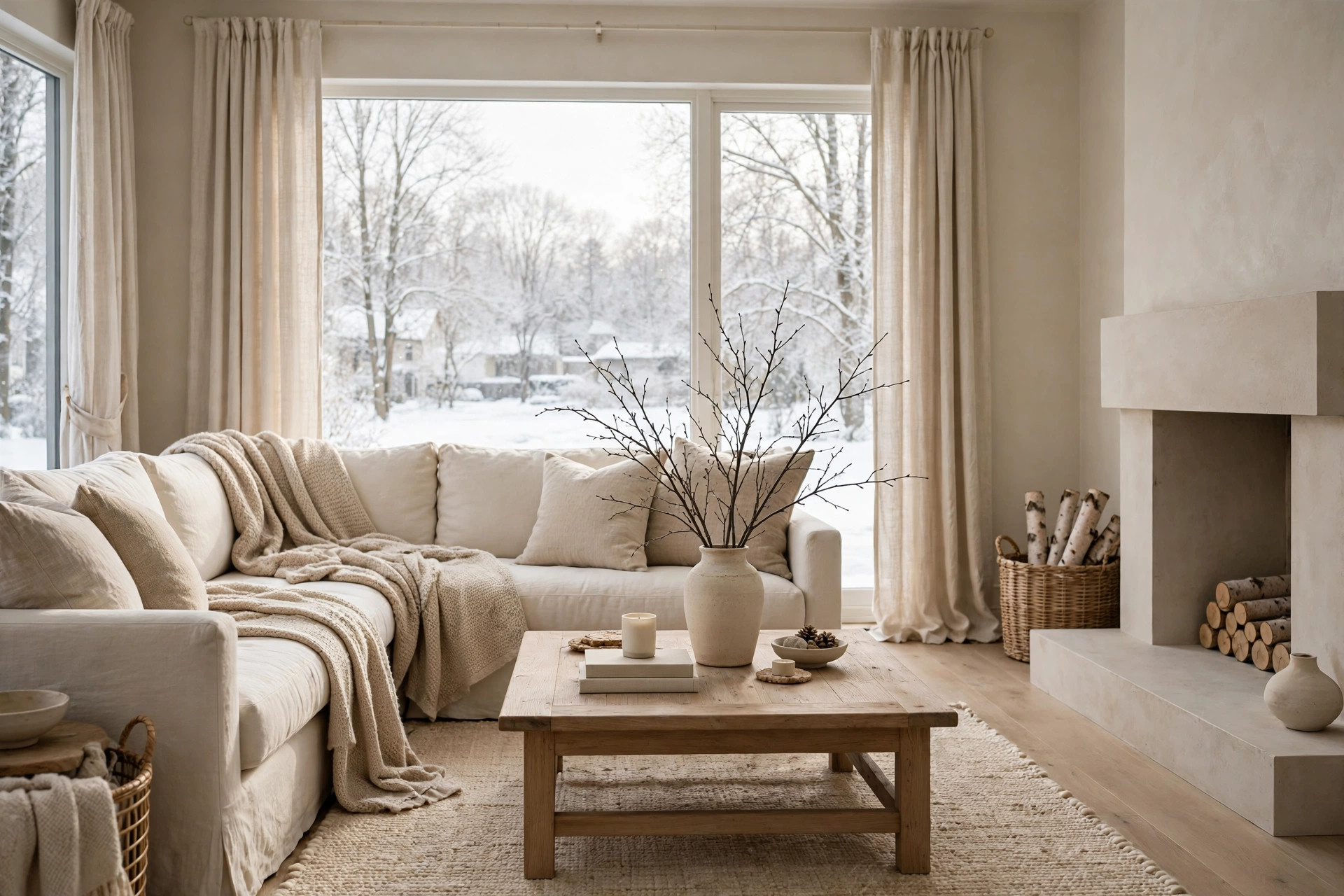
If there is one thing that changes a room instantly in winter, it is textiles. A bare sofa looks cold and flat. The same sofa with a chunky knit throw, two soft cushions, and a folded wool blanket looks warm and inviting. Layering is the key. Start with a base layer, like a light throw draped over the back of the sofa, then add a second layer, like a thicker knit blanket folded over one arm. Finish with cushions in different sizes and textures.
Mix materials for a rich, lived in feel. Wool, cotton, faux fur, velvet, and linen all work well together. A velvet cushion next to a knit cushion looks far more interesting than two matching cushions. Stick to a simple color palette so the mix still feels calm. Warm neutrals like cream, oatmeal, camel, and soft gray are easy to live with all winter. Add one deeper tone, like forest green, rust, or warm brown, for depth.
Do not forget the floor. A soft rug under your feet makes a cold room feel warm the moment you step in. If you already have a rug, layer a smaller, thicker rug on top for the winter months. In the bedroom, add a second blanket at the foot of the bed and swap light summer bedding for flannel or brushed cotton sheets. Small changes like these make the whole house feel ready for winter.
How to Layer Throws Without Making a Mess
Layering should look relaxed, not messy. Fold one throw neatly and place it over the arm of the sofa. Drape a second throw loosely across the back, letting it fall in soft folds. Place cushions in odd numbers, like three on a sofa, with the largest at the corners. Step back and look. If one corner looks crowded, move one item away. A good rule is to leave a little empty space so the eye can rest.
Keep a basket of extra blankets near the sofa so guests can help themselves on a cold evening. A woven basket full of rolled throws is both useful and pretty, and it adds a natural texture to the room at the same time. For more ideas on using baskets as decor, see our guide to rattan basket decor ideas that work in every room of the house.
Cozy Lighting That Makes Winter Evenings Soft
Winter days are short, and the light outside is often gray. That is why lighting matters so much in winter. Warm light makes a room feel like a hug. Cool white bulbs can make a room feel like an office, so swap them for warm white bulbs in the rooms where you relax in the evening. The change is small, but the feeling is completely different.
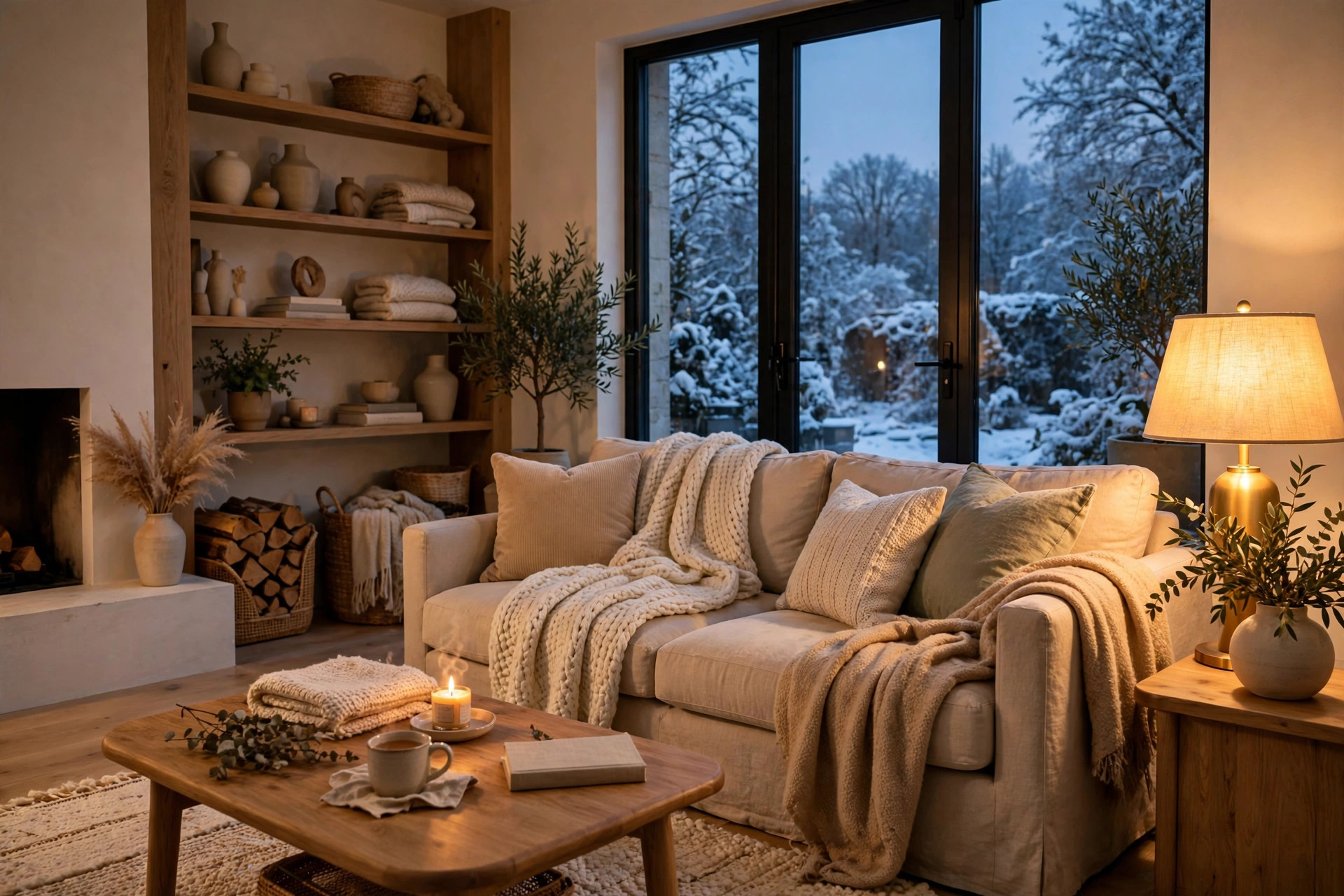
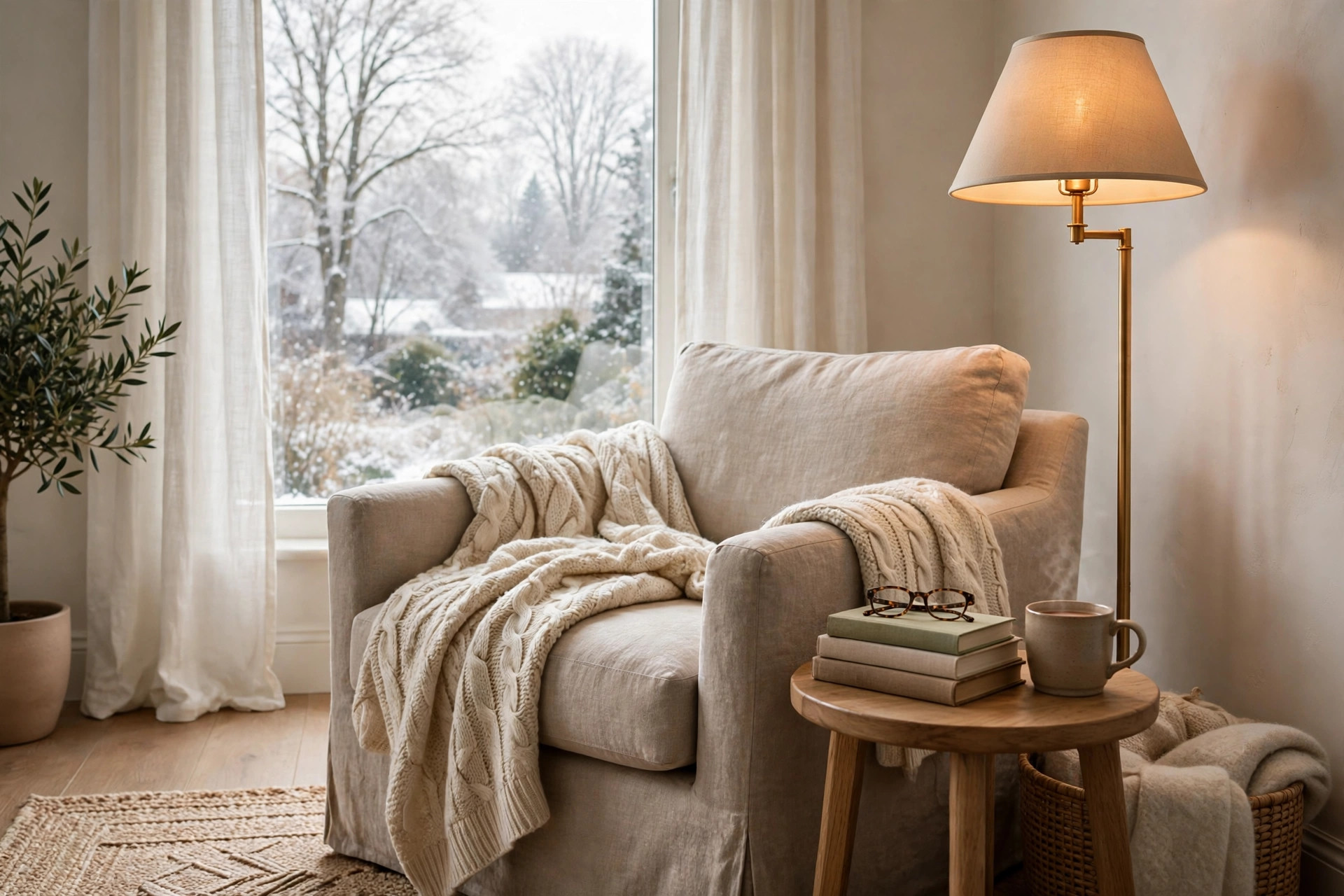
Use several small lights instead of one bright ceiling light. A table lamp on a side table, a floor lamp in a corner, and a few candles on the coffee table create layers of soft light. This layered lighting is gentle on the eyes and makes the room feel deeper and cozier. Put lamps on a low setting in the evening and let the room glow.
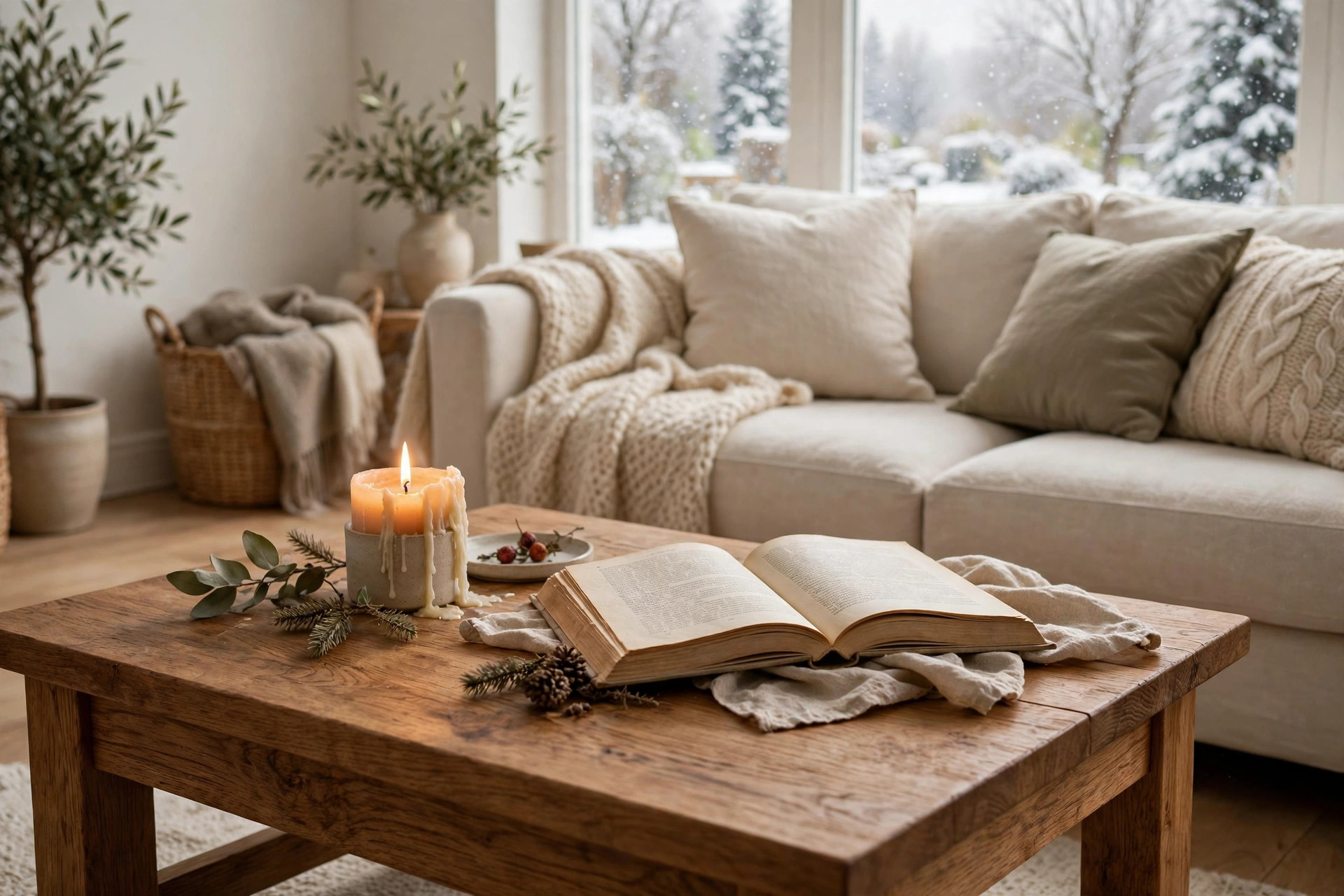
Candles are one of the simplest winter home decor ideas, and they cost very little. Group three candles of different heights on a tray, and place the tray on a coffee table or a shelf. Choose simple scents like cedar, cinnamon, or vanilla. Always keep candles away from curtains, throws, and anything that can catch fire, and never leave a burning candle alone in a room.
Fairy Lights Without the Holiday Look
Fairy lights are not only for Christmas. A string of warm white fairy lights in a glass jar, along a shelf, or draped over a mirror adds a soft sparkle that feels right all winter. Choose lights with a warm glow, not bright white, and keep them simple. One string in a jar on a side table is enough. You do not need to cover the whole room.
Battery powered lights are easy to place anywhere, since you do not need a plug nearby. Use them inside a lantern, along a window ledge, or woven through bare branches in a vase. Turn them on in the late afternoon when the light starts to fade, and your room will feel warm before you even sit down.
Natural Winter Greenery: Pine, Eucalyptus, and Bare Branches
Fresh greenery brings life into a winter home, and it does not have to mean a Christmas tree. A few stems of pine, a bunch of eucalyptus, or a tall vase of bare branches can fill a room with a quiet, natural feeling. These plants are winter plants, not holiday decorations, so they look right from November through February.
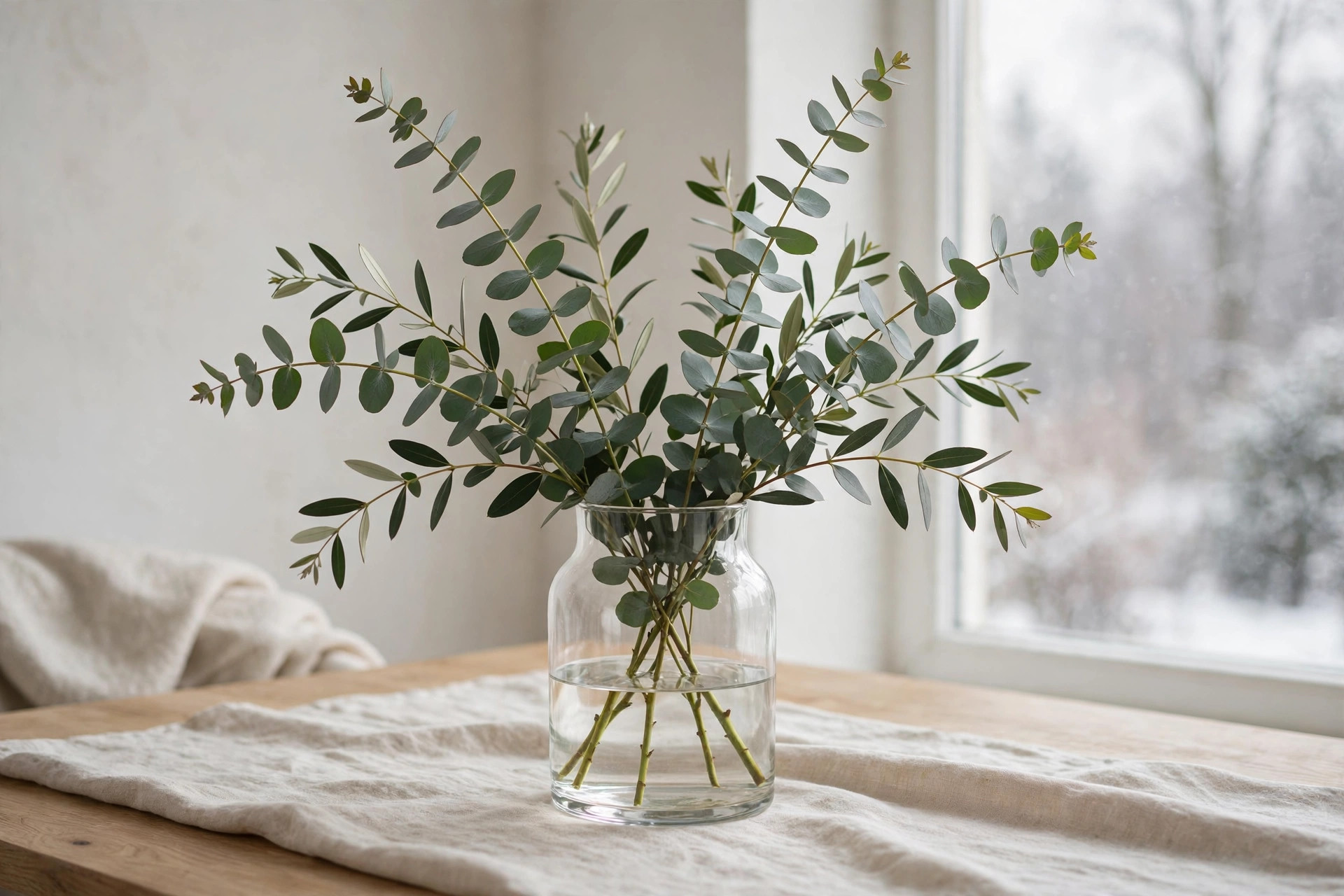
Eucalyptus is one of the easiest choices. A small bunch in a glass vase lasts for weeks, smells fresh, and looks beautiful on a dining table, a bathroom shelf, or a bedside table. Pine branches are another good pick. Cut a few stems, place them in a vase with water, and let them arch naturally. They bring the smell of a winter forest indoors without a single ornament.
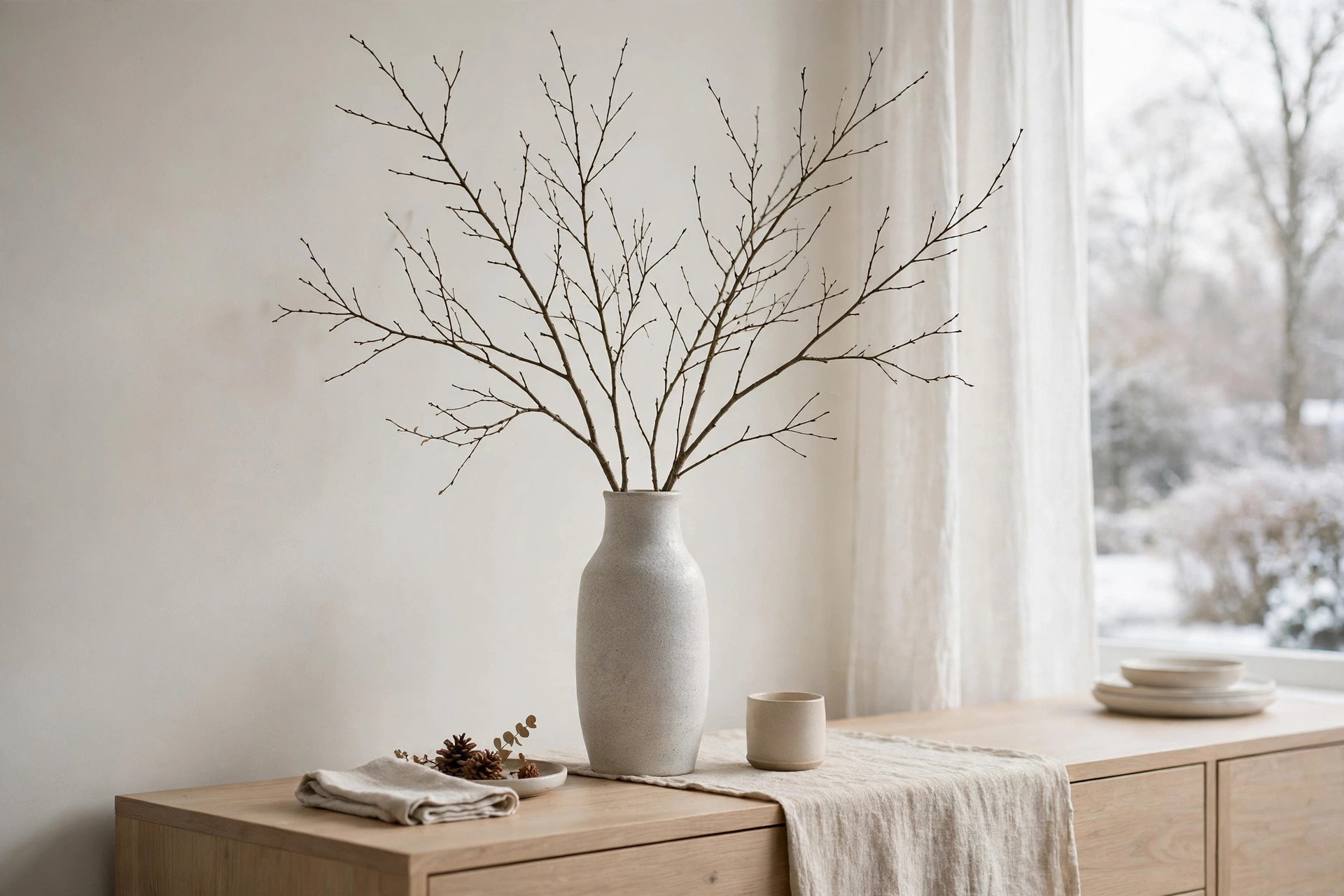
Bare branches are perfect for a simple, modern look. Collect a few straight branches from your yard or a park, clean them, and stand them in a tall vase. They add height and shape to a sideboard or an entryway table. You can leave them plain, or tie a simple piece of twine around the vase for a soft, handmade touch.
How to Style Greenery So It Lasts
Keep your greenery fresh with a few simple steps. Change the water in the vase every few days, and trim the stems at a slight angle so they can drink. Keep the vase out of direct heat from a radiator or a fireplace, because heat dries the leaves fast. If a few leaves drop, that is normal. Just remove them and enjoy the rest.
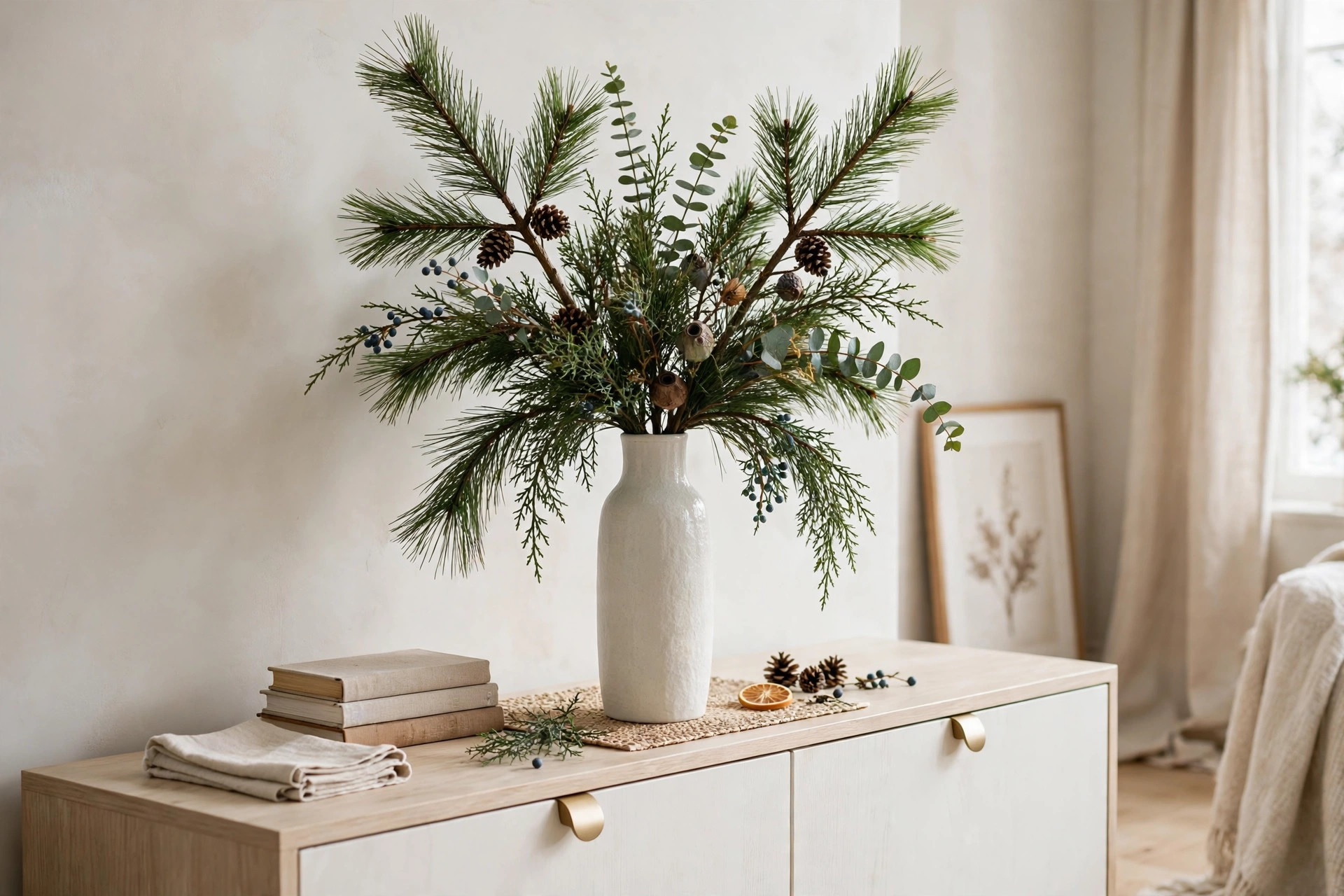
Mix greenery with other natural items for a fuller look. A pine branch next to a wooden bowl, a stack of books, or a stone vase looks calm and balanced. Avoid mixing in red berries, gold ribbon, or anything that reads as Christmas. The goal is a winter forest feeling, not a holiday display.
Warm Wood and Natural Textures
Wood is one of the warmest materials you can bring into a home, and winter is the best time to show it off. A wooden coffee table, a carved bowl, a cutting board leaning on a kitchen shelf, or a simple wooden tray all add warmth and a handmade feeling. You do not need new furniture. Just let the wood you already have take center stage by clearing away clutter around it.
Natural textures work the same way. Rattan, wicker, jute, linen, and stone all add a soft, earthy feeling that balances the cold outside. A jute rug under a coffee table, a rattan basket holding firewood or blankets, and a linen table runner on the dining table all work together to make a room feel grounded and calm.
In the kitchen, display wooden spoons in a crock, keep a wooden board on the counter, and use linen napkins instead of paper. These small touches make a working room feel warm and lived in. In the living room, a wooden tray on the coffee table can hold candles, a small plant, and a book, turning a flat surface into a cozy little scene.
A Winter Entryway That Feels Welcoming
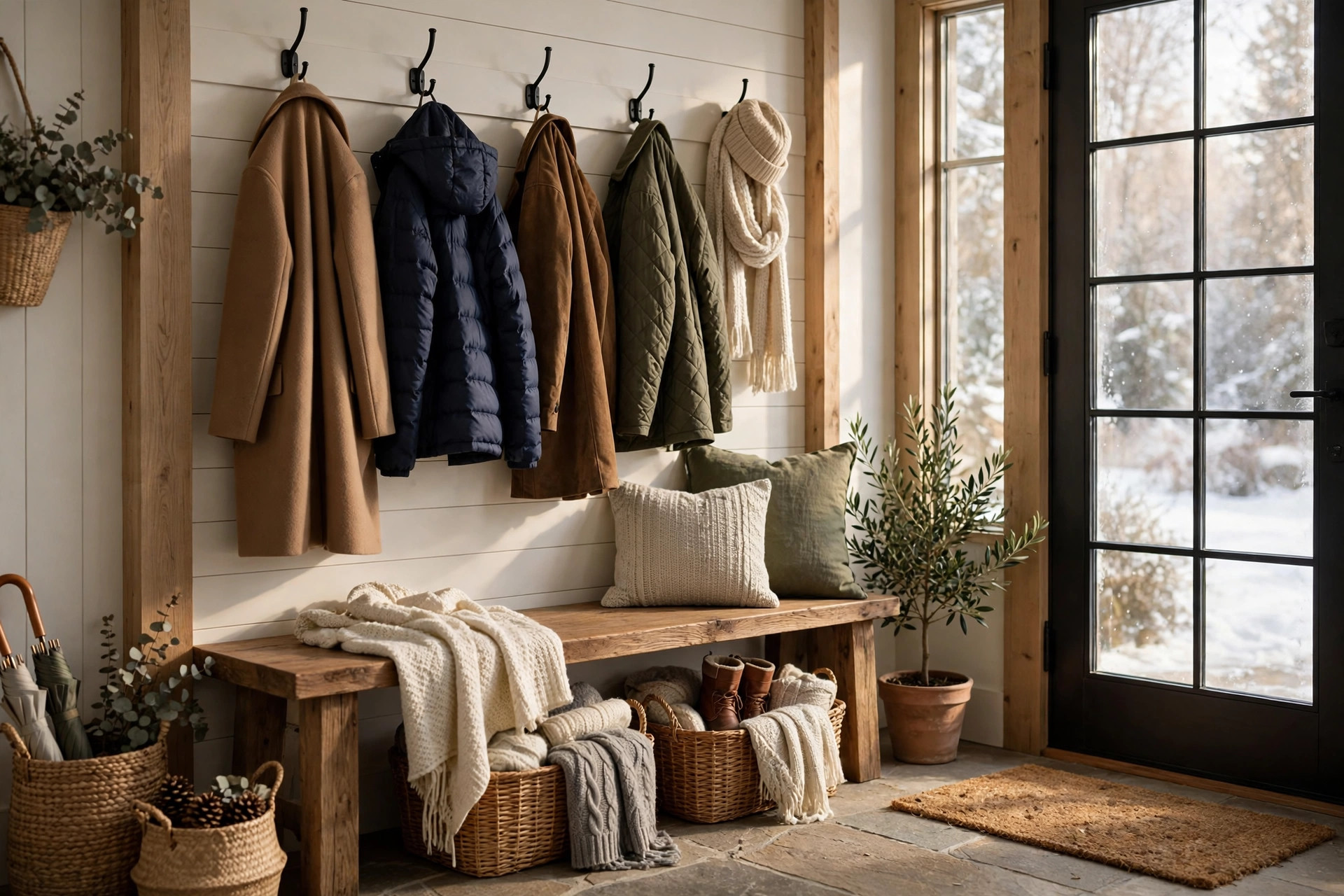
The entryway is the first thing you see when you come home on a cold day, so it should feel warm and welcoming. Start with a sturdy doormat that can handle wet boots and snow. Add a bench or a small stool where you can sit to take off your shoes. A bench also gives you a place to fold a throw or stack a few books.
Hooks on the wall keep coats tidy and add a useful touch. Hang a mix of coats, a scarf, and a warm hat so the entryway looks lived in, not staged. Place a basket under the bench for shoes, and a second basket for scarves and gloves. When everything has a place, the entryway stays calm even on the busiest winter morning.
Add one warm light and one natural touch. A small lamp on a console table, or a candle in a lantern by the door, makes the entryway glow when you come home after dark. A vase of bare branches or eucalyptus on the table adds life without taking up much space. A mirror above the table bounces light around and makes a small entryway feel bigger.
Small Entryways Can Feel Cozy Too
If your entryway is just a small corner by the door, keep it simple. One hook, one small basket, and one doormat are enough. Choose items in warm tones, like a wooden hook rail or a woven basket, so the corner feels warm even though it is small. A small rug in a warm color can define the space and keep cold feet off a hard floor.
Scent and Small Seasonal Touches
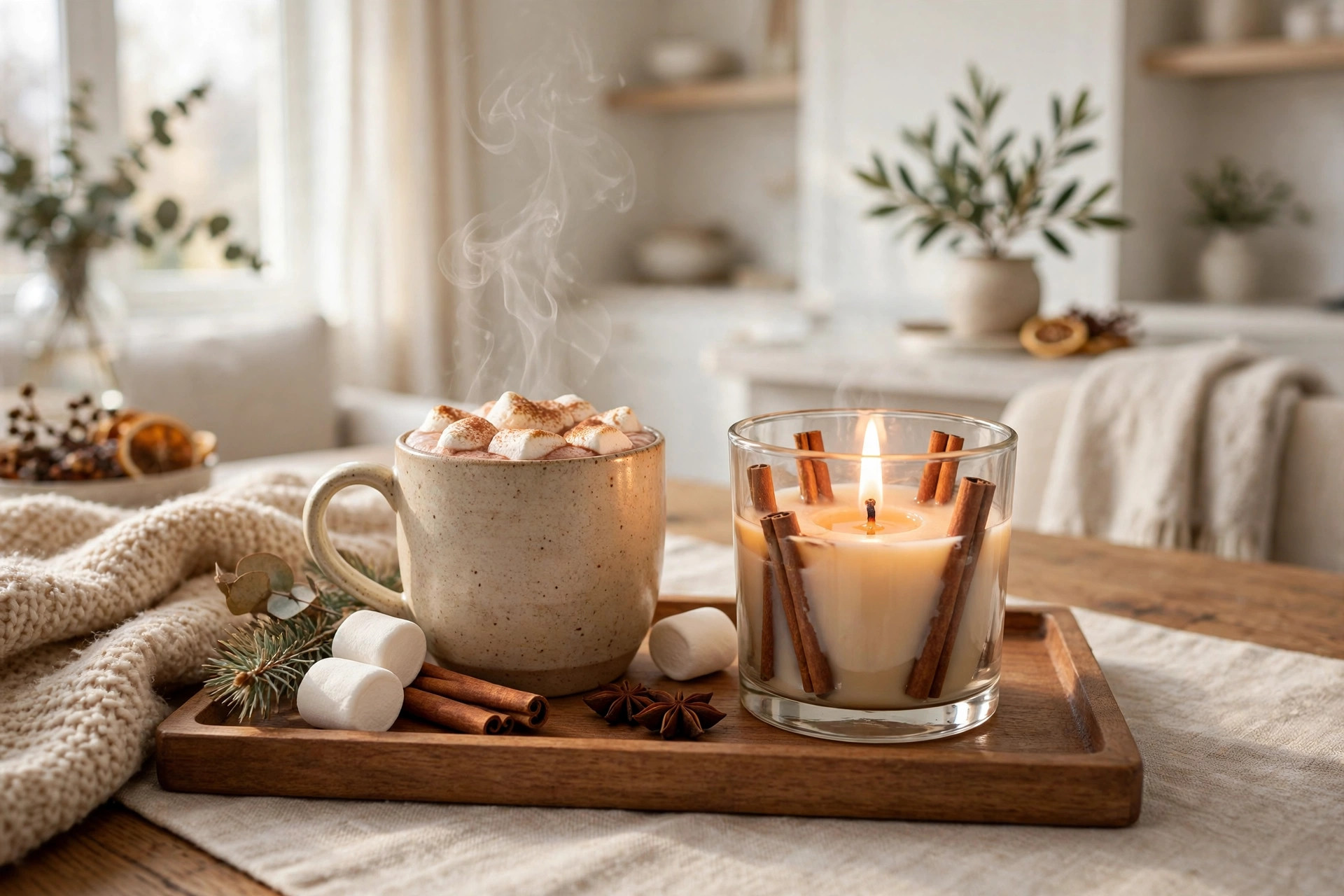
Winter decor is not only about what you see. Scent plays a big part in how a home feels. A simmer pot on the stove with orange slices, cinnamon sticks, and cloves fills the house with a warm, spicy smell. It costs almost nothing and works in minutes. You can also use a reed diffuser or a scented candle in the living room and the bedroom.
Choose scents that feel like winter without smelling like a holiday store. Cedar, pine, cinnamon, vanilla, and baked apple are all good choices. Use one scent per room so the smells do not fight each other. Keep it light. A gentle scent that you notice when you walk in is better than a strong smell that fills the whole house.
Small seasonal touches finish the look. A bowl of pinecones on a shelf, a stack of books with a candle on top, or a simple wreath made of eucalyptus on a door all add a winter feeling without any holiday symbols. A wreath of plain greenery, with no ribbon and no ornaments, is a winter wreath, not a Christmas wreath, and it can stay up all season.
Budget Friendly Swaps That Make a Big Difference
You do not need a big budget to decorate for winter. The best winter home decor ideas are often free or very cheap, because they use things you already own in a new way. Start by moving items between rooms. A throw from the bedroom can live on the sofa for winter. A lamp from a spare room can brighten a dark corner. A vase from the kitchen can hold branches in the living room.
Swap cushion covers instead of buying new cushions. A set of warm colored covers costs far less than new cushions and changes the whole look of the sofa. Swap light curtains for heavier ones if you have them, or simply add a second layer by hanging a sheer curtain behind a thicker one. Even changing the color of your bedding to a warm tone can make the bedroom feel new.
Shop your own home first, then look for second hand finds. Thrift stores, garage sales, and online marketplaces often have wooden bowls, baskets, lamps, and blankets for a few dollars. A quick wash or a polish can make them look like new. For a full list of low cost ideas, keep a running list of swaps you try each year, so next winter you know exactly what works in your home.
Free Winter Decor From Nature
Nature gives you free winter decor. Pinecones, bare branches, dried leaves, and smooth stones can all be collected on a walk and used at home. Wash pinecones in warm water, let them dry, and place them in a bowl on a shelf. Use branches in a tall vase. Place a few stones in a glass jar with a candle on top. These simple items look beautiful because they are real, and they cost nothing.
Keeping the Look Up All Season: January Into February
The best part of decorating for winter instead of Christmas is that your home still looks right in January. When the holidays end, most people take down their decorations and their homes feel empty. Your home will not feel empty, because your winter look was never about the holiday. The throws, the lamps, the greenery, and the warm wood are all still there.
In January, refresh the look with small changes. Swap the pine branches for fresh eucalyptus, change the cushion covers to a lighter neutral, and add a new candle scent. Open the curtains on bright days to let in the low winter sun. A clean, bright room with soft textures feels hopeful in January, when the days are slowly getting longer.
By February, lean into lighter touches. Add a white throw, a pale cushion, or a vase of early spring stems if you can find them. Keep the warm lighting and the cozy layers, because the cold is not over yet. This slow shift from deep winter to early spring feels natural, and it means you never have to redecorate in a rush. For more cozy ideas for the coldest months, read our guide to cozy winter bedroom ideas and bring the same warm feeling into your bedroom.
A Simple Winter Care Routine
Give your winter decor a quick check once a week. Fluff the cushions, fold the throws, dust the shelves, and change the water in your vases. Wash cushion covers and throw blankets every few weeks so they stay fresh. A home that is cared for feels cozy even on the coldest day, and these small habits take only a few minutes.
When winter finally ends, store your winter items with care. Wash and fold the throws, store the branches and pinecones in a box, and keep the warm cushion covers together so you can find them next year. You will thank yourself when the cold returns.
Frequently Asked Questions
Here are answers to the questions people ask most about winter home decor without Christmas.
How can I make my home feel cozy in winter without Christmas decorations?
Focus on warmth, not holidays. Layer soft throws and cushions, use warm lighting from lamps and candles, and add natural greenery like eucalyptus or pine branches. Warm wood, woven baskets, and a soft rug add texture. These elements feel cozy all winter and have nothing to do with Christmas.
What colors work best for non Christmas winter decor?
Warm neutrals work best. Cream, oatmeal, camel, soft gray, and warm brown create a calm base. Add one deeper tone like forest green, rust, or deep blue for contrast. Avoid bright red and green together, because that color pair reads as Christmas to most people.
How do I keep greenery fresh indoors in winter?
Change the vase water every few days and trim the stems at an angle so they can drink. Keep the vase away from radiators and fireplaces, because heat dries the leaves quickly. Eucalyptus lasts for weeks, and pine branches usually last two to three weeks with fresh water.
Can I use fairy lights if I am not decorating for Christmas?
Yes. Warm white fairy lights in a glass jar, along a shelf, or around a mirror look soft and pretty all winter. Choose a warm glow, keep the display simple, and avoid colored lights. One small string is enough to add a gentle sparkle to a room.
What is the cheapest way to decorate for winter?
Start with what you already own. Move throws, lamps, and vases between rooms, swap cushion covers, and collect free natural items like pinecones and branches. Thrift stores are a great source for wooden bowls, baskets, and blankets at a low cost. Small changes, like a new candle or a fresh bunch of eucalyptus, can change a whole room for very little money.
When should I take down my winter decor?
There is no rush. Winter decor can stay up until the weather turns warm, usually in March or April. In February, start shifting to lighter colors and fresher greenery, and remove the heaviest layers slowly. Because your decor was never tied to a holiday, you can take it down whenever it feels right to you.
Conclusion
Winter is long, and your home should feel warm through every week of it. With layered textiles, soft lighting, natural greenery, warm wood, and a few small seasonal touches, you can build a cozy winter look that has nothing to do with Christmas and everything to do with comfort. Start small, use what you already have, and add one new touch at a time.
The best winter home is not the one with the most decorations. It is the one where you want to sit down with a warm drink, read a book, and stay a while. Try one idea from this guide today, and let your home grow warmer week by week, all season long.
Looking for more ideas to make your home feel warm and welcoming? Explore more simple home decor guides on designizo.com and find the perfect look for every room in your house.