
A small sofa for bedroom comfort is one of the easiest upgrades you can make to your room. It gives you a soft spot to sit with your morning coffee, a place to read before sleep, and a stylish piece that makes the whole bedroom feel finished. You do not need a huge room either — even a compact bedroom can fit a loveseat, a small settee, or an armless bench when you choose the right size and spot.
In this guide, you will find the best types of small sofas for bedrooms, how to pick the right size, smart placement ideas, styling tips, colors that work beautifully, and answers to the questions people ask most. Everything is written in simple words, so you can plan your cozy bedroom corner with confidence.
Why a Small Sofa for Bedroom Just Makes Sense
Most bedrooms only have a bed and maybe a nightstand. That leaves the room feeling a little empty, even when it is tidy. A small sofa fills that gap without crowding the space.
Think about your daily routine. In the morning, you sit on the edge of the bed to put on your shoes. At night, you pile clothes on a chair because there is nowhere else to sit. A small sofa solves both problems and looks lovely doing it.
It also changes how the room feels. A bedroom with a sofa feels more like a retreat and less like just a place to sleep. Guests notice it too — a little seating area makes a master bedroom feel thoughtful and complete.
Best Types of Small Sofas for Bedrooms
Not every small sofa suits a bedroom. The best ones are compact, comfortable, and easy to move around. Here are the styles that work best.
Loveseats at the Foot of the Bed
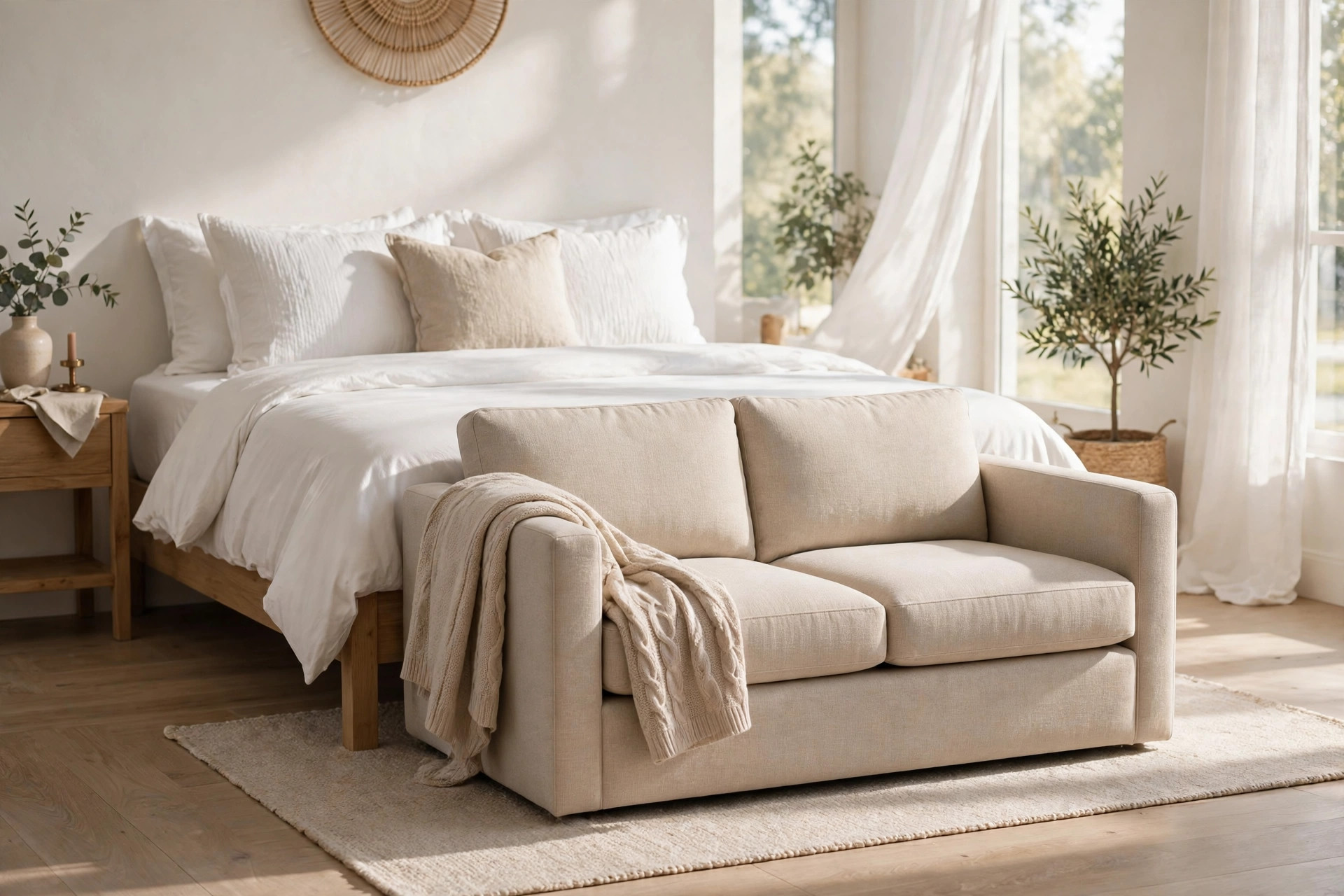
A loveseat is a two-seat sofa, usually between 48 and 60 inches wide. It is the classic choice for the foot of the bed because the width often matches the bed nicely. A king or queen bed looks balanced with a loveseat tucked at its end.
Pick a loveseat with a low back so it does not block your view across the room. Slim arms keep it from feeling bulky. Fabric loveseats in linen or cotton feel soft and relaxed, which suits a bedroom perfectly.
Armless Benches and Settees
If your room is very tight on space, an armless bench or settee is a smart pick. Without arms, it takes up less visual space and you can sit on it from any side. It works well at the foot of the bed or under a window.
Upholstered benches with a little padding feel much more comfortable than a hard wooden bench. Look for one with storage inside if you want a hidden spot for extra blankets.

Small Velvet Sofas
Velvet brings instant luxury to a bedroom. A small velvet sofa in emerald green, navy, or blush pink becomes the prettiest piece in the room. Velvet also feels warm and soft, which is exactly what you want where you sleep.
Velvet needs a little care — it shows pressure marks — but a quick brush with your hand smooths them out. In a bedroom, where the sofa gets gentle use, velvet holds up beautifully.

Leather Loveseats
A small leather loveseat adds warmth and a slightly masculine, grounded feel. Cognac, tan, and warm brown leather look wonderful against white bedding and wood floors. Leather is also easy to wipe clean, which is handy in a bedroom.
Keep a leather loveseat out of direct harsh sunlight so the color stays even. A soft throw over one arm makes it feel cozier and protects the leather where you sit most.

Curved and Compact Sofas
Curved sofas are trending, and they suit bedrooms wonderfully. The rounded shape feels gentle and calm, and a small curved loveseat softens all the straight lines of a bed and dresser. Bouclé fabric in cream or ivory is a popular pairing.
Because curved sofas have no sharp corners, they are also easier to walk around in a tight room. If you love the idea of low, lounge-style seating, a boneless couch can be a cozy alternative for a bedroom corner where you want to sink in and relax.

How to Choose the Right Size for Your Room
Size is the most important decision. A sofa that is too big will make your bedroom feel cramped, and one that is too small can look lost.
Start by measuring. Take a tape measure and check the width of the wall or the space at the foot of your bed where the sofa will go. Write the number down. Then leave at least 24 to 30 inches of walking space around the sofa so you can move freely.
As a simple rule, the sofa should be about the same width as your bed, or a little narrower. A loveseat of 48 to 60 inches wide suits most queen and king beds. For a twin or full bed, look at settees around 40 to 48 inches.
Also check the depth. Bedroom sofas feel best when they are a little shallower than living room sofas — around 30 to 34 inches deep keeps the room feeling open. And measure your doorways too, so the sofa actually fits through on delivery day.

Where to Place a Small Sofa in Your Bedroom
Placement changes everything. The same sofa can look perfect or awkward depending on where it sits. These are the three spots that work best.
At the Foot of the Bed
This is the most popular spot, and for good reason. It creates a natural seating area, gives you a place to lay out tomorrow’s clothes, and makes the bed look grand and styled. Leave a small gap — a few inches — between the bed and the sofa so bedding does not bunch up.
Under a Window
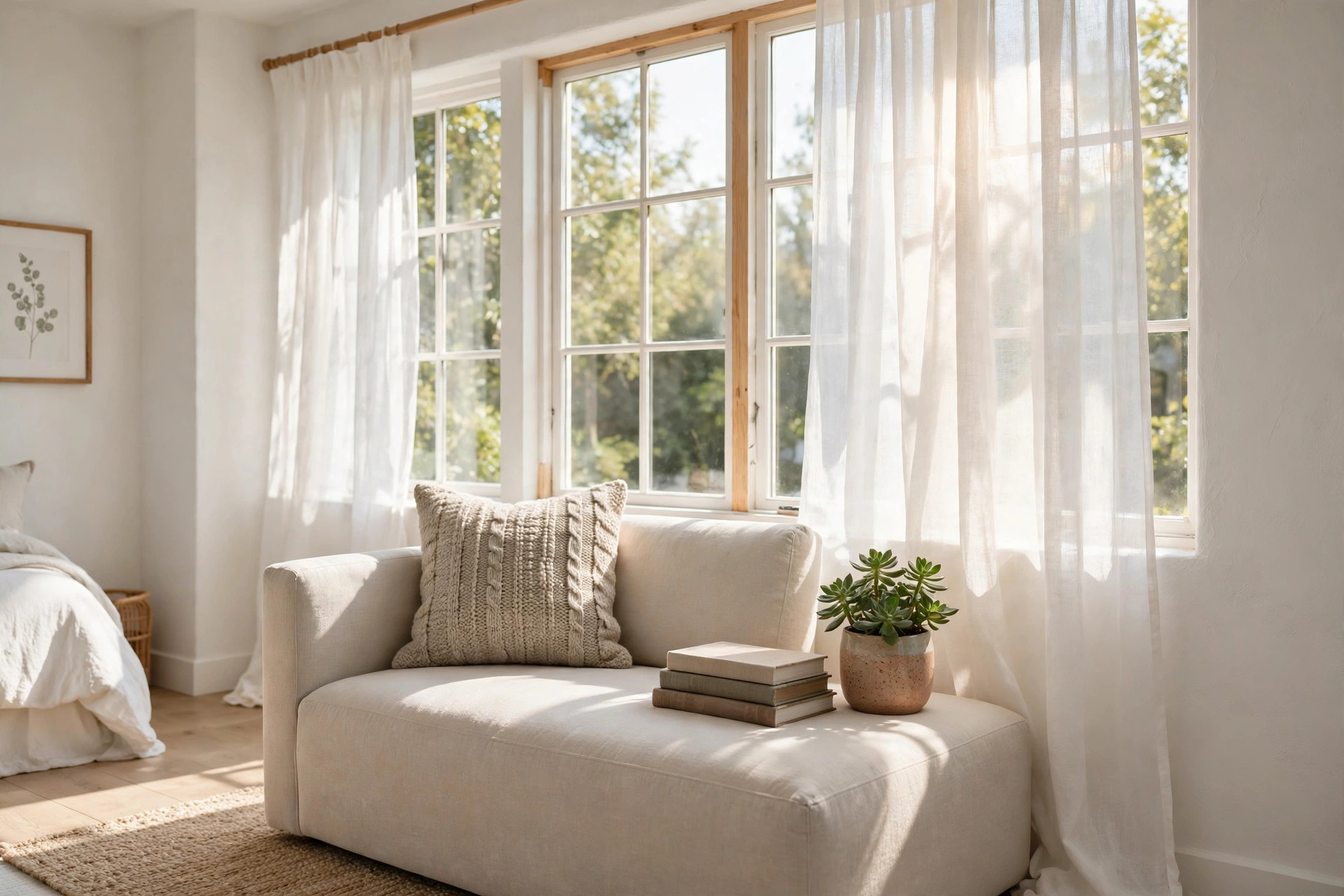
A low sofa under a window turns dead space into your favorite seat in the house. Morning light makes it perfect for coffee or a quiet moment. Just make sure the sofa back sits below the windowsill so the window stays the star.
A Cozy Reading Corner
If you have an empty corner, claim it. A small sofa, a floor lamp, and a side table with books create a reading nook you will actually use. Add a soft rug under the sofa to mark the corner as its own little zone.
To make the corner feel taller and brighter, pair your sofa with an arched mirror — these arched mirror ideas show how a mirror and a small sofa together can turn a plain bedroom corner into a styled moment.

Styling Ideas That Make It Cozy
A plain sofa looks fine, but a styled sofa looks inviting. The good news is that styling is simple and cheap.
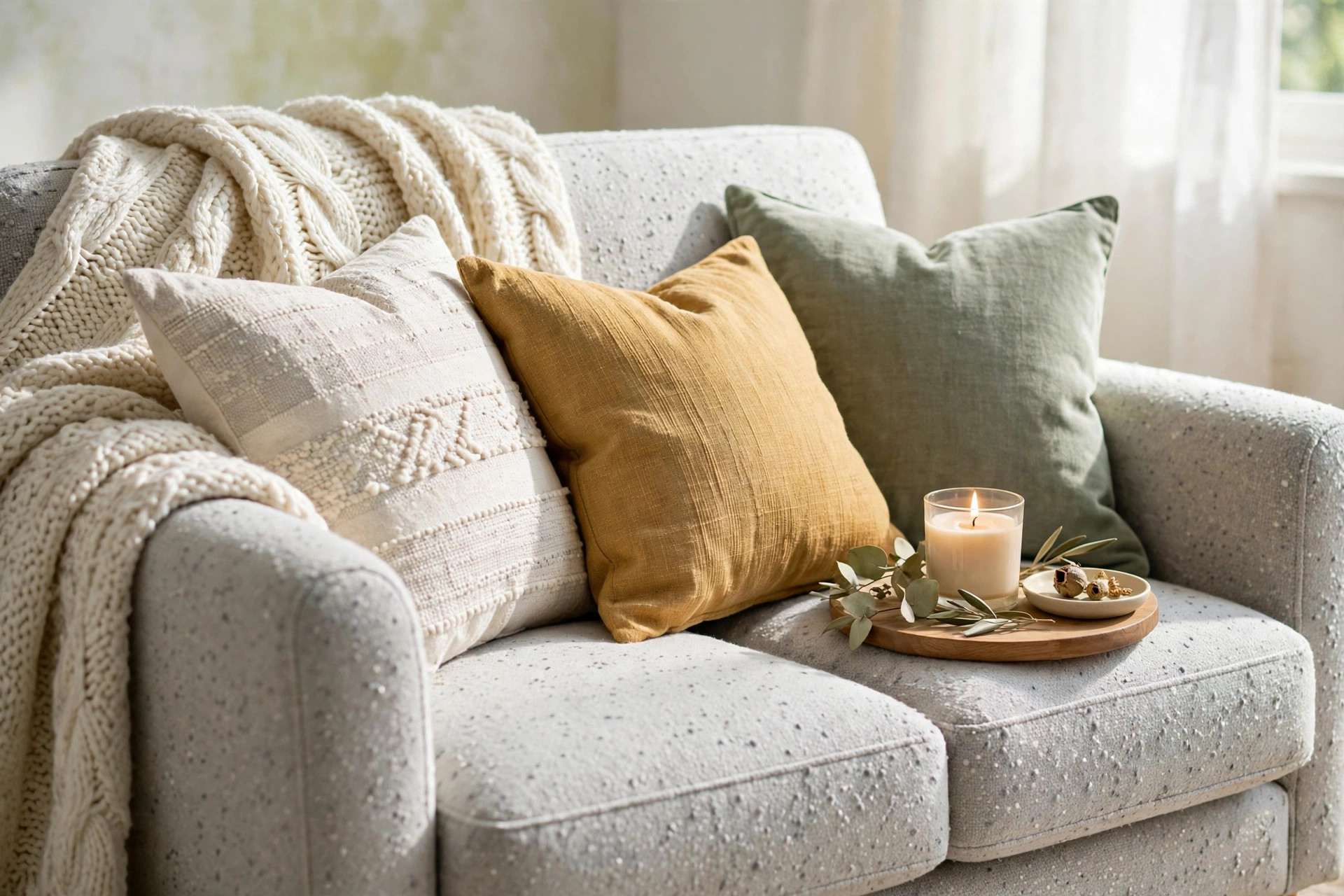
Start with throw pillows. Two or three pillows in different sizes look better than a row of identical ones. Mix textures — a knit pillow, a linen pillow, a velvet one — in colors pulled from your bedding so everything feels connected.
Add a throw blanket draped over one arm or folded across the seat. It adds softness and gives you something to pull over your legs on chilly evenings. A small tray on the seat with a candle turns the sofa into a styled vignette when it is not in use.
Finish with something living. A small plant on the side table next to the sofa brings freshness and color. If your corner is dark, even a good faux plant works.
Best Colors for a Bedroom Sofa
Color sets the mood. Since the bedroom is for rest, calm colors usually work best.
Neutrals are the safest and most flexible choice. Beige, oatmeal, light grey, and ivory go with any bedding and never feel dated. If you redecorate often, a neutral sofa lets you change everything around it.
Soft color can still feel calm. Sage green, dusty blue, and blush pink add personality without shouting. These muted tones pair beautifully with white walls and wood furniture.
Bold color makes a statement. Emerald green, navy, or mustard turn the sofa into the focal point of the room. This works best when the rest of the room stays quiet — plain walls, simple bedding — so the sofa gets all the attention.
One tip: bring a fabric swatch or a photo of your bedding when you shop, so the sofa color truly matches your room’s palette.

Small Sofa Ideas for Teen Bedrooms
Teenagers love having their own hangout spot, and a small sofa gives them one without leaving the bedroom. It becomes the place for homework breaks, video calls with friends, and weekend lounging.
For a teen room, pick durable fabric that handles daily use — a tight weave or performance fabric in a fun color like blush pink, teal, or mustard. Avoid very light colors that show every mark.
Keep the scale small so there is still floor space. A compact loveseat under the window or against a free wall works well. Add a couple of playful cushions and a soft throw, and the corner feels personal and cozy.

Mistakes to Avoid When Adding a Sofa to Your Bedroom
A few common mistakes can spoil an otherwise lovely setup. Watch out for these.
First, do not block your walking paths. If you have to squeeze past the sofa to reach the closet, it is too big or in the wrong spot. Comfort comes first.
Second, do not match everything exactly. A sofa in the exact same fabric as your bedding can look flat. Contrast is your friend — if the bedding is plain, the sofa can carry the pattern, and vice versa.
Third, do not skip measuring. Eyeballing the size is the top reason sofas get returned. Measure the space, the sofa, and the doorway before you buy.
Finally, do not forget lighting. A sofa in a dark corner will never feel inviting. A small lamp or nearby window light makes all the difference.
Frequently Asked Questions
What size sofa fits best in a bedroom?
For most bedrooms, a loveseat between 48 and 60 inches wide is ideal. It should be roughly the width of your bed or slightly narrower, with 24 to 30 inches of walking space around it. Shallower sofas, around 30 to 34 inches deep, keep the room feeling open.
Where should I put a small sofa in my bedroom?
The three best spots are at the foot of the bed, under a window, or in an empty corner as a reading nook. The foot of the bed is the most classic choice, while a window spot gets the best natural light.
Can a small sofa work in a very small bedroom?
Yes. Choose an armless bench or a compact settee around 40 to 48 inches wide, and place it where it does not block walking paths — often at the foot of the bed or under a window. Light colors and slim legs help it feel airy rather than bulky.
What is the best fabric for a bedroom sofa?
Linen and cotton blends feel relaxed and breathable, velvet adds luxury and warmth, and leather is durable and easy to clean. For daily use or kids’ rooms, look for tightly woven or performance fabrics that resist stains.
How do I style a bedroom sofa so it looks cozy?
Layer two or three throw pillows in mixed textures, drape a soft throw blanket over one arm, and add a small side table with a lamp or plant nearby. Pull colors from your bedding so the sofa feels connected to the rest of the room.
Final Thoughts: Your Cozy Corner Is Waiting
A small sofa for bedroom living is a small change with a big payoff. It gives you comfort, style, and a room that feels truly finished. Start by measuring your space, pick a style that matches your mood — a classic loveseat, a soft velvet piece, or a simple armless bench — and place it where the light is best.
Ready to find more ideas for a beautiful home? Browse our design guides for fresh inspiration, and start planning the cozy bedroom you will love coming home to every day.

2 thoughts on “Small Sofa for Bedroom: Cozy Seating Ideas for Your Room”