Small Home Office Ideas: A Work Corner That Actually Fits
You do not need a spare room to work from home well. You need a corner that fits your life, your desk, and the way you actually work. A good small home office is not about buying the most expensive chair or the biggest monitor. It is about finding a spot where you can sit down, focus, and get things done — then close the laptop and enjoy your home again.
That is why small home office ideas are so popular right now. More people work from home at least part of the week, and most homes were never designed with an office in mind. The good news is that almost every home has an unused corner, a quiet wall, or a small nook that can become a work spot. With a little planning, that spot can feel calm, comfortable, and even beautiful.
In this guide, you will find practical small home office ideas for every kind of home: apartments, bedrooms, living rooms, and even closets. You will learn how to pick the right desk, light the space well, keep it tidy, and make it look good on video calls. The goal is simple — a work corner that actually fits, and that you will actually use.
Start With the Corner You Already Have
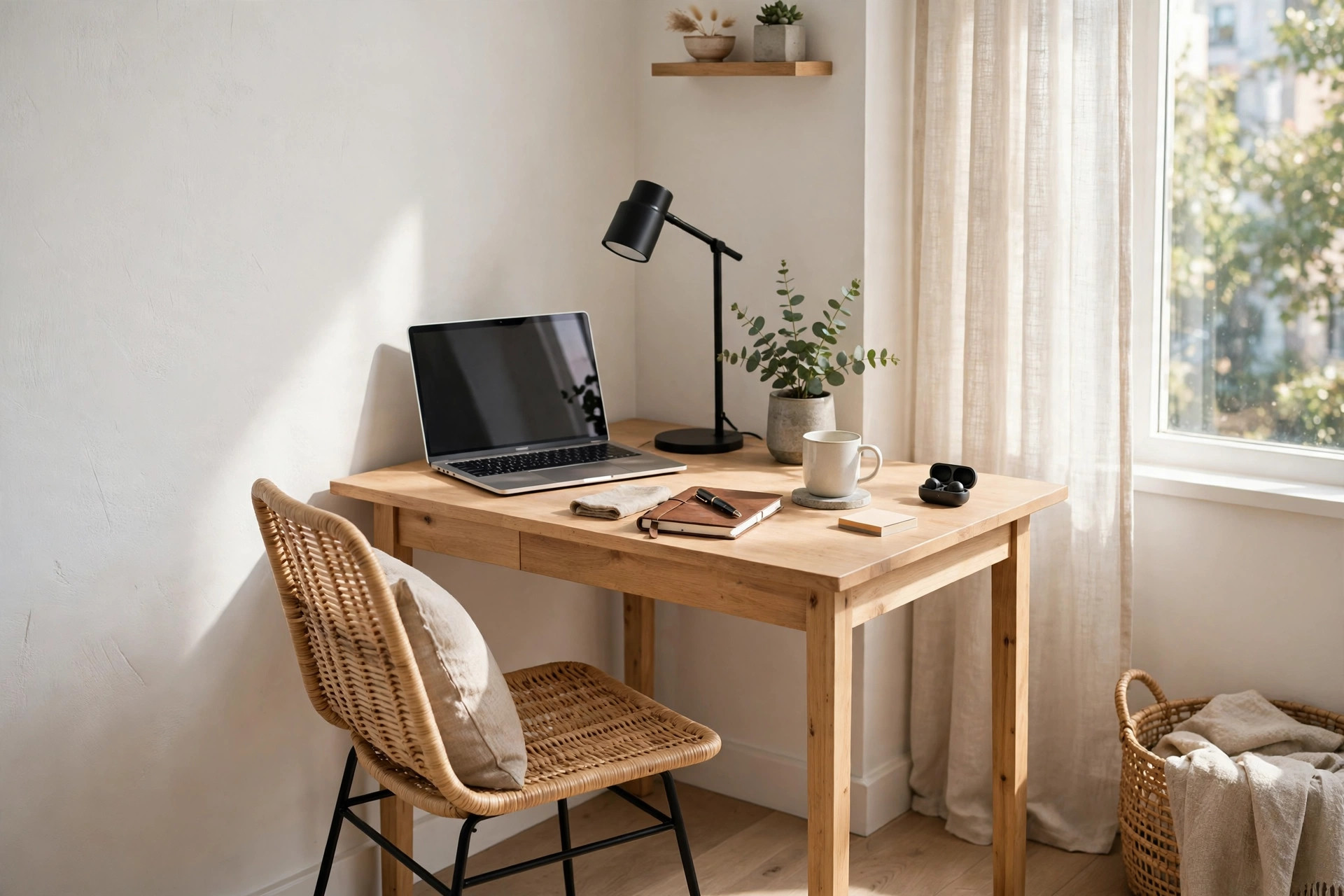
Before you buy anything, walk through your home and look for corners. A corner is the best friend of a small home office. It gives you two walls to work with, it feels naturally enclosed, and it takes up space that is often wasted anyway. The corner near a window is ideal, but any quiet corner will do.
Measure the corner before you shop. Write down the width of each wall, the height of any windowsill, and how much room you have to pull a chair out. A desk that looks small in a store can feel huge in a tight corner, and a desk that is too deep can leave you with no legroom. For most small corners, a desk depth of about 45 to 55 centimeters works well, and a width of 90 to 120 centimeters gives you room for a laptop and a notebook without crowding you.
Pick a desk shape that fits the corner
A straight desk pushed into a corner works fine, but an L-shaped or triangular corner desk uses the space even better. It wraps around you, gives you a second surface for papers or a printer, and leaves the middle of the room free. If you like a clean look, a wall-mounted desk is another smart choice. It folds up when you are done, which is perfect for very small rooms.
Whatever shape you choose, keep the desk surface as clear as you can. A clear desk helps you think clearly. One laptop, one lamp, and one small tray for pens is enough for most people. Everything else can live on a shelf or in a drawer.
A Home Office in the Bedroom

The bedroom is the most common place for a small home office, and it works well if you set it up with care. The trick is to keep work and rest apart, even when they share a room. When your desk is in your bedroom, it is easy for work to creep into your evenings, and it is easy for your bed to creep into your workday.
Put your desk as far from the bed as the room allows, and face away from the bed if you can. Facing a wall or a window helps your brain switch into work mode. A small rug under the desk and chair can mark the work zone clearly. When you step onto that rug, you are at work. When you step off it, you are home.
Keep the bedroom calm after work
At the end of the day, close the laptop and put it away if you can. A desk with a closed laptop looks like furniture, not like unfinished work. A small basket or a drawer for your work papers helps too. If your bedroom office still feels like it is watching you at night, a folding screen or a curtain on a ceiling track can hide the desk completely. If you enjoy creating quiet corners in your home, you may also like these cozy reading nook ideas for turning small spots into places to relax.
A Work Corner in the Living Room
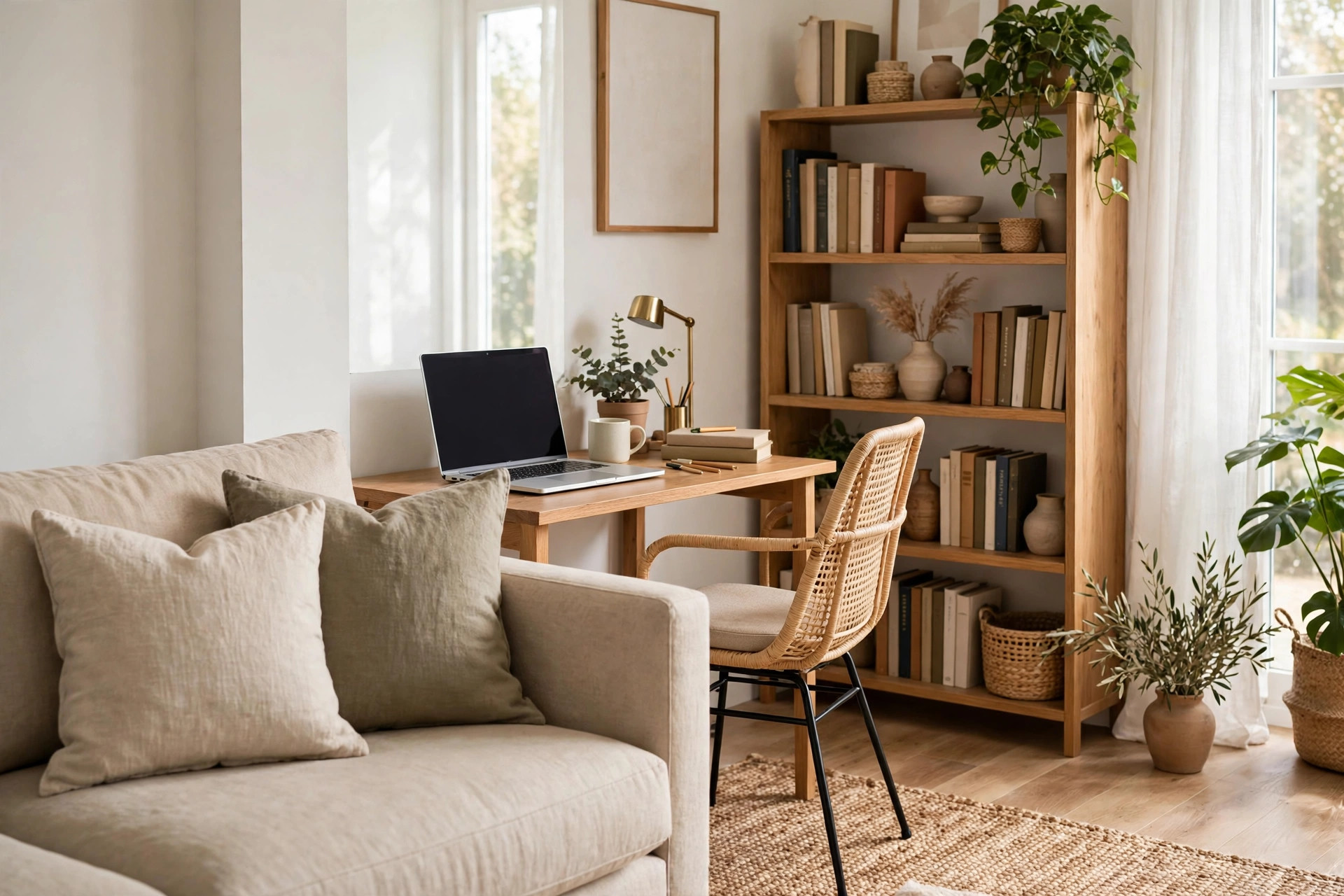
A living room office works best when it blends in with the rest of the room. You do not want your living room to look like an office, and you do not want your office to feel like a waiting room. Choose a desk that matches your living room furniture — a wood desk with a living room, a white desk in a bright modern room — and pick a chair that could pass as a regular dining or accent chair.
The back of a sofa is a classic spot for a living room desk. A slim console desk behind the sofa gives you a work surface without taking floor space from the seating area. Another good spot is beside a bookshelf, where your desk becomes part of a wall of furniture instead of standing alone.
Hide it when guests come over
If your living room is also your entertaining space, think about how the desk looks when you are not working. A desk with closed storage, a laptop that slides into a drawer, and cables tucked away will look neat in seconds. A desk in a living room should be easy to tidy, because it is always on show.
The Closet Office: A Tiny Room of Your Own
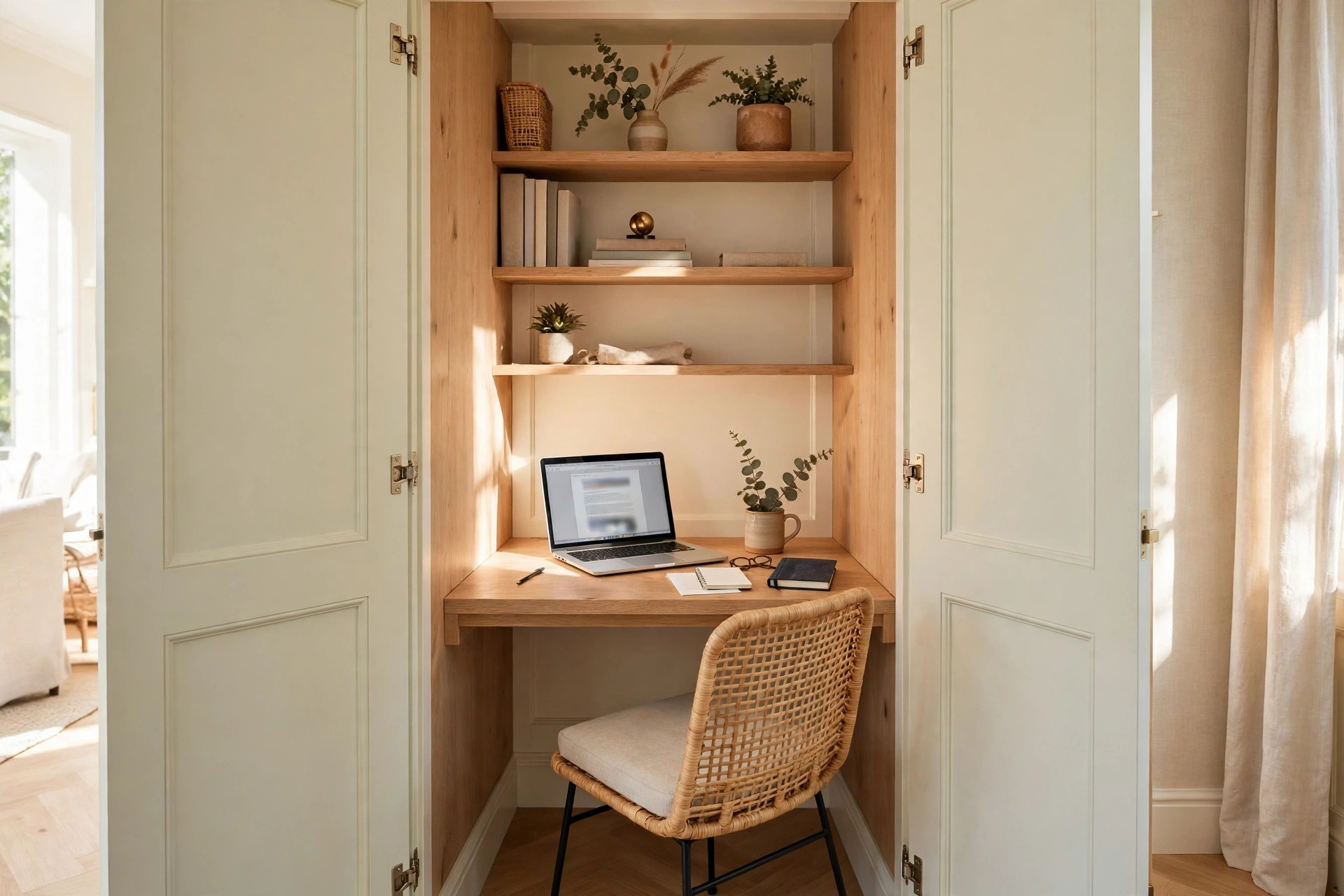
A closet office — sometimes called a “cloffice” — is one of the cleverest tiny office ideas out there. If you have a closet you barely use, or a shallow alcove in a hallway, you can turn it into a small office with a desk board, a couple of shelves, and a light. When you close the doors, the office disappears.
Start by clearing the closet completely and removing the hanging rod if you do not need it. A desk board fixed at sitting height, or a small freestanding desk that fits inside, gives you your work surface. Shelves above the desk hold books, files, and supplies. Because a closet is small and enclosed, good lighting matters even more here — a small LED strip under the top shelf or a clip-on lamp makes the space feel bright instead of boxed in.
Make a closet office comfortable
Closets are not built for sitting in all day, so pay attention to air and comfort. Leave the doors open while you work so air can move, and choose a chair that slides fully under the desk so the space stays usable. Paint the inside of the closet a light color, even white, to bounce light around and make the nook feel bigger than it is.
Light It Right: The Secret to a Space That Works
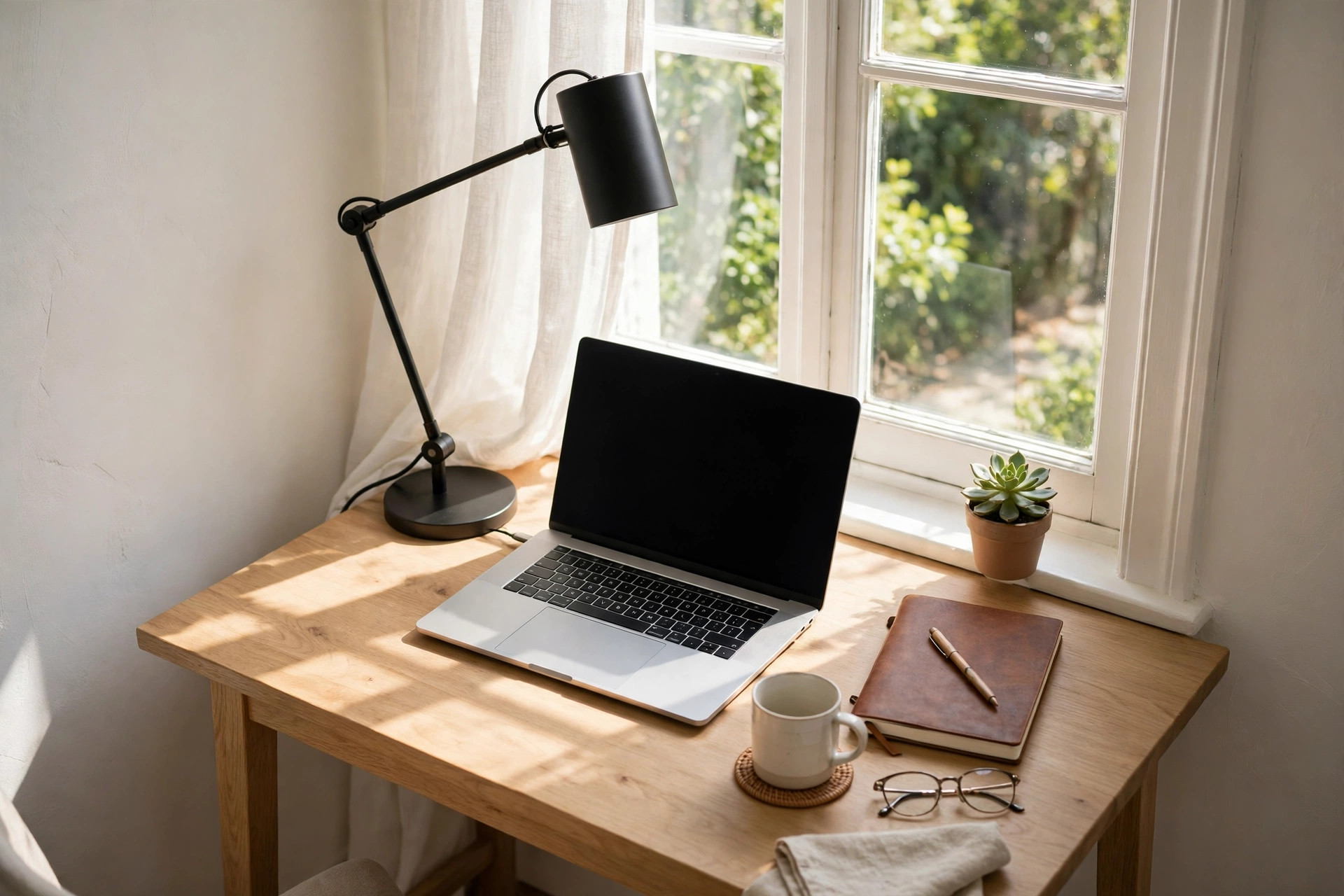
Lighting can make or break a small home office. Bad light causes eye strain, headaches, and tiredness. Good light makes you feel awake and makes the space look bigger and more welcoming. Natural daylight is the best light you can get, so if you can put your desk near a window, do it.
Face your desk so the window light comes from the side, not from directly in front of or behind you. Light from the side gives you a bright workspace without glare on your screen and without turning you into a dark silhouette on video calls. If the window is very sunny, a sheer curtain softens the light without blocking it.
Layer your light for evenings
When daylight fades, you need a second layer of light. A desk lamp with a warm white bulb is the classic choice, and an adjustable arm lets you point the light exactly where you need it — on your papers, not on your screen. A small floor lamp or a wall light behind you adds soft background light, which stops the room from feeling like a dark cave with one bright spot. Avoid a single harsh ceiling light on its own; it creates shadows and makes small rooms feel flat.
Storage That Keeps a Small Desk Clear

In a small home office, storage is not about having more furniture. It is about using the walls. Every item that lives on your desk takes space from your work. Every item that lives on the wall gives that space back. Shelves above the desk, a pegboard, a wall file holder, or a magnetic board can hold a surprising amount without touching the floor at all.
Sort your supplies into three groups: things you use every day, things you use every week, and things you rarely use. Daily items stay on the desk or in the top drawer. Weekly items go on the shelf within arm’s reach. Rare items go in a box on a high shelf or in another room. This simple rule keeps a small desk clear without constant tidying.
Small storage ideas that actually help
A desk organizer or a small tray stops pens and cables from spreading across the surface. A cable clip or a small cable box hides the messy wires that make a desk look untidy even when it is clean. A rolling cart beside the desk is a flexible option — it holds a printer, files, or craft supplies, and it can roll away when you need the floor space. If your work corner shares a room with a bed, a tidy desk matters even more, and a compact setup pairs well with pieces like a small sofa for a bedroom that keeps the whole room feeling open.
Choose a Chair You Can Sit In All Day

Your chair is the one item worth spending a little more time choosing. You will sit in it for hours, and a bad chair can leave you with a sore back, stiff shoulders, and a headache by lunchtime. A good chair does not have to be big or expensive, but it does have to fit your body and your desk.
Look for a chair with adjustable height so your feet rest flat on the floor and your elbows sit at about desk height. Lower back support matters more than soft padding. A chair with a curved backrest that supports your lower back will feel better after four hours than a soft chair with no support at all. If you like to move around, a chair with wheels lets you slide in and out of a tight corner easily.
Small chairs for small spaces
Big executive chairs can swallow a small work corner. A slim task chair, an armless office chair, or a well-shaped dining chair can work just as well and leave more room to move. Armless chairs slide fully under the desk, which is a big win in a tight space. Try the chair at your desk height before you commit, and sit in it for at least ten minutes — comfort shows up over time, not in the first minute.
Small-Space Tricks That Save Real Room
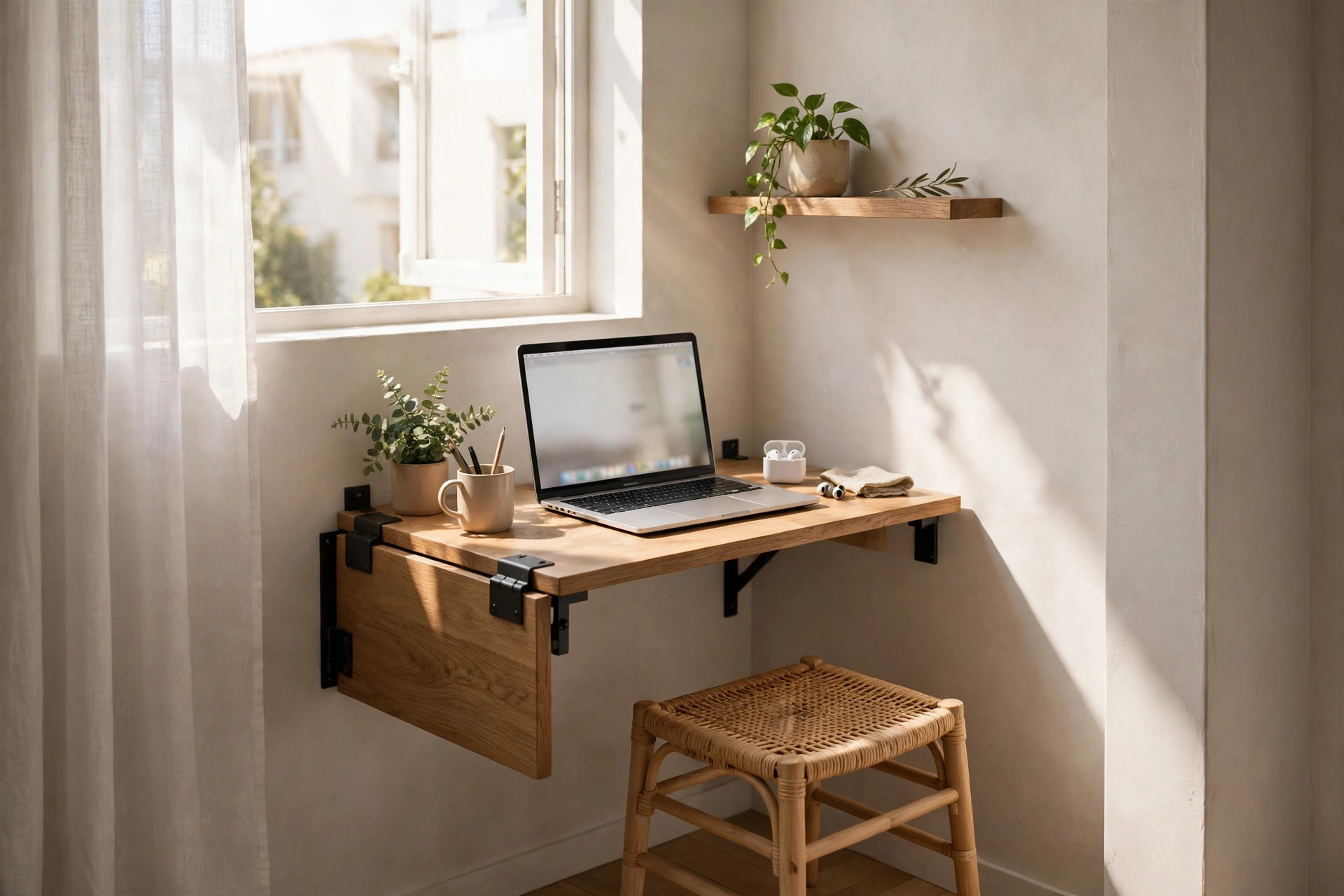
When space is truly tight, clever tricks matter more than new furniture. A wall-mounted folding desk is one of the best tiny office ideas: it gives you a full work surface when it is down and folds flat against the wall when it is up. A desk that mounts to the wall also leaves the floor clear, which makes the whole room feel bigger.
Other tricks include using a windowsill as a standing desk for short tasks, putting a narrow shelf above a radiator or a low cabinet to create a work ledge, and using the space under the stairs for a desk nook. Vertical space is your friend: a tall narrow bookcase holds more than a wide low one, and it takes less floor space.
One room, two jobs
Many small homes need one room to do two jobs. A guest room can hold a desk that doubles as a dressing table. A dining table can be a desk during work hours if you use a laptop and a small storage box that you pack away at dinner time. The key is a clear start and end to the workday: set up in the morning, pack away in the evening, and the room goes back to being a home.
A Good Setup on a Small Budget

You do not need to spend a lot to build a good small home office. In fact, some of the best work corners cost very little, because they are built from what the home already has. A simple desk, a decent chair, and good light will take you further than a room full of gadgets you never use.
Start with what you have. A spare dining chair can be a fine office chair for a while. A plank on two drawer units makes a sturdy desk. A shelf board from a hardware store, fixed to the wall with brackets, costs little and gives you a clean custom desk that fits your corner exactly. Add one good lamp, and you have the basics covered.
Spend where it counts
If you do have a little money to spend, spend it in this order: chair first, then lighting, then desk. A comfortable chair protects your back every single day. Good lighting protects your eyes. A desk just needs to be the right size and steady. Everything else — organizers, plants, art, a monitor stand — can wait until you know how you actually use the space. Buying slowly also stops you from filling a small corner with things you do not need.
Make It Look Good on Video Calls

Video calls are part of working from home, and your background is part of your work image. You do not need a perfect room behind you. You need a background that is tidy, calm, and not distracting. A plain wall with one shelf, a plant, or a simple piece of art looks professional and friendly.
Put your light source in front of you, not behind you. A window or a lamp facing you lights your face evenly and makes you easy to see. A light behind you turns you into a shadow. Raise your laptop on a stack of books or a small stand so the camera is at eye level — a camera looking up at you is never flattering, and a camera at eye level looks natural and confident.
Quick fixes before a call
Before an important call, do a thirty-second check: clear the desk behind you of clutter, close any tabs or papers you do not want seen, and check your camera view with a quick preview. Keep a small plant or a tidy shelf in the background — it adds warmth without stealing attention. A neutral background also helps if your work corner is in a bedroom or living room, because it keeps the focus on you, not on the rest of the room.
Mistakes to Avoid in a Small Home Office

Small spaces forgive very little, so a few common mistakes can ruin an otherwise good setup. The first is putting the desk in the darkest corner of the room. Dark corners feel gloomy, strain your eyes, and make you avoid the desk. Always choose light over a hidden spot.
The second mistake is buying furniture before measuring. A desk that is too big blocks walkways, bumps into doors, and makes the room feel cramped. Measure twice, buy once. The third mistake is letting cables and papers pile up. In a small space, clutter grows fast and shrinks the room visually. A five-minute tidy at the end of each workday keeps the corner inviting.
Do not forget comfort and breaks
A small office can tempt you to sit still for too long, because everything is within reach. Stand up, stretch, and step away from the desk during the day. A small space is not an excuse to skip movement. If you can, put your desk near a window so you can look outside and rest your eyes. Comfort is not a luxury in a home office — it is what makes you keep using the corner day after day.
Frequently Asked Questions
What is the best place for a small home office?
The best place is a quiet corner near natural light, away from the busiest part of your home. A corner in a bedroom, living room, or hallway can all work well. The most important things are good light, enough room to sit comfortably, and a spot you can leave set up so you do not have to build and pack away your office every day.
How much space do I need for a small home office?
You can build a useful work corner in a space as small as one meter wide. A laptop, a small desk, and a chair that slides under the desk are enough for most desk work. Wall shelves and vertical storage make even a very small corner feel workable, because they use the walls instead of the floor.
What desk is best for a small room?
A wall-mounted or folding desk is best for very small rooms, because it disappears when you are done. For a permanent corner, a compact straight desk or an L-shaped corner desk works well. Choose a desk depth of about 45 to 55 centimeters so you have legroom without losing too much floor space.
How can I make a small home office look nice?
Keep the desk clear, use light colors, and add one or two personal touches — a plant, a framed print, or a nice lamp. Matching the desk to your room’s furniture helps the corner blend in instead of standing out. Good lighting also makes a big difference: a bright, tidy corner always looks better than a dark, cluttered one.
Can I work from a bedroom office without it affecting my sleep?
Yes, if you keep work and rest separate. Face away from the bed while you work, close the laptop at the end of the day, and hide work papers in a drawer or basket. A rug, a screen, or a curtain can mark the work zone clearly. A short wind-down routine — closing the laptop, tidying the desk, and stepping away — tells your brain that work is over.
Do I need a special chair for a small home office?
You do not need a big or costly chair, but you do need one that supports your back and fits your desk height. Look for adjustable height and lower back support, and choose a slim or armless chair if space is tight. Comfort matters more than size or brand.
Conclusion: Build a Corner You Will Actually Use
A small home office does not need to be big, costly, or perfect. It needs to fit your home, your body, and your working day. Start with a corner you already have. Add a desk that fits, a chair that supports you, and light that keeps you awake and comfortable. Use the walls for storage, keep the surface clear, and make the background tidy for video calls.
The best small home office ideas are the ones you actually live with. Try one idea from this guide this week — move a desk near a window, clear a corner, or add a shelf above your desk — and see how it feels. Small changes add up, and before long, that forgotten corner can become your favorite spot in the house.
Ready to build your own work corner? Pick your spot, measure it, and start with the basics: desk, chair, and light. Your future self — the one who sits down each morning to a calm, bright, comfortable corner — will be glad you did.