
Cozy Reading Nook Ideas: Small Corners That Feel Like a Retreat
Every home has a corner that is easy to overlook. It might be the space beside a window, the end of a hallway, a quiet spot under the stairs, or an empty wall in the bedroom. With a little thought, that forgotten corner can become the most loved spot in the house: a cozy reading nook where you can slow down, open a book, and forget the noise of the day for a while.
Good reading nook ideas are not about having a big room or spending a lot of money. They are about comfort, light, and a feeling of calm. When a nook feels soft, warm, and personal, you will actually want to use it. That is the real secret. A beautiful chair that no one sits in is just furniture. A simple corner with a good light, a soft blanket, and a place for your books can become a daily habit.
In this guide, you will find practical reading nook ideas for small spaces, window seats, bedrooms, living rooms, and family homes. Each idea is easy to adapt, even if you rent, share a home, or work with a very small budget. Pick the parts that fit your home and your reading style, and build a corner that feels like a small retreat.
Start With a Chair You Actually Love to Sit In
The chair is the heart of any reading nook. If it is not comfortable, the nook will not work, no matter how pretty it looks. Look for a chair that supports your back, lets you tuck your feet up if you like, and gives you room to change position during a long chapter.
An armchair with deep seating and soft arms works well for most people. A chaise or a small lounge chair is a good choice if you like to stretch out. If space is tight, a cushioned accent chair with a footstool can give you almost the same comfort without taking over the room. Try the chair before you buy it if you can. Sit in it the way you read, not just the way you would sit for a photo.

How to Choose the Right Size
Measure your corner before you shop. Leave enough room to walk past the chair and to pull it out slightly for cleaning. In a very small nook, a chair with slim arms or an armless slipper chair can save precious inches while still feeling soft and inviting.
Add a Footstool or Ottoman
A footstool turns a good chair into a great reading spot. It lets you raise your feet, rest a book, or keep a warm drink close by. Choose one that can slide under the chair or double as extra seating when friends visit.
Turn a Window Seat Into Your Favorite Reading Spot
A window seat reading nook is a classic for a reason. Natural light makes reading easier on the eyes, and looking outside between pages feels restful. If your home already has a wide windowsill or a built-in bench, you are halfway there.
Add a thick cushion in a washable fabric, a few pillows in different sizes, and a soft throw. A cushion that is at least a few inches thick will make a hard bench feel like a real seat. If you do not have a built-in seat, a low storage bench placed under a window can create the same effect, with the bonus of hidden space for books and blankets.

Make the Window Work Harder
Sheer curtains soften bright sunlight without blocking it completely. They also add privacy, which helps a window nook feel like a private retreat rather than a display. In the evening, a small lamp or a wall light nearby keeps the seat useful after sunset.
Keep Books Within Reach
A small shelf beside the window, a basket on the floor, or a ledge under the seat keeps your current book and your next read close. When everything you need is within arm’s reach, you are much more likely to sit down and stay a while.
Design a Small Reading Nook in a Tiny Corner
A small reading nook does not need a whole room. It needs a clear purpose and a few well-chosen pieces. Start with one corner, even if it is only wide enough for a chair and a small table. Define the space with a rug, a different paint color on one wall, or a tall plant beside the chair. These simple touches tell your brain that this spot is for reading, not for storage or passing through.
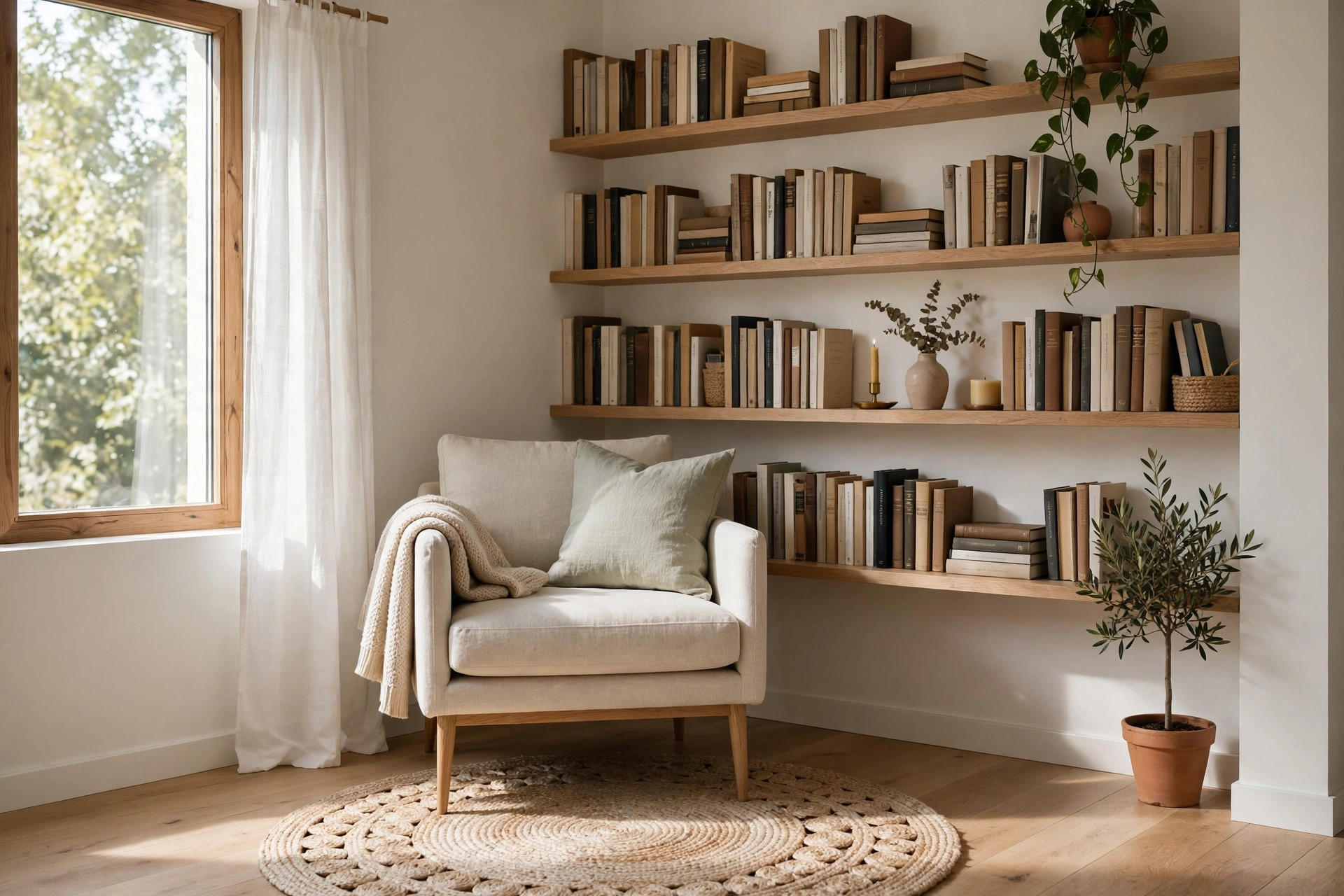
Choose furniture that fits the scale of the corner. A bulky chair in a tiny space will feel crowded, while a slim chair with a small side table feels calm and open. Wall-mounted shelves save floor space and keep books visible, which adds to the cozy, library-like feeling.
Use Vertical Space
When floor space is limited, look up. Tall, narrow shelves, a hanging basket for magazines, or a wall-mounted reading light can add function without clutter. Keep the lower part of the nook simple so it feels open and easy to sit in.
One Rug Can Change Everything
A small rug anchors the nook and makes it feel separate from the rest of the room. It also adds warmth underfoot, which matters on cold mornings. Choose a rug that is large enough for the chair and your feet, but not so large that it swallows the whole corner.
Get the Lighting Right for Long Reading Sessions
Good lighting is one of the most important reading nook ideas, and also one of the most overlooked. You want light that is bright enough to read without strain, but soft enough to feel relaxing. A single overhead light is rarely enough, because it can create shadows on the page.
A floor lamp placed behind or beside your shoulder is a classic solution. It directs light onto the book without shining into your eyes. A table lamp on a side table works just as well in a smaller nook. For a window seat, daylight is wonderful during the day, but a clip-on or wall-mounted light keeps the spot useful in the evening.

Choose Warm, Adjustable Light
Warm white light feels calm and cozy, while very cool light can feel harsh in a relaxing corner. If you can, choose a lamp with adjustable brightness so you can make it brighter for fine print and softer when you want to wind down before bed.
Avoid Glare on the Page
Place the lamp so light falls over your shoulder and onto the book, not directly into your eyes or onto a shiny screen. If you read on a tablet, a softer light and a matte screen setting can reduce glare and eye tiredness.
Add Shelves and Storage That Keep Books Close
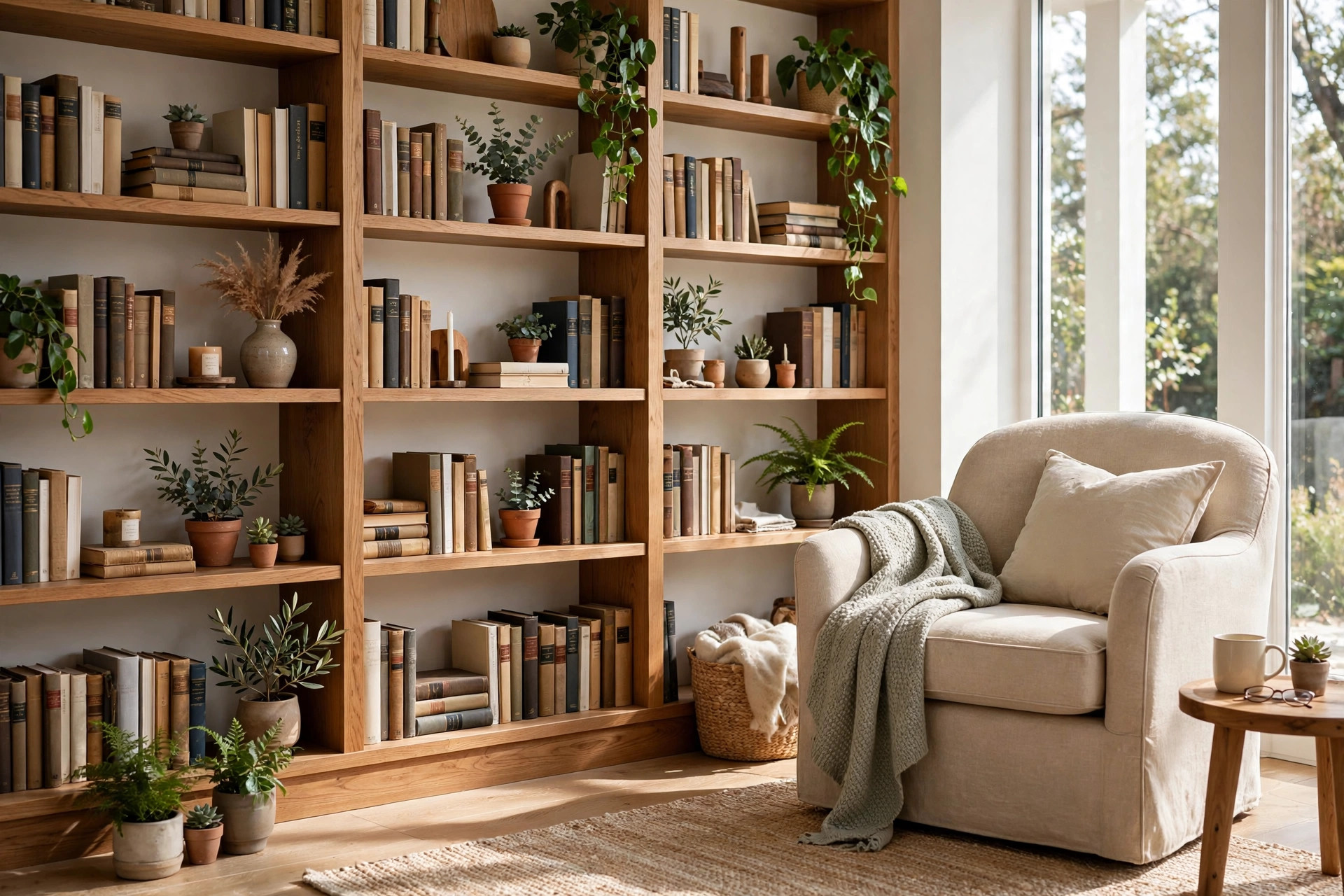
A reading nook feels more inviting when books are part of the decor. You do not need a huge bookcase. A few shelves, a small stack on a side table, or a basket of current reads can give the corner a warm, lived-in feeling.
Think about how you actually read. If you finish one book and start another right away, keep a small pile of unread books nearby. If you reread favorites, display them where you can see them. Storage should support your habit, not just look tidy for a photo.
Mix Books With Personal Touches
A few plants, a framed photo, or a favorite mug on the shelf makes the nook feel personal. Keep it simple, though. Too many objects can make shelves feel busy and distract from the calm feeling you want.
Hidden Storage for a Calm Look
Baskets, boxes, or a bench with storage inside are perfect for blankets, chargers, and notebooks. When clutter has a home, the nook stays calm, and you can sit down without tidying first.
Layer Blankets, Pillows, and Soft Textures
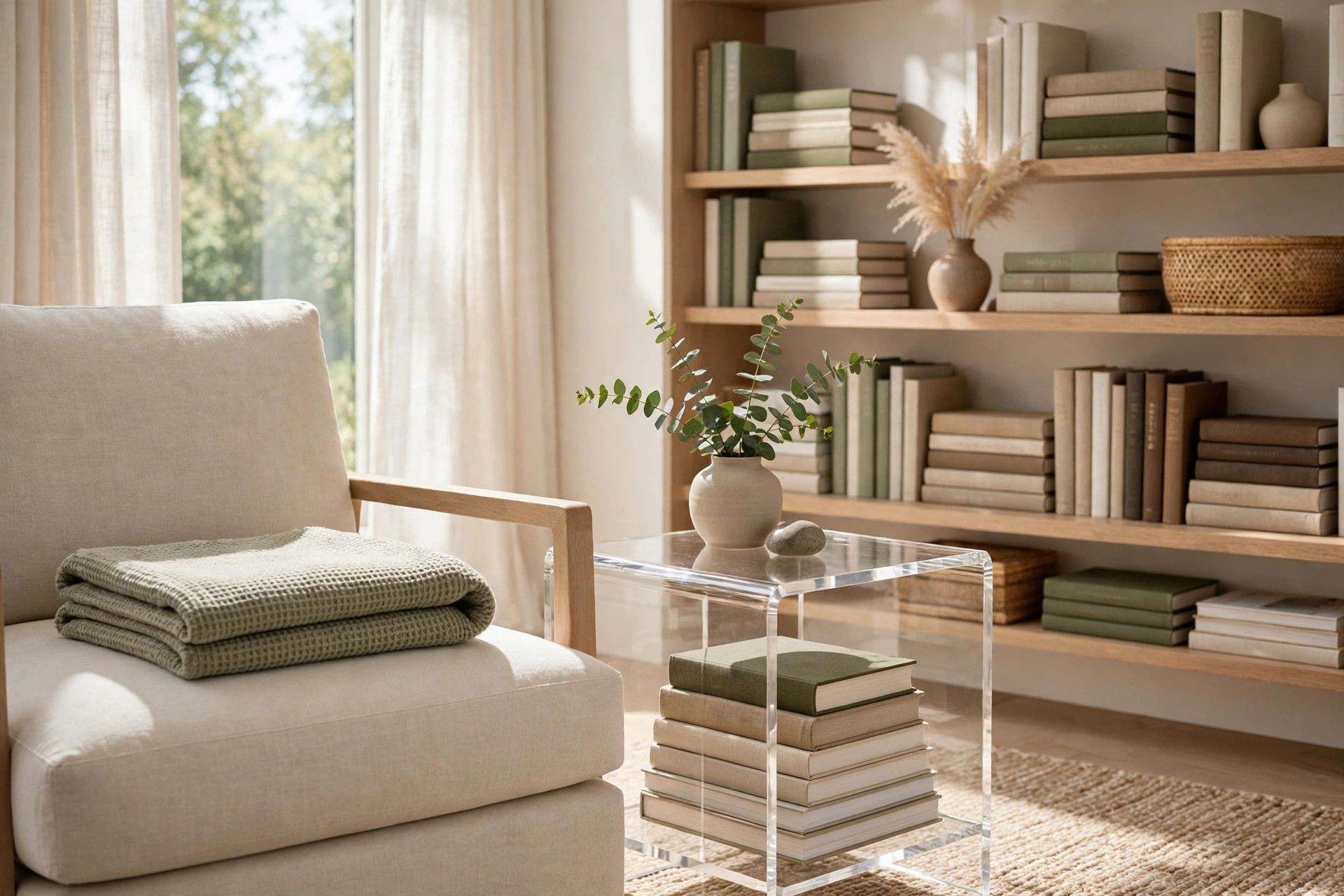
Texture is what makes a reading nook feel cozy rather than just furnished. A soft throw over the arm of the chair, a cushion behind your back, and a rug under your feet all invite you to settle in. These layers also make the nook feel warm in winter and easy to refresh in summer by swapping a heavy blanket for a light cotton throw.
Choose fabrics you enjoy touching. Knitted throws, soft cotton, linen, and wool blends all work well. Washable fabrics are a smart choice, especially if the nook is used by kids or pets, or if you like to read with a cup of tea.

Start With Two Pillows, Not Ten
Two or three pillows are enough for comfort and support: one for your lower back and one or two to hug or lean on. Too many pillows can make a small chair feel crowded and mean extra tidying every time you sit down.
Keep a Throw Always in Reach
Drape a throw over the chair or fold it in a basket beside it. When a blanket is easy to grab, you are more likely to stay for one more chapter on a chilly evening.
Choose a Calm Color Palette That Helps You Relax
Color has a quiet effect on how a space feels. For a reading nook, soft, calm colors usually work best: warm whites, soft greens, gentle blues, warm beige, and light wood tones. These colors feel restful and let the books and textures stand out.
You do not need to repaint a whole room. Painting just the nook wall, adding a colored cushion, or choosing a rug in a calming shade can be enough. If you love bold color, use it in small touches, like a bright throw or a piece of art, so the nook still feels peaceful.

Let Natural Materials Lead
Wood, rattan, linen, and cotton bring warmth without effort. A wooden side table, a woven basket, or a linen cushion can make a modern corner feel softer and more natural, which suits long, slow reading time.
Add One Accent You Love
One favorite color or pattern can give the nook personality. It might be a patterned pillow, a colorful piece of art, or a vintage lamp. When everything else stays calm, that one accent feels special rather than busy.
Create a Reading Nook in the Bedroom
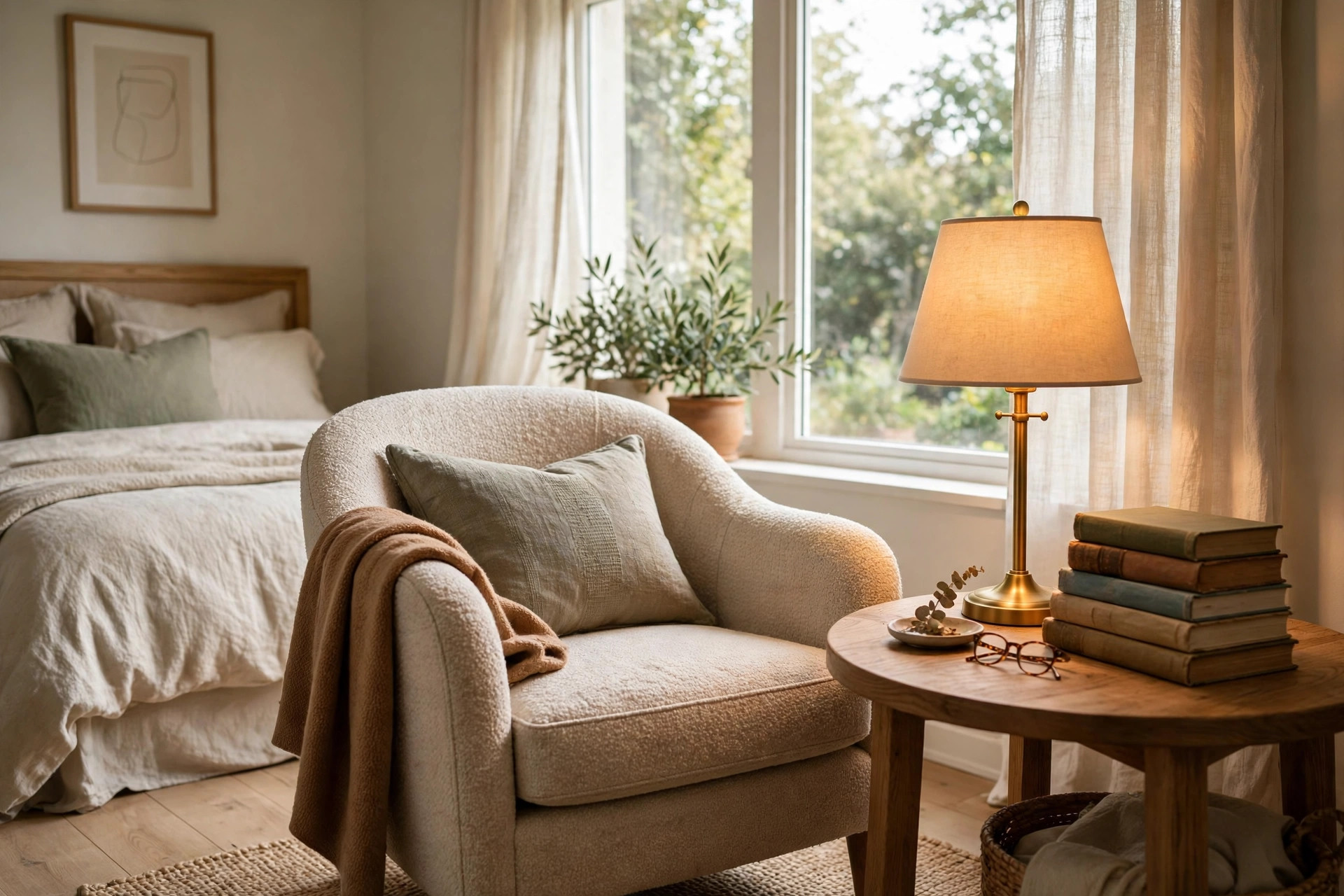
The bedroom is a natural home for a reading nook, especially if you like to read before sleep. A chair near the window, a chaise at the foot of the bed, or even a pile of large cushions in a corner can work. The key is to keep the nook separate enough from the bed that it feels like a place to sit up and read, not just another place to lie down.
A small side table for a lamp and a drink, plus a basket for books, completes the setup. If bedroom space is very tight, a comfortable chair with a wall-mounted light can create a nook without adding much furniture at all.
For more ideas on making a bedroom feel calm and comfortable, you may enjoy our guide to small sofa ideas for the bedroom, which shares seating options that work well in smaller rooms.
Keep Bedtime Reading Screen-Free When You Can
Reading a paper book or using a device with a warm, low light setting can help you wind down. Keep chargers and bright screens out of the nook if you want it to feel like a calm, pre-sleep retreat.
A Nook for Two Readers
If you and a partner both love to read, a loveseat or two chairs facing each other with a shared table can turn a bedroom corner into a quiet shared ritual. Even a few minutes of side-by-side reading can become a favorite part of the day.
Make a Family-Friendly Nook Everyone Can Enjoy
A reading nook does not have to belong to one person. A family nook with a wide seat, floor cushions, and low shelves can invite kids to read beside adults, or give everyone a shared quiet spot. Floor cushions are especially good for children, because they can move them, build a small fort, and make the space their own.
Choose durable, washable fabrics and sturdy, low furniture. Keep children’s books on low shelves they can reach, and keep adult books higher up. A nook that works for the whole family is more likely to be used every day, not just on weekends.

Let Kids Personalize Their Corner
Let children choose a cushion, a blanket, or a piece of art for the nook. When kids feel ownership of a reading spot, they are more excited to use it, and reading starts to feel like a treat rather than a task.
Keep It Safe and Sturdy
Anchor tall shelves to the wall, choose stable furniture that will not tip, and keep cords from lamps tucked away. A safe nook is a nook everyone can relax in.
Build a Beautiful Nook on a Small Budget
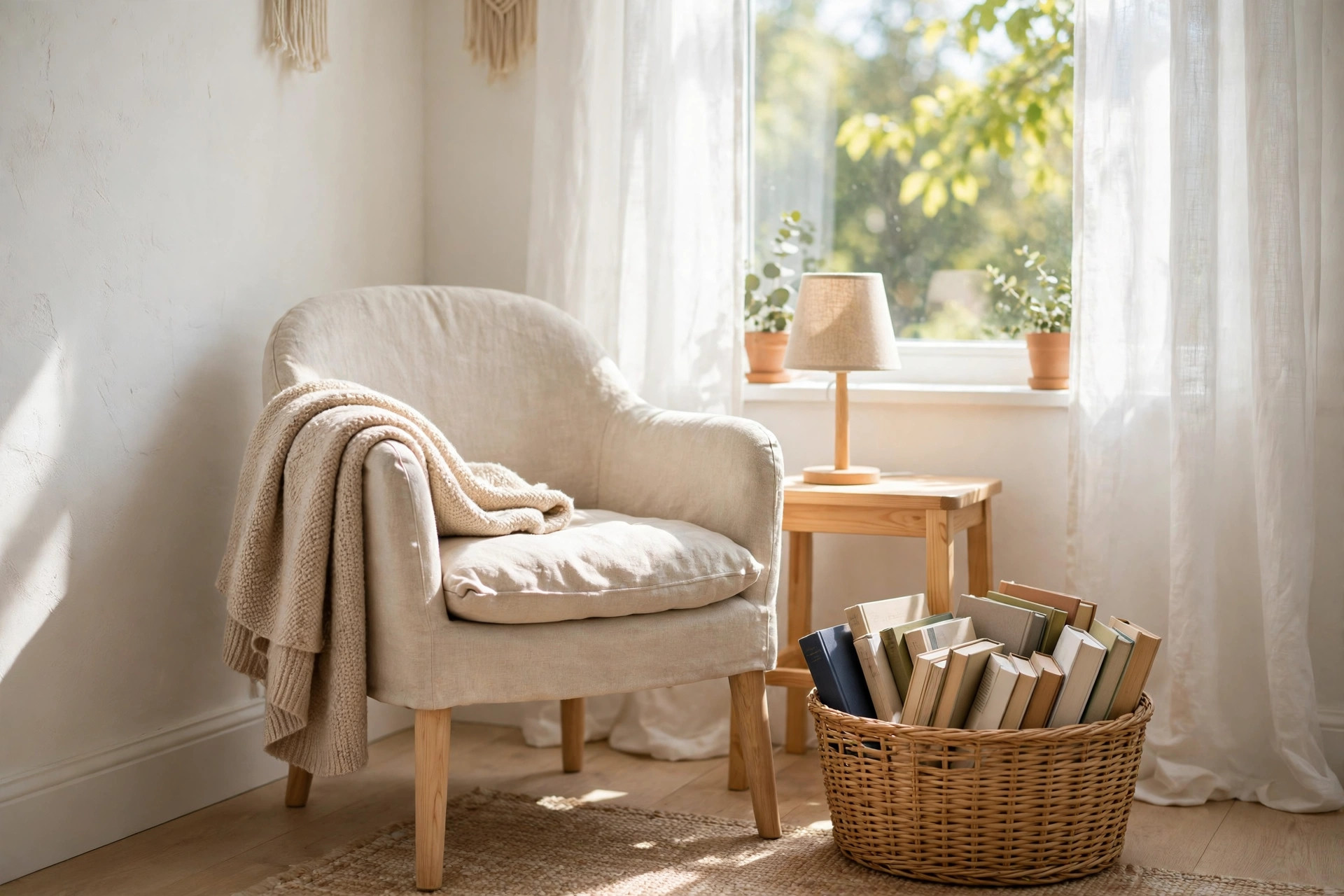
You do not need to buy everything new to create a cozy reading nook. Many of the best nooks come together slowly, with pieces found over time. Start with what you already have: a chair you like, a lamp from another room, a blanket from the closet, and a stack of books you already own.
Thrifted chairs can be refreshed with a washable cover or a new cushion. A simple wooden crate can become a side table. A basket from another room can hold books and throws. Small changes, made one at a time, often feel more personal than a room bought all at once.
Spend First on Comfort
If you have a small budget, spend it on the chair cushion and the light first. Those two things affect comfort the most. Decorative items can wait, and you can add them slowly as you find pieces you truly love.
Shop Your Own Home First
Walk through your home with fresh eyes. A plant from the living room, a rug from a spare room, or a lamp from a desk might be perfect for the nook. Moving pieces around costs nothing and often reveals combinations you had not noticed before.
Keep Your Nook Tidy Without Losing Its Coziness
A cozy nook can easily turn into a cluttered corner if books, mugs, and blankets pile up. The trick is to build tidiness into the design, so keeping it neat takes only a minute. A basket for throws, a tray for a mug, and a rule of one book pile at a time can make a big difference.
Take a minute at the end of each reading session to fold the throw, return the book, and clear the table. That small habit keeps the nook ready for next time, so you never have to tidy before you can relax.
If you are refreshing a wider living space around your nook, our living room interior design guide offers simple ideas for layout, color, and furniture that pair well with a quiet reading corner.
The One-Minute Reset
Fold the blanket, stack the books, and put the mug in the kitchen. One minute is enough, and it means the next time you walk past the nook, it will invite you in instead of reminding you of a chore.
Limit What Lives in the Nook
Decide what truly belongs there: a chair, a light, a few books, a throw, and a drink. Everything else can live elsewhere. A clear boundary keeps the nook calm and makes it easier to keep that way.
Frequently Asked Questions About Reading Nooks
What is the best place for a reading nook in a small home?
The best place is any quiet corner with good light that you pass often. A window corner, a bedroom corner, or the end of a living room often works well, because you will see it daily and be reminded to use it.
Do I need a special chair for a reading nook?
No, you just need a chair that is comfortable for long sitting. An armchair, a lounge chair, or even a well-cushioned dining chair with a footstool can work. Comfort matters more than style.
How much light does a reading nook need?
Enough to read without straining your eyes, but soft enough to feel relaxing. A floor or table lamp beside your shoulder, plus natural daylight when possible, is usually ideal.
Can I create a reading nook without spending much money?
Yes. Start with a chair and lamp you already own, add a blanket and a few books, and build the nook slowly. Comfort and light matter most, and both can come from pieces already in your home.
How do I keep a reading nook from becoming cluttered?
Give everything a home, like a basket for throws and a shelf for books, and do a one-minute reset after each reading session. Limiting the nook to reading essentials also helps it stay calm.
What makes a window seat a good reading nook?
Natural light, a view to rest your eyes on, and a sense of privacy make window seats special. A thick cushion, pillows, and a nearby light for evenings complete the setup.
Conclusion: Build a Corner You Will Actually Use
A cozy reading nook is not about perfection. It is about creating a small, welcoming space where reading feels easy and enjoyable. Start with a comfortable chair, add good light, keep books close, and layer in soft textures that make you want to stay. Let the nook grow slowly, and choose pieces that feel personal to you.
You do not need a big room, a big budget, or a complete redesign. You just need one corner and a little intention. This week, pick a spot in your home, place a chair and a lamp there, and put your current book on the table beside it. Then sit down, open the first page, and enjoy your new retreat.
We would love to hear about your nook. Share your favorite reading corner idea in the comments, or tell us which of these reading nook ideas you plan to try first. Happy reading!




2 thoughts on “Cozy Reading Nook Ideas: Small Corners That Feel Like a Retreat”