
Acoustic Wall Panels: Stylish Ideas for a Quieter Home
Have you ever noticed how a bare room sounds hollow? Every footstep echoes, voices bounce off the walls, and the TV seems louder than it should be. I noticed this in my own home the first time I walked into an empty living room with hard floors and bare walls. It looked pretty, but it sounded cold and noisy. That is when I discovered acoustic wall panels, and they changed the way my home feels.
Acoustic wall panels are decorative panels made from wood, felt, foam, or fabric. They soften sound by absorbing the noise that bounces around a room. The result is a calmer, quieter space that still looks beautiful. They are not just for music studios anymore. Today, acoustic wall panels come in warm wood slats, soft fabric squares, and pretty geometric shapes that work in any home.
In this guide, I will share eleven acoustic wall panel ideas for a quieter home. We will look at the best styles, the rooms where panels work hardest, and simple tips to help you choose and hang them. By the end, you will know exactly how to make your home sound as good as it looks. Let us get started.
1. Warm Wood Slat Acoustic Panels in the Living Room
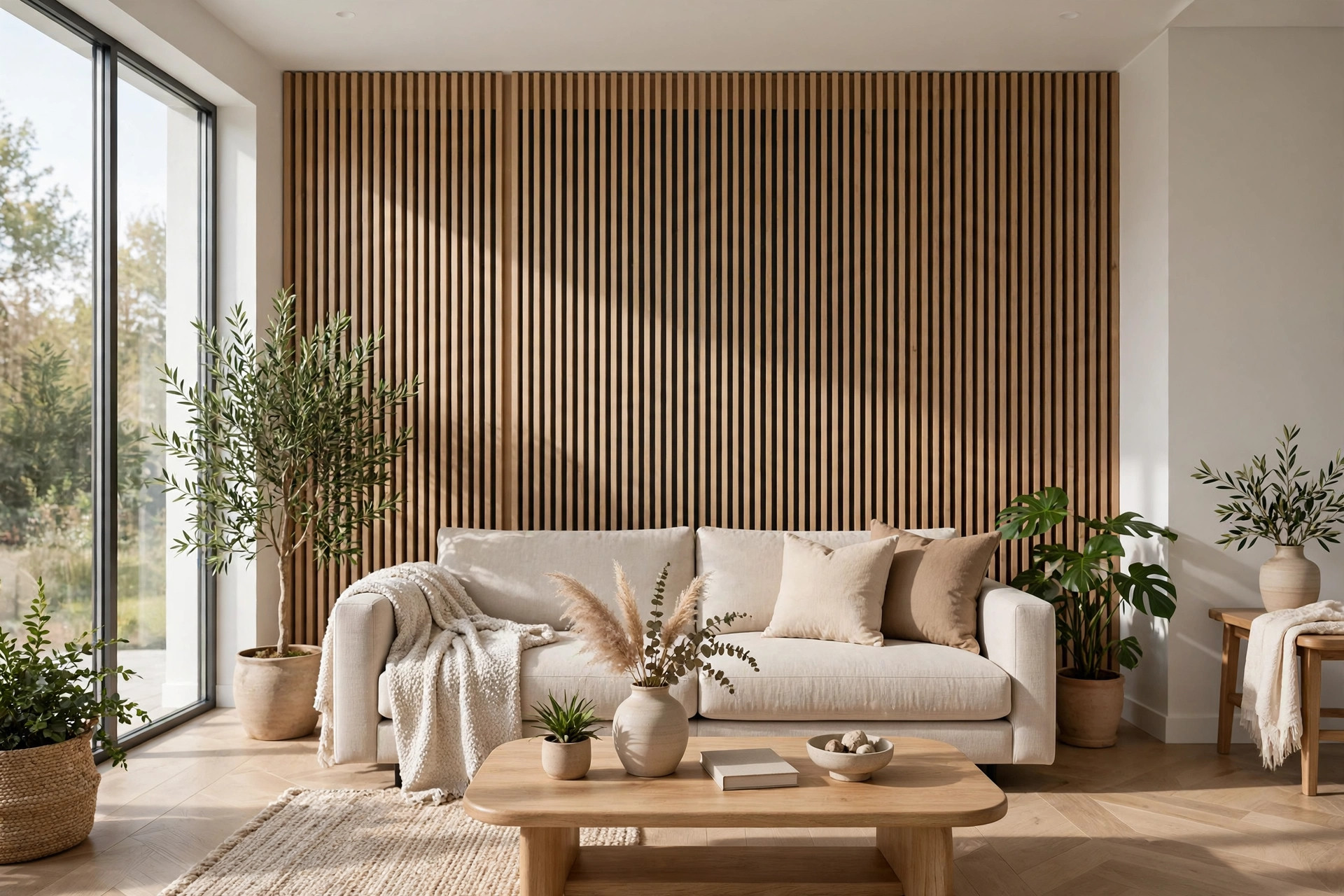
Wood slat acoustic panels are the most popular style right now, and for good reason. Thin wooden slats sit on a soft felt backing, which absorbs sound while the wood brings warmth and texture to the wall. The look is modern, clean, and inviting all at once.
Your living room is the perfect place to start. A wood slat panel wall behind the sofa creates a beautiful focal point and takes the echo out of the room at the same time. Conversations feel softer, music sounds richer, and the whole room feels more relaxed. Light oak slats suit bright, airy rooms, while walnut tones add depth to a cozy space.
Try running the panels across one full wall, floor to ceiling, for the biggest effect. If you prefer a softer touch, panel just the wall behind your TV or sofa. Keep the rest of the room simple with plain cushions and a light rug so the wood stays the star of the show.
2. Soft Fabric Acoustic Panels for a Quiet Bedroom
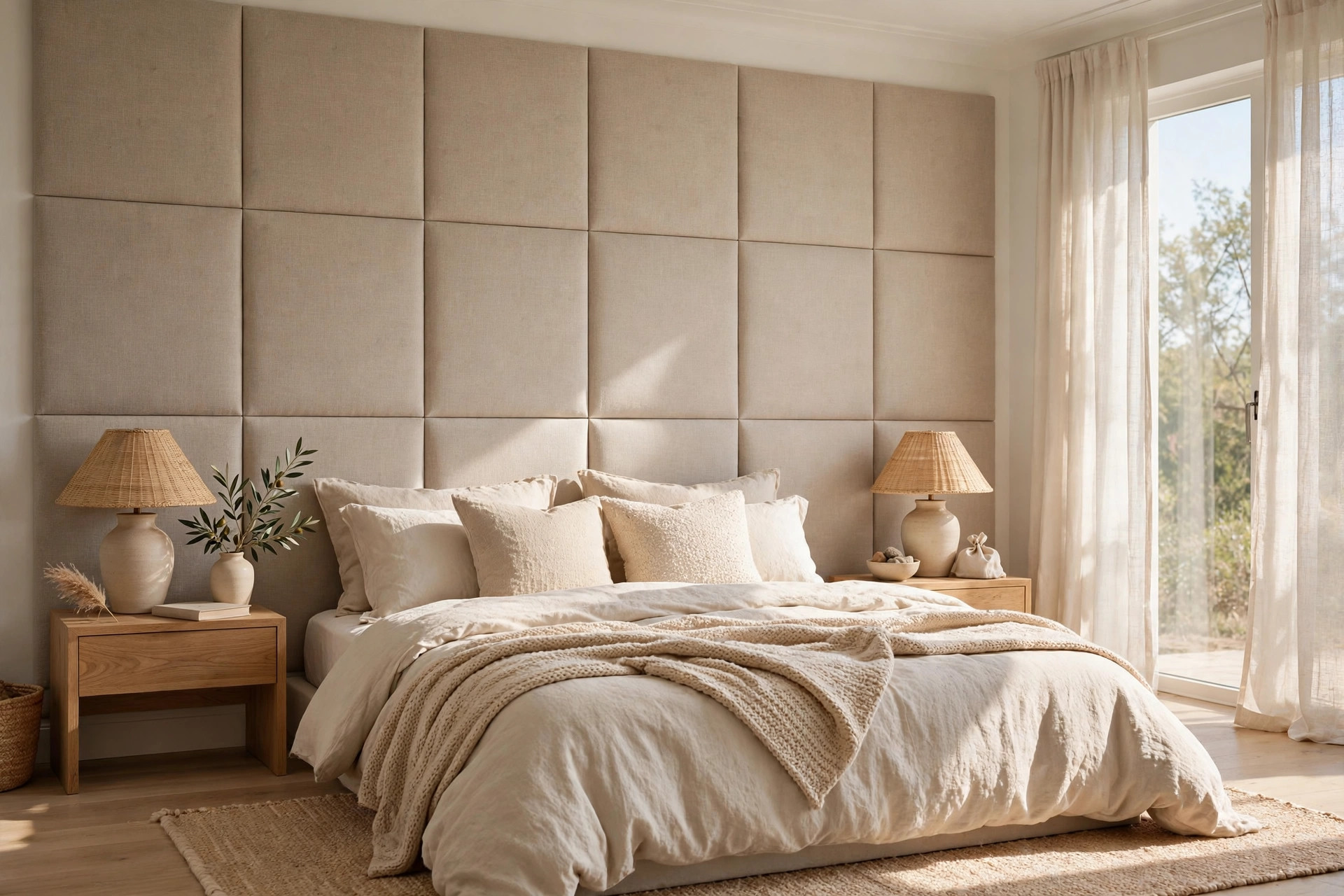
A bedroom should feel like a quiet retreat, but hard walls and bare floors can make it feel noisy and restless. Soft fabric acoustic panels are the answer. They are covered in gentle fabric in calm colors, and they soak up sound beautifully. The fabric surface also adds a soft, padded look that feels cozy and calm.
Place fabric panels behind the headboard for a look that is both pretty and practical. Choose a color that matches your bedding, like soft gray, warm beige, or dusty blue. The panels work a bit like an extra thick headboard, and they make the whole bed area feel snug and peaceful.
If you love the idea of a cozy bedroom that feels warm and welcoming, fabric acoustic panels are a lovely way to build that feeling. Pair them with soft curtains and a thick rug, and your bedroom will become the quietest room in the house.
3. Felt Acoustic Panels in a Home Office
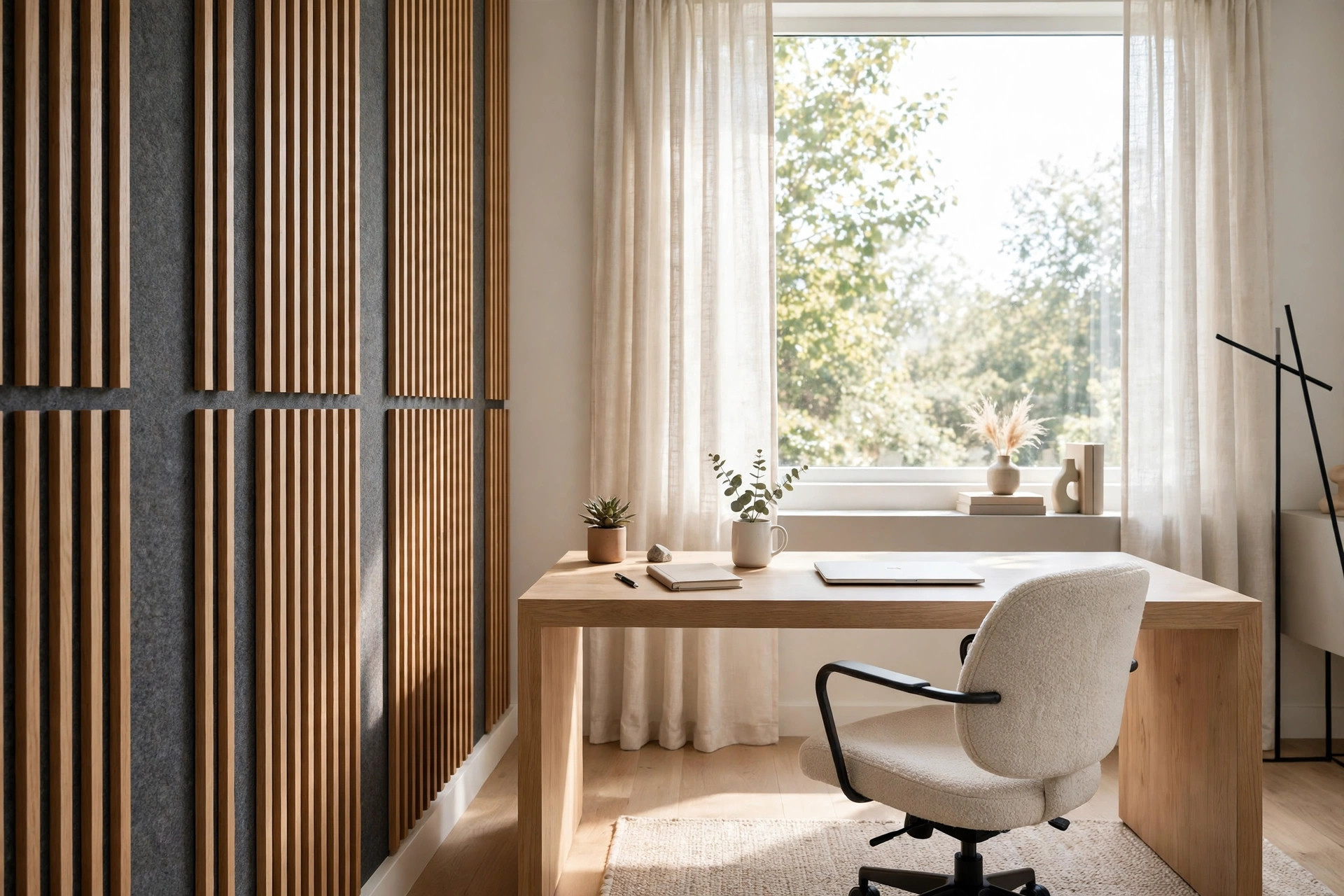
Working from home is hard when every sound echoes around the room. Video calls sound hollow, and even typing feels loud. Felt acoustic panels are a simple fix for a home office. They are light, easy to hang, and they come in lots of colors and shapes.
Hang a few felt panels on the wall behind your desk, or on the wall facing your video call camera. They will clean up the sound on your calls and make the room feel calm and focused. Dark gray or navy panels look smart and professional, while soft green or warm beige feels friendly and relaxed.
One of the best things about felt panels is that you can move them. If you change your desk layout, just take the panels down and hang them somewhere new. Start with four or six panels and add more if the room still feels echoey. Small rooms often need only a few panels to make a real difference.
4. Acoustic Panels Behind the Dining Table
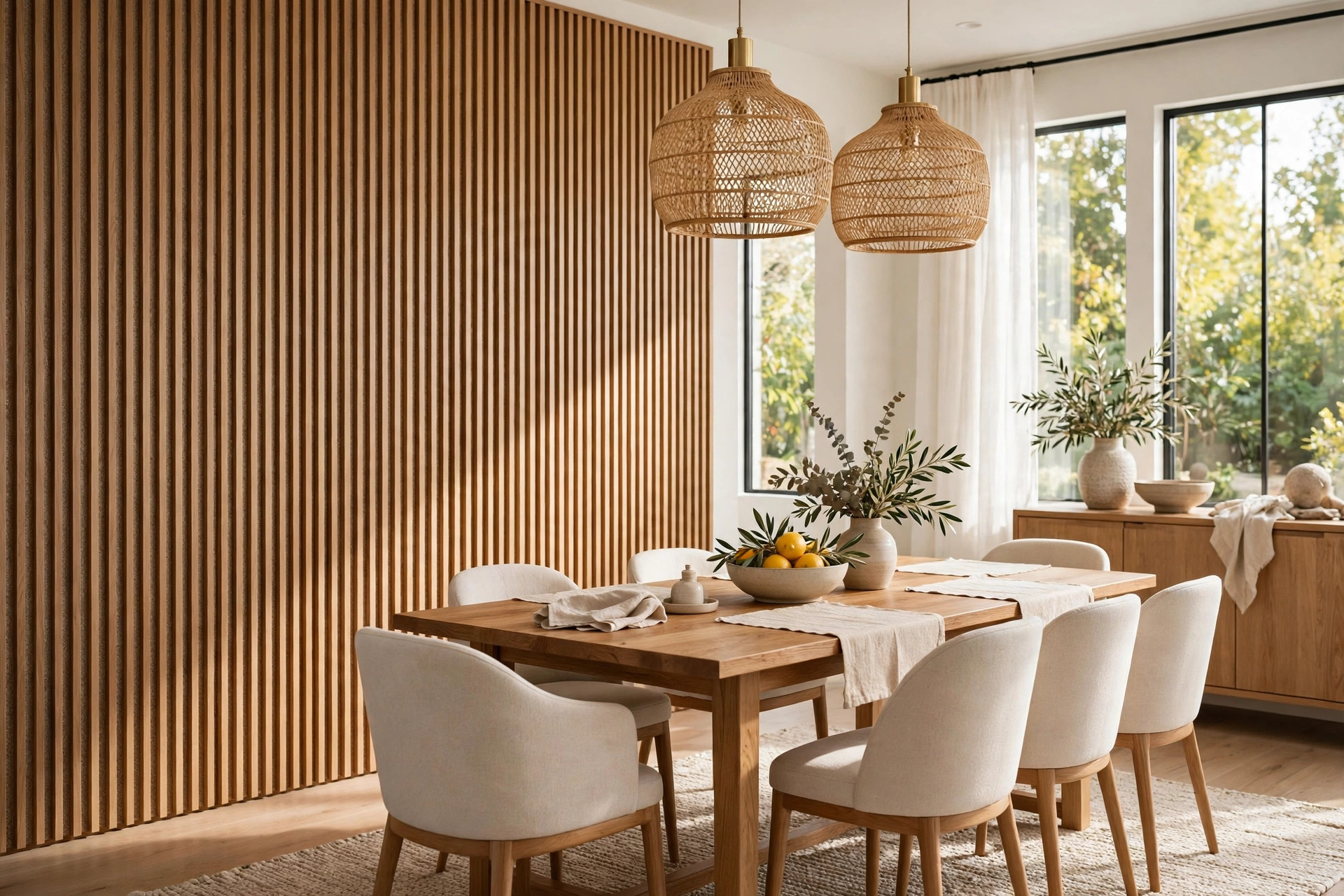
Dinner conversations should be easy and relaxed, but in a room with hard floors and bare walls, voices bounce and everyone ends up talking louder. Acoustic panels behind the dining table fix this nicely. They soften the noise so you can actually hear each other across the table.
Wood slat panels work wonderfully in a dining room. They bring the same warm, natural feel as a wooden table, and the whole room feels pulled together. If your dining room is part of an open plan space, panels also help separate the dining area from the kitchen or living room without building a wall.
Keep the panels on one wall only, and let the rest of the room breathe. A simple pendant light above the table and a few candles will complete the look. Your dinner guests will notice the calm feeling even if they never guess why the room sounds so good.
Best panel styles for dining rooms
Wood slats in a medium tone are the safest choice for a dining room, because they match most tables and chairs. If your style is more modern, try flat fabric panels in a warm neutral color. Avoid very dark panels in a small dining room, since they can make the space feel closed in.
5. Gentle Felt Panels in a Nursery or Kids Room
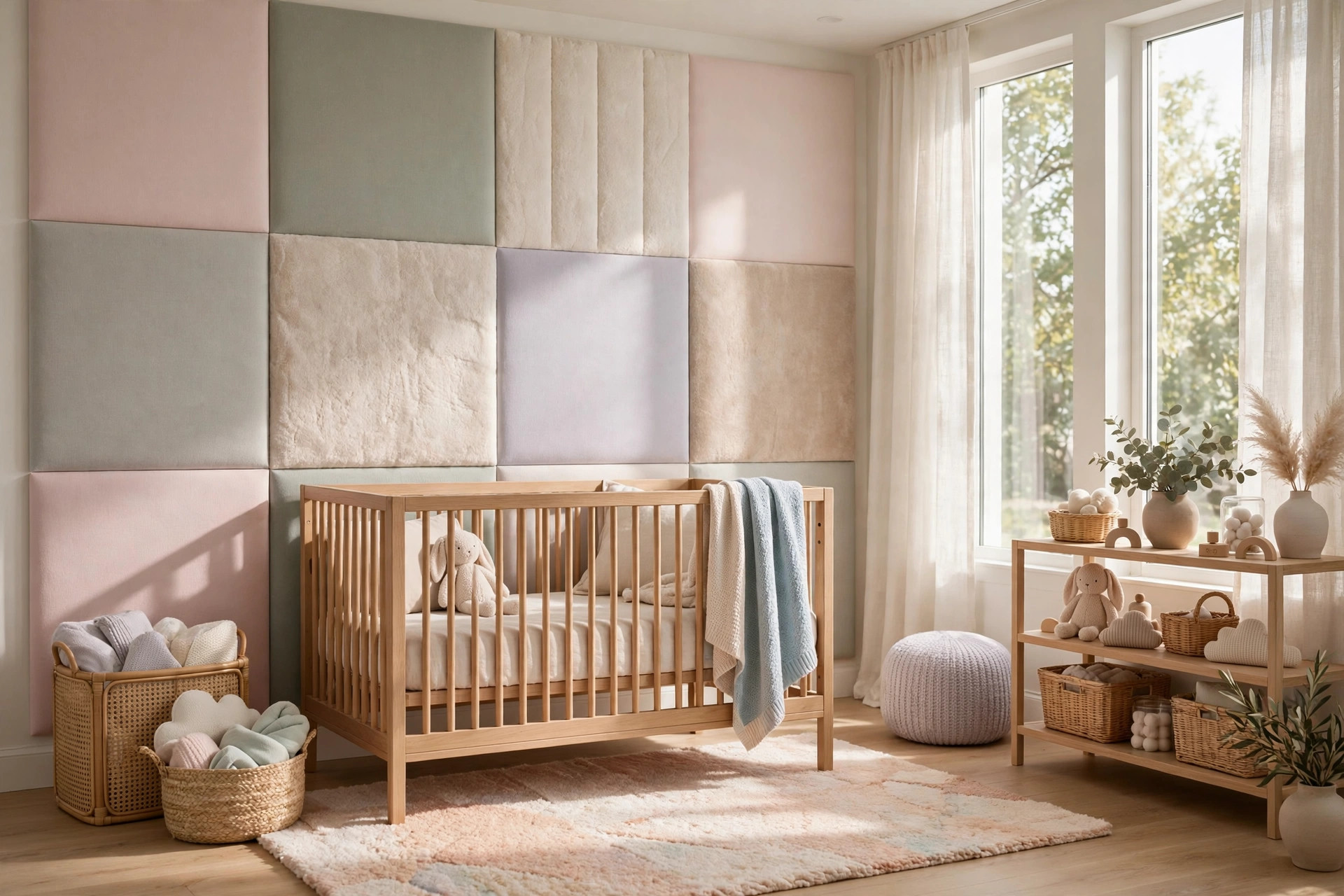
A nursery should be the calmest room in the house. Soft felt acoustic panels are perfect here because they are gentle to the touch, safe for little hands, and they quiet the room beautifully. Babies sleep better in a calm space, and parents will love the peaceful feeling too.
Choose panels in soft pastel colors like cream, blush, sage, or pale blue. You can arrange them in a simple grid, or play with shapes like arches, clouds, or circles for a fun, child friendly design. Place them on the wall near the crib or the reading corner.
Felt panels are also great in a kids playroom. They soften the noise of playtime, and they double as a soft surface if a ball bounces off the wall. Stick with light colors and keep the panels at a height that is easy to reach and clean.
6. Acoustic Panels in a Hallway or Entryway
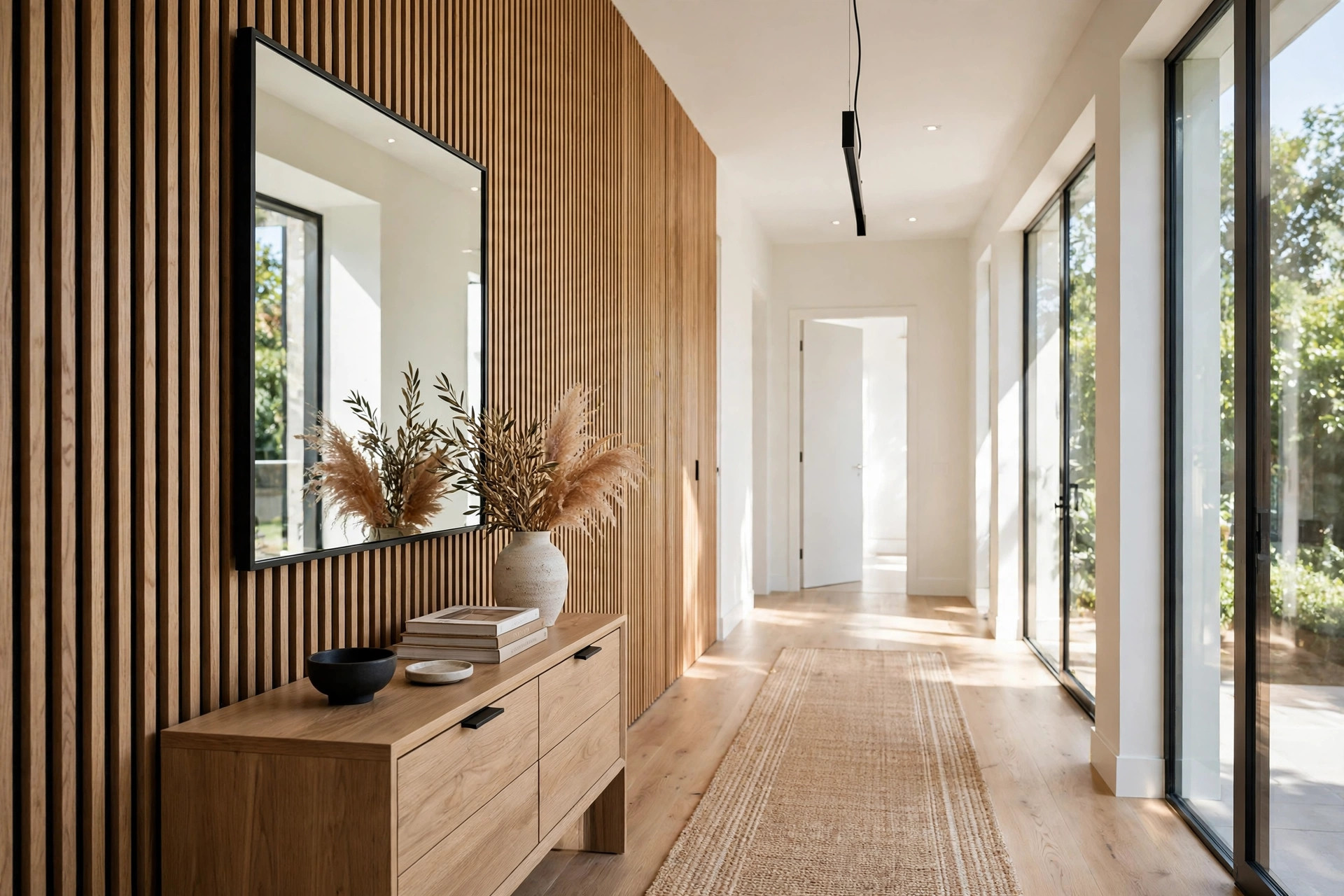
Hallways are some of the noisiest spots in a home. Hard floors, high ceilings, and bare walls turn every footstep into an echo. A few acoustic panels in a hallway can make the whole home feel quieter, because the hallway connects every room.
Run wood slat panels along one hallway wall from floor to ceiling. The vertical lines draw the eye forward and make a narrow hallway feel taller and more elegant. The panels also protect the wall from scuffs and marks, which is a bonus in a busy pass through space.
In a small entryway, even two or three panels make a difference. Hang them near the front door with a slim bench and a mirror below, and the whole entry feels planned and welcoming. Choose light wood tones so the space stays bright.
7. A Quieter TV Wall with Acoustic Panels
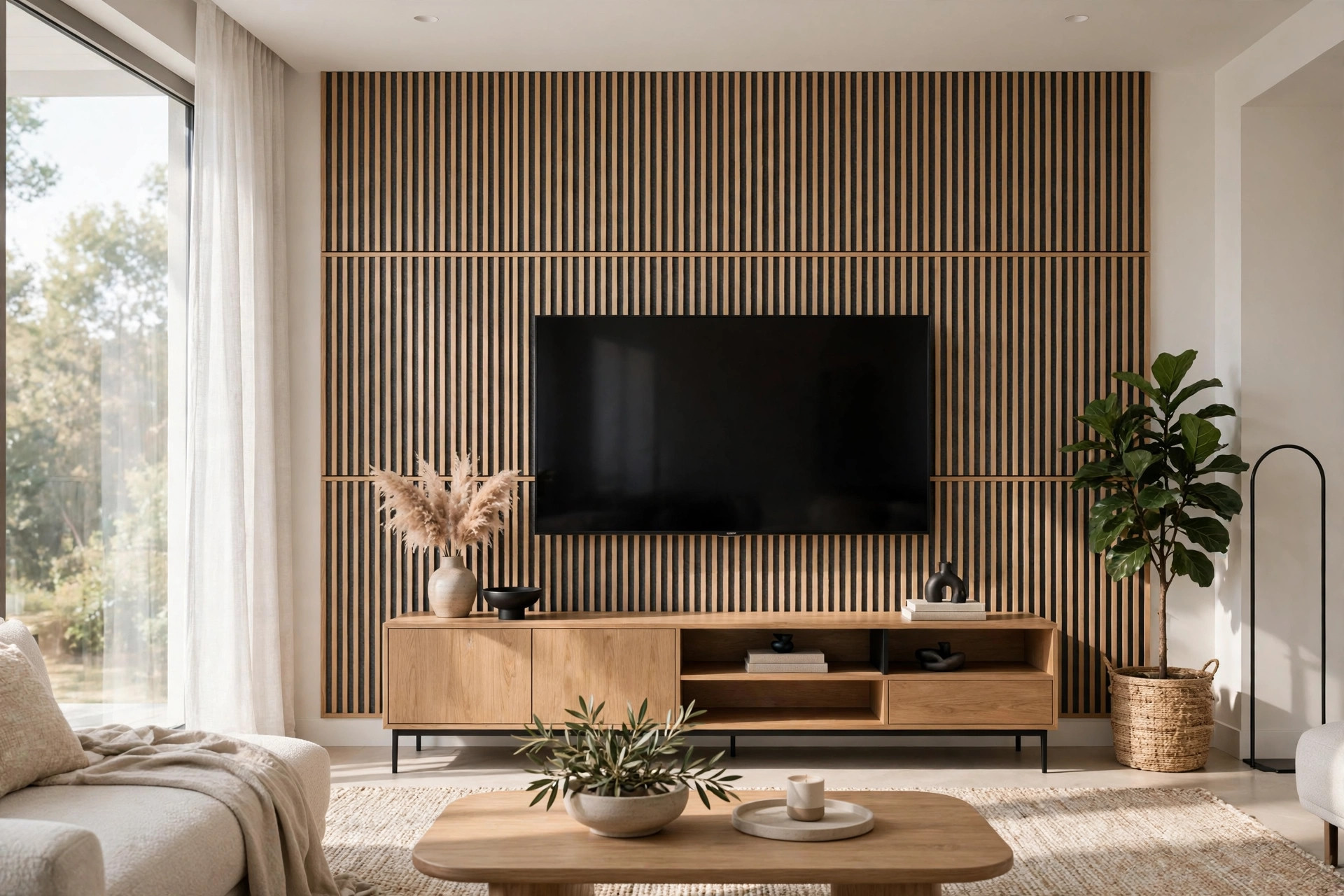
The wall behind your TV takes a lot of abuse. Sound from the speakers bounces straight off it and back into the room, which can make movies sound harsh and echoey. Acoustic panels on the TV wall absorb that extra sound, so dialogue sounds clearer and music feels richer.
Wood slat panels are the classic choice for a TV wall. They frame the screen nicely and turn a plain black rectangle into part of the design. If you want a softer look, try fabric panels in a warm neutral tone. Either way, run the panels across the full width of the wall so the room feels balanced, even if the TV itself is small.
This is one of the easiest acoustic wall panel ideas to try, because you only need one wall. If you enjoy wall features like this, you might also like exploring wall panelling ideas for modern homes, where you will find more ways to turn a plain wall into a feature. Add a low media unit and a soft floor lamp, and your TV wall will look good even when the screen is off.
8. Acoustic Panels Along a Staircase Wall
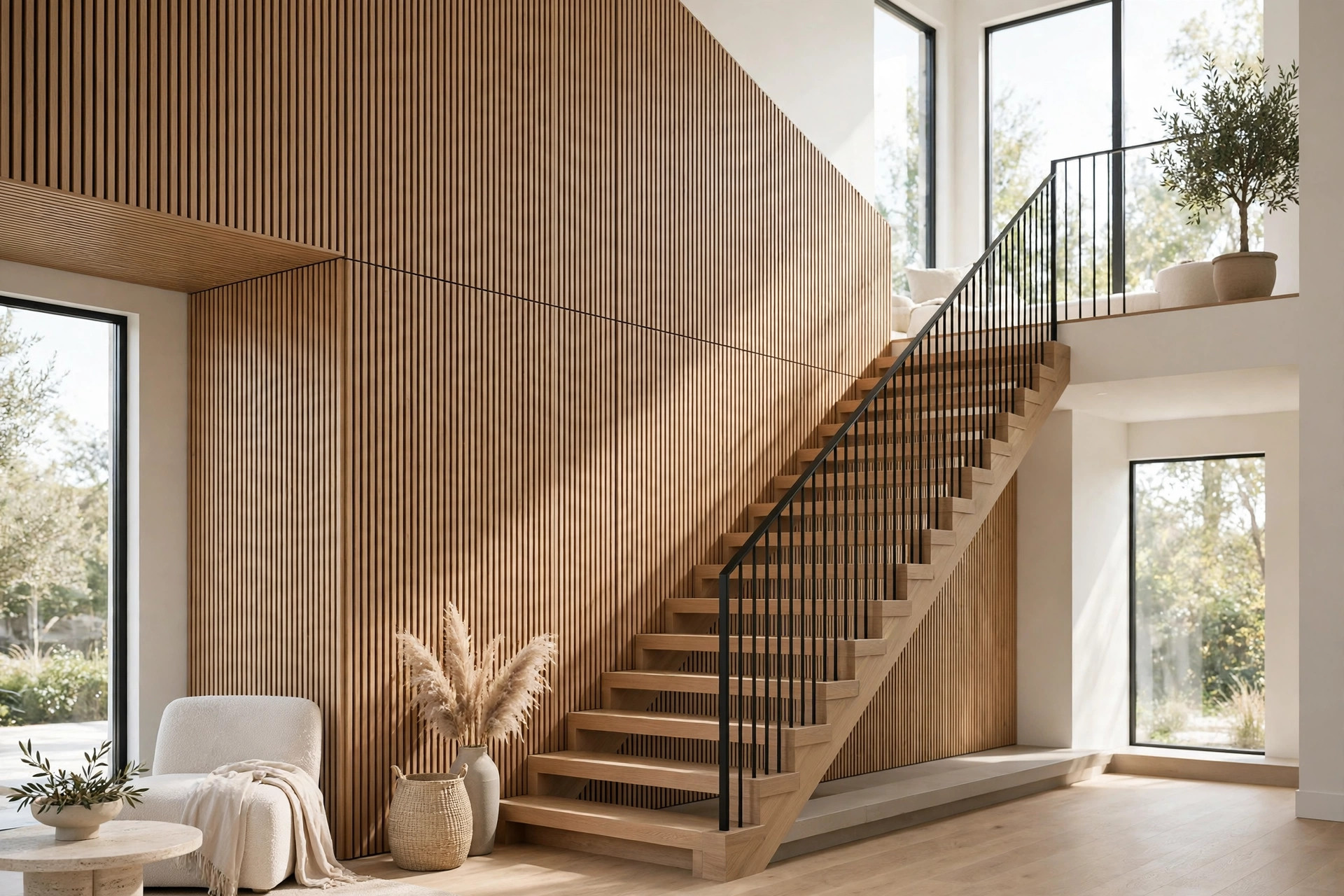
Staircases are echo chambers. Tall walls, hard steps, and open space send every sound bouncing up and down. Acoustic panels along a staircase wall are a smart and stylish fix. They calm the noise and give the staircase a finished, designed look.
Vertical wood slat panels follow the line of the stairs beautifully. You can run them straight up the wall, or step them to follow the slope of the staircase. The tall vertical lines make the space feel grand, almost like a boutique hotel stairwell.
Good lighting matters here. A simple wall light or a pendant hanging over the stairs will catch the wood texture and make the panels glow in the evening. Keep the steps clear and the handrail simple so the panels stay the main feature.
9. Acoustic Panels in an Open Plan Kitchen
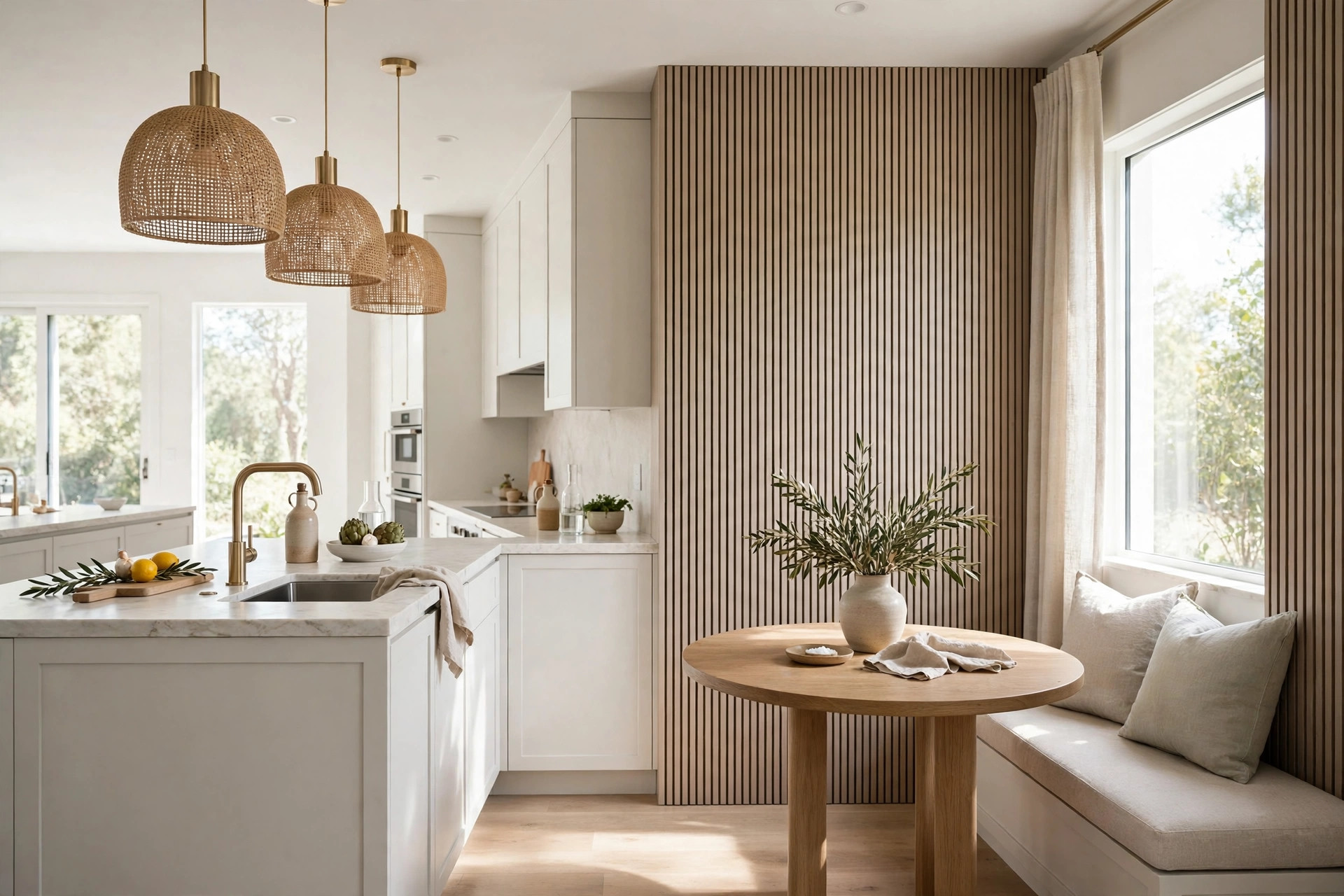
Open plan kitchens are lovely, but they are also noisy. Hard counters, tile floors, and high ceilings bounce every clatter and conversation around the room. Acoustic panels on the kitchen side wall or near the dining area can soften the noise without changing how the kitchen works.
Choose panels that can handle a little steam and splashing. Sealed wood slats or wipeable fabric panels are good choices. Place them on a wall away from the stove and sink, for example on the wall behind a breakfast bar or near the dining table.
Keep the colors light and warm so the kitchen still feels fresh. White oak slats or soft beige panels pair beautifully with white cabinets and wooden counters. The result is a kitchen that sounds calm even when the whole family is cooking, chatting, and laughing at once.
Where to place kitchen acoustic panels
The wall facing the living room is usually the best spot, because it catches sound traveling between the two spaces. Avoid placing soft fabric panels right next to the stove, where heat and grease can damage them over time.
10. DIY Installation Tips for Acoustic Wall Panels
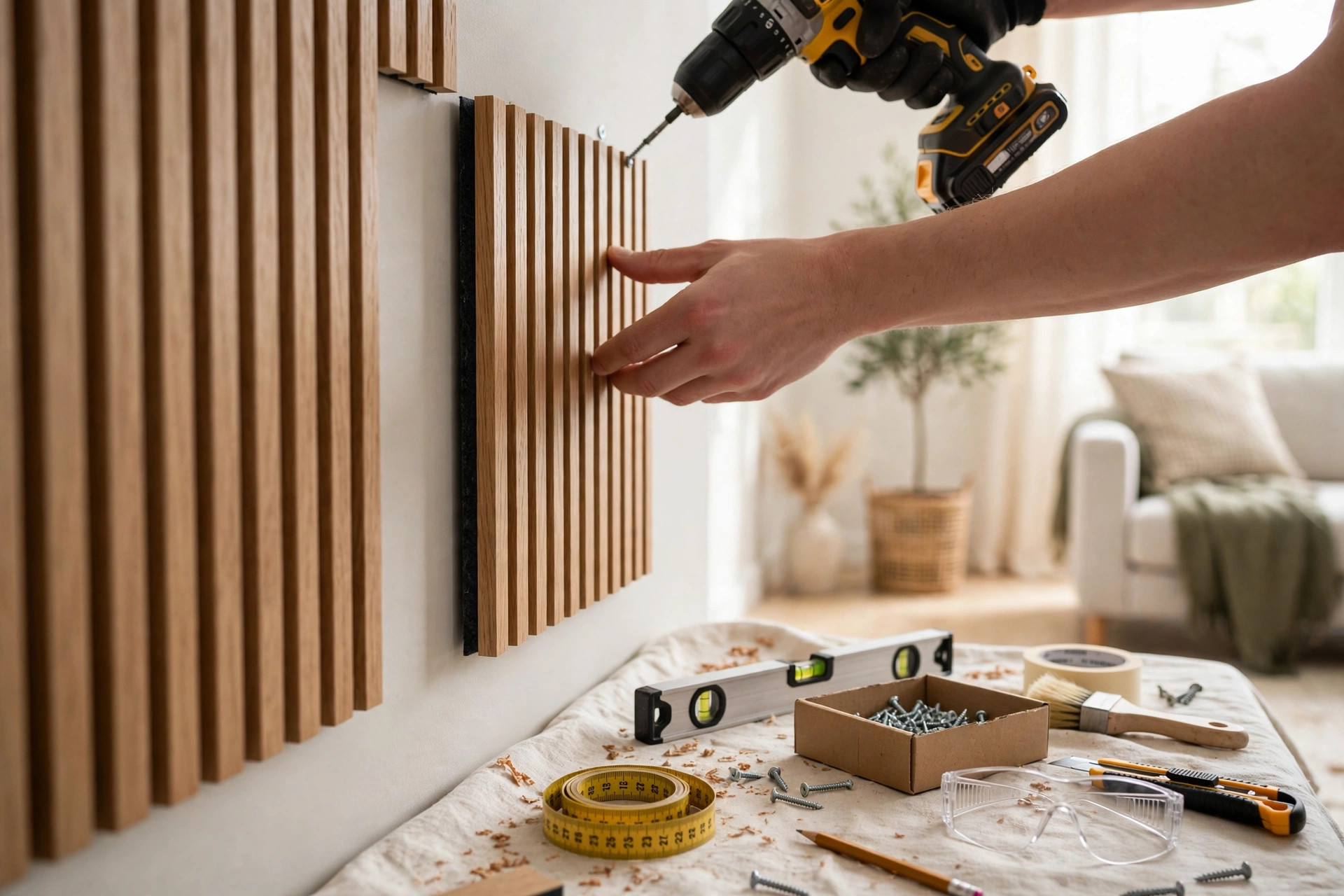
Most acoustic wall panels are easy to install yourself. You do not need to be a professional. With a few simple tools and an afternoon, you can transform a noisy wall into a quiet, beautiful feature. Here is a simple plan that works for most panel types.
First, measure your wall and plan the layout on paper. Mark the center of the wall and work outward so the panels sit evenly. Second, gather your tools. You will need a tape measure, a level, a pencil, a drill or screwdriver, wall anchors, and the mounting clips or adhesive that came with your panels. Many panels come with simple French cleats or sticky strips that make hanging easy.
Start by fixing the mounting hardware level on the wall, then hang each panel and check it with your level before moving to the next one. Leave a small, even gap between panels if your design calls for it. Step back often to check the whole wall from across the room. A crooked panel is the one mistake that will show, so take your time.
For heavier wood slat panels, always screw into wall studs or use strong wall anchors. Light felt panels can often be hung with strong adhesive strips, which is great for renters. If you are renting, check with your landlord first and choose a removable mounting option.
Safety and prep tips
Turn off power to any outlets on the wall before you start drilling. Move furniture away and lay a drop cloth to catch dust. Wear safety glasses when drilling, and work in a ventilated room if you are cutting wood. Ask a friend to help hold large panels while you fix them in place.
11. Mixing Acoustic Panels with Art, Wallpaper, and Color
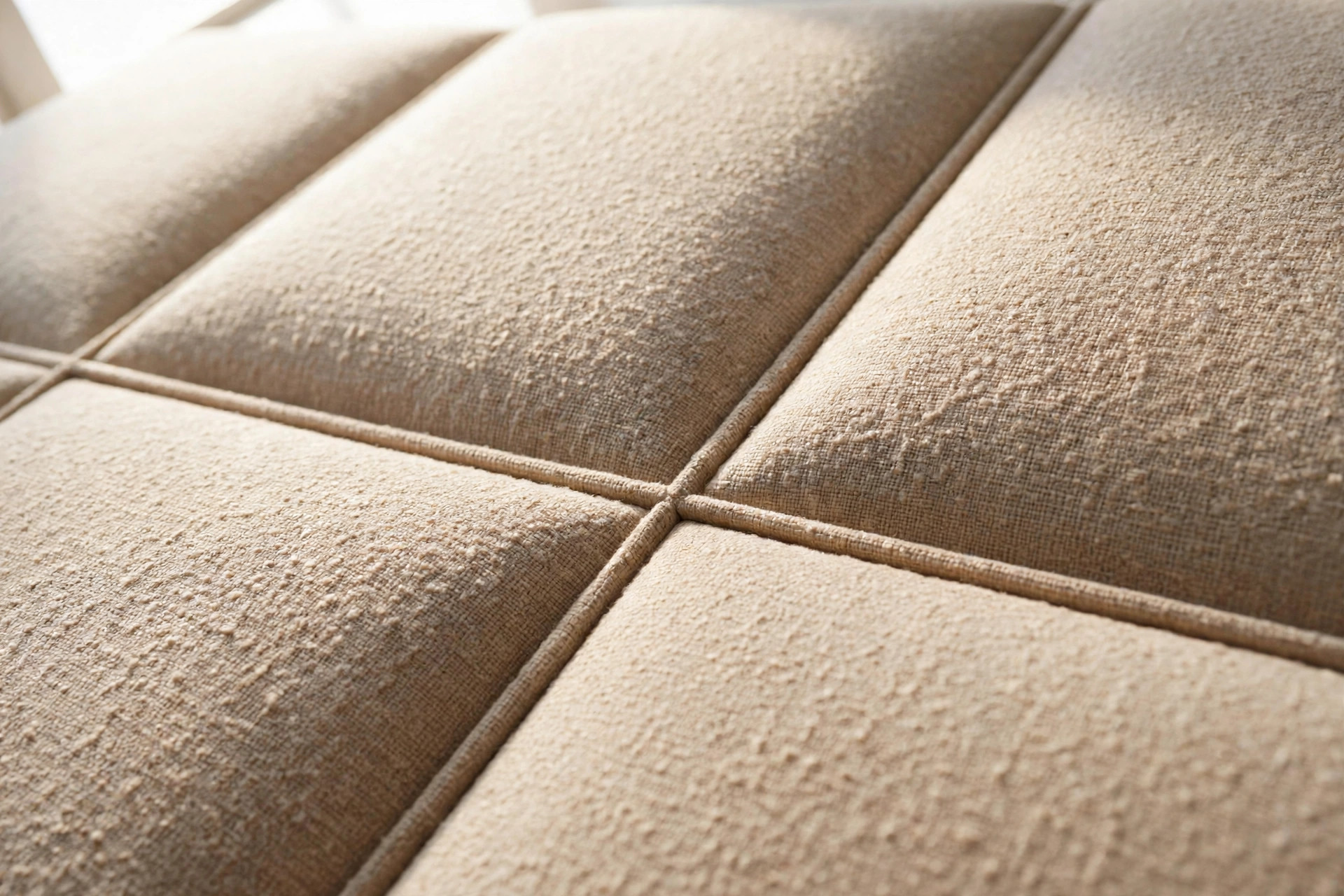
Acoustic panels do not have to stand alone. Some of the prettiest rooms mix them with other wall finishes. Try wood slat panels on one section of the wall and a large piece of art beside them. The contrast between natural wood and a bold print looks fresh and modern.
You can also pair panels with wallpaper. Place acoustic panels on the lower half of the wall and a soft patterned wallpaper above. The panels ground the room while the wallpaper adds pattern and fun. Just keep the colors in the same family so the two finishes feel like they belong together.
Color is your friend here. If your room feels plain, choose panels in a soft accent color like sage green, dusty blue, or warm terracotta. If your furniture is already colorful, stick to neutral panels and let the furniture shine. One bold choice is usually enough.
Do not forget the small details. A few framed prints, a plant, or a soft curtain near your panel wall will make the whole corner feel finished. The goal is a room that looks designed, not a wall that looks like a studio.
Frequently Asked Questions
Do acoustic wall panels really reduce noise?
Yes, they do. Acoustic panels absorb the sound waves that bounce off hard walls, which reduces echo and makes a room feel quieter and calmer. They will not block sound from coming through a wall, but they make a big difference to the sound inside a room.
Which rooms benefit most from acoustic wall panels?
Living rooms, bedrooms, home offices, and dining rooms benefit the most, because these are the rooms where you talk, relax, and work. Hallways and staircases are also good spots, since they carry sound through the whole house.
Are acoustic panels easy to install?
Most panels are very easy to install. Light felt panels can be hung with adhesive strips, while wood slat panels usually need screws or mounting clips. Many homeowners finish one wall in a single afternoon with basic tools.
Can I use acoustic wall panels in a rental home?
Yes, if you choose a removable option. Light felt panels hung with strong adhesive strips or command strips leave little or no damage. Always check with your landlord first and avoid drilling into the walls unless you have permission.
Do acoustic panels work in a bathroom or kitchen?
They can work in a kitchen if you place them away from the stove and sink and choose sealed wood or wipeable panels. Bathrooms are trickier because of steam and moisture, so it is better to use moisture resistant panels and keep them away from the shower area.
How do I clean acoustic wall panels?
Wood slat panels can be dusted with a dry cloth or a soft brush. Fabric and felt panels can be vacuumed gently with a brush attachment. For small marks on fabric, dab lightly with a damp cloth and mild soap, and let the panel air dry.
Final Thoughts
Acoustic wall panels prove that a quieter home does not have to look plain or boring. A few warm wood slats, some soft fabric panels, or a row of felt shapes can turn an echoey room into a calm, beautiful space you love spending time in.
Start with the room that bothers you most. Maybe it is the living room where voices echo, or the bedroom that never feels restful, or the home office where calls sound hollow. Choose one wall, pick a style you love, and give it a try. You will notice the difference the very first evening.
Now I would love to hear from you. Which of these acoustic wall panel ideas will you try first? Tell me in the comments, and share a photo if you take on the project. And if this guide helped you, pass it along to a friend whose home could use a little more peace and quiet.