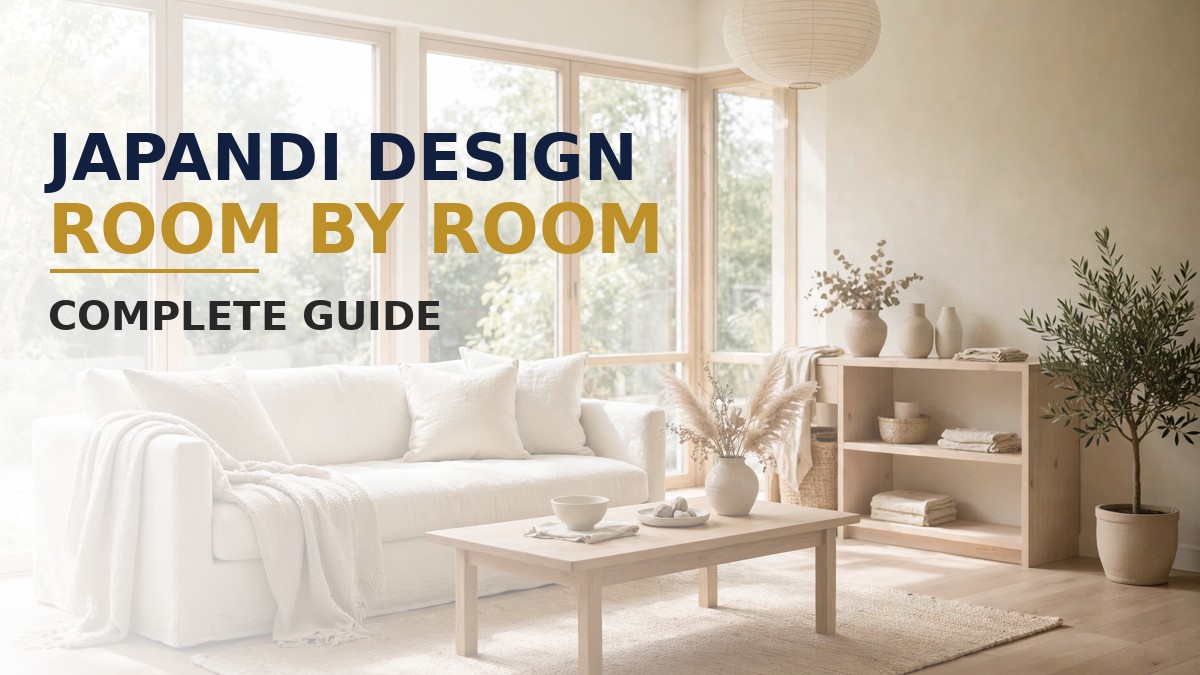
Japandi Interior Design: The Complete Room-by-Room Guide
Imagine walking into your home and feeling your shoulders drop. The room is calm. The light is soft. Everything you see has a place, and everything has a reason to be there. That feeling is the heart of japandi interior design — a style that mixes the quiet beauty of Japan with the cozy simplicity of Scandinavia.
Japandi is one of the most loved home styles right now, and for good reason. Life feels busy and loud, so our homes should feel like the opposite: peaceful, warm, and easy to live in. This guide will walk you through japandi interior design room by room, from the living room to the bathroom. You will learn the main ideas behind the style, the colors and materials that make it work, and simple steps you can start using today — even on a small budget.
What Is Japandi Design?
Japandi is a mix of two words: Japanese and Scandinavian. It takes the best parts of both styles and blends them into something new. From Japanese design, it takes quietness, respect for nature, and the idea of wabi-sabi — finding beauty in things that are simple and not perfect. From Scandinavian design, it takes warmth, comfort, and the idea that a home should be practical and full of light.
The result is a home that is clean and simple but never cold. Many minimal homes can feel empty or stiff. Japandi is different. It adds soft fabrics, warm wood, and handmade pieces so the room feels lived-in and welcoming. Think of a low wooden coffee table, a soft cream rug, a few handmade clay pots, and sunlight coming through plain linen curtains.
Japandi interior design also cares about how a room feels, not just how it looks. A japandi home should help you slow down. It should make mornings feel calm and evenings feel restful. That is why the style avoids clutter, loud colors, and busy patterns. Every item in the room earns its place.
The 5 Core Principles of Japandi
Before you move a single piece of furniture, it helps to know the ideas behind japandi interior design. These five principles guide every choice, from the color of your walls to the number of items on your shelf.
1. Simplicity First
Keep only what you need and love. A japandi room does not try to impress you with many objects. Instead, it shows you a few beautiful things and gives them space to breathe. If an item does not serve a purpose or bring you joy, it does not belong in the room.
2. Natural Materials
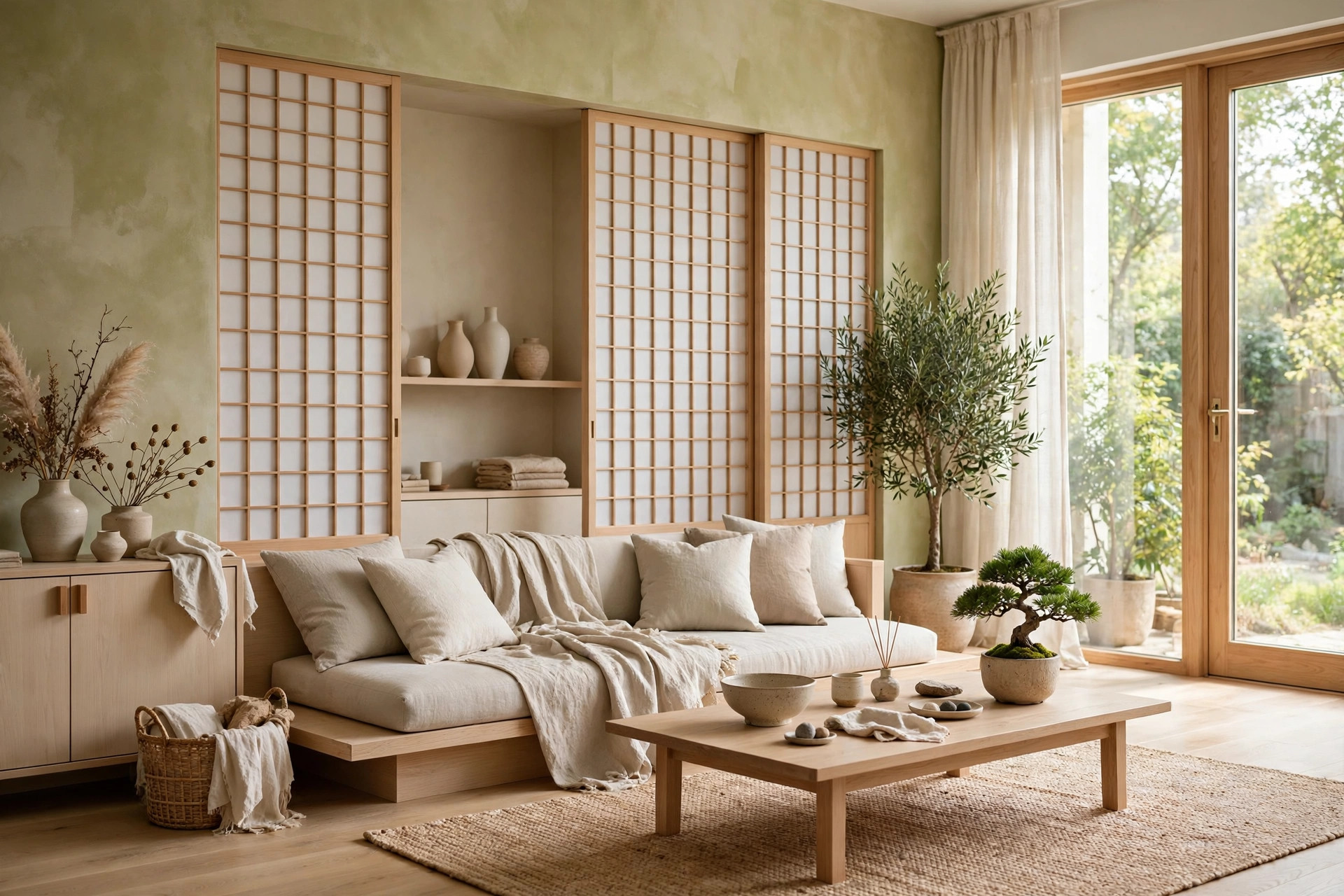
Japandi loves things from nature: wood, bamboo, linen, cotton, clay, and stone. These materials feel good to touch and look better as they age. A wooden table with visible grain feels warm and alive in a way that shiny plastic never will.
3. Warm Minimalism
Minimal does not mean cold. Japandi balances clean lines with softness — a low sofa with thick cushions, a wool throw over a wooden bench, a paper lamp that glows softly at night. The room stays simple, but it also feels cozy and human.
4. Calm Colors
Japandi uses quiet, natural colors. Think warm white, soft beige, light gray, and gentle touches of green, brown, or clay. Bright, loud colors are saved for tiny accents — or left out completely. The color palette should feel like a calm walk in the woods.
5. Handmade and Imperfect
Perfect, factory-made items are not the goal. Japandi celebrates handmade things: a slightly uneven clay bowl, a woven basket, a linen cushion with a natural texture. These small imperfections make a home feel personal and real.
Japandi Living Room
The living room is where japandi interior design shines brightest. This is the room where you relax, read, and spend time with family — so it should feel open, calm, and comfortable.
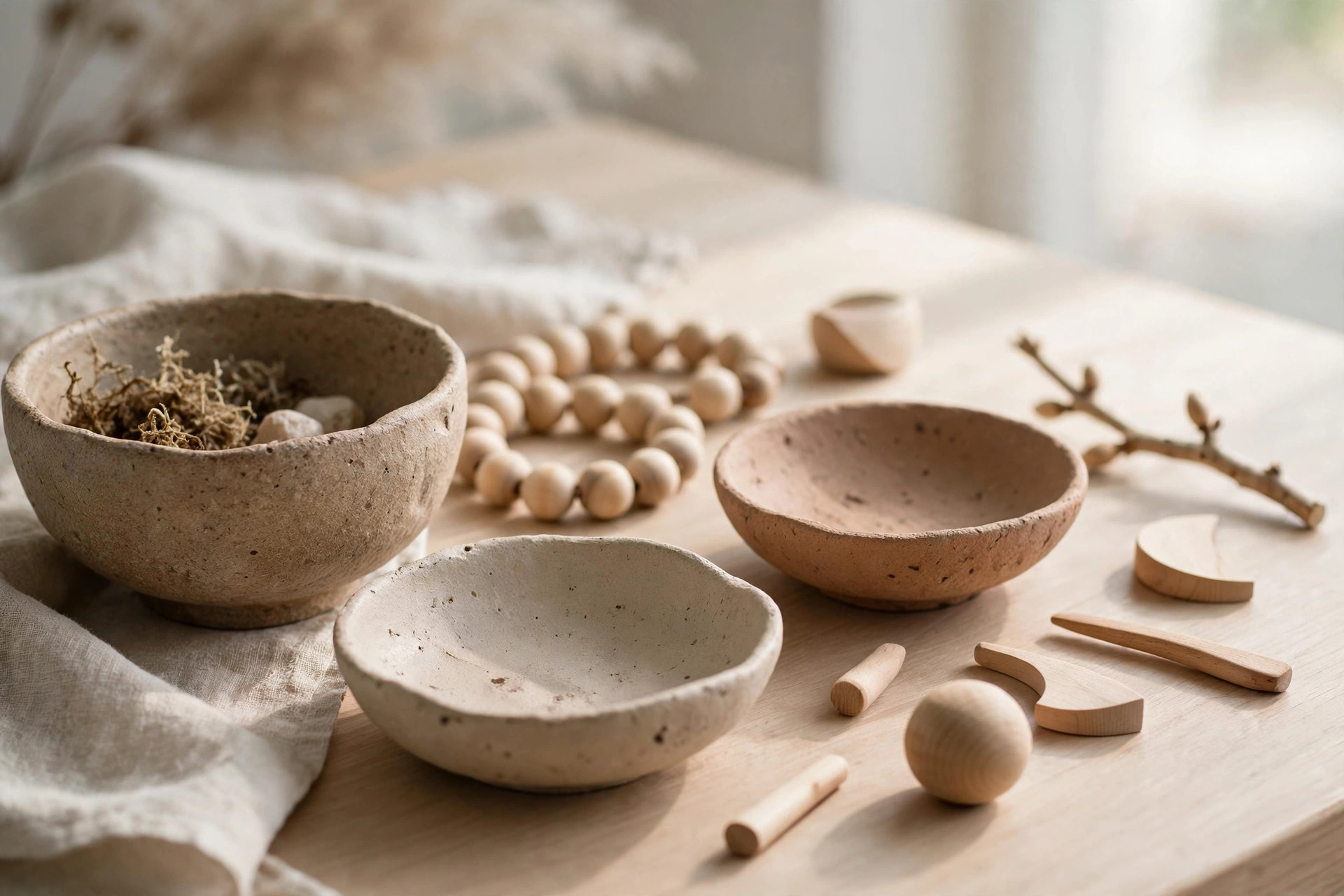
Start with low furniture. A low-profile sofa in a soft neutral fabric, a simple wooden coffee table, and maybe a low bench or floor cushions. Low furniture makes the room feel grounded and peaceful, like a traditional Japanese home. Keep the layout open with clear paths to walk through. Nothing should block the natural flow of the room.
Choose one or two standout pieces and let them shine. A large piece of wall art in soft, natural tones can anchor the whole room — if you want ideas, check out these large wall art ideas for calm, minimal spaces. Add a soft rug in cream or light gray to warm up a wood floor, and finish with a few plants. Greenery is very important in japandi design. A tall plant in a clay pot or a small bonsai on a shelf brings life into the room.
Lighting should be soft and warm. Use paper or fabric lamps that spread a gentle glow. Avoid harsh ceiling lights when you can. A floor lamp with a linen shade in the corner can make the whole room feel cozy in the evening.
Japandi Bedroom
Your bedroom should be the calmest room in the house, and japandi interior design is perfect for it. The goal is simple: a space that helps you rest.
Choose a low platform bed in natural wood. Platform beds sit close to the floor, which makes the room feel stable and restful. Dress it with bedding in soft, natural fabrics — linen or cotton in white, beige, or light gray. Layer a light quilt or throw for warmth, but keep the look simple. No busy patterns, no piles of decorative pillows.
Keep nightstands minimal: a small wooden table, a simple lamp, and maybe one book. That is all you need. A japandi bedroom has clear surfaces, which helps your mind feel clear too. If you have a window, dress it with light linen curtains that let daylight filter in softly. Morning light is part of the design.
For the walls, keep them plain or add one quiet piece of art. Soft textures matter more than decoration here — a woven rug under the bed, a knitted throw, or a rattan basket for extra blankets. These small touches make the room feel warm without adding clutter.

Japandi Kitchen
A japandi kitchen is clean, practical, and beautiful at the same time. The two ideas are not opposites here — they work together.
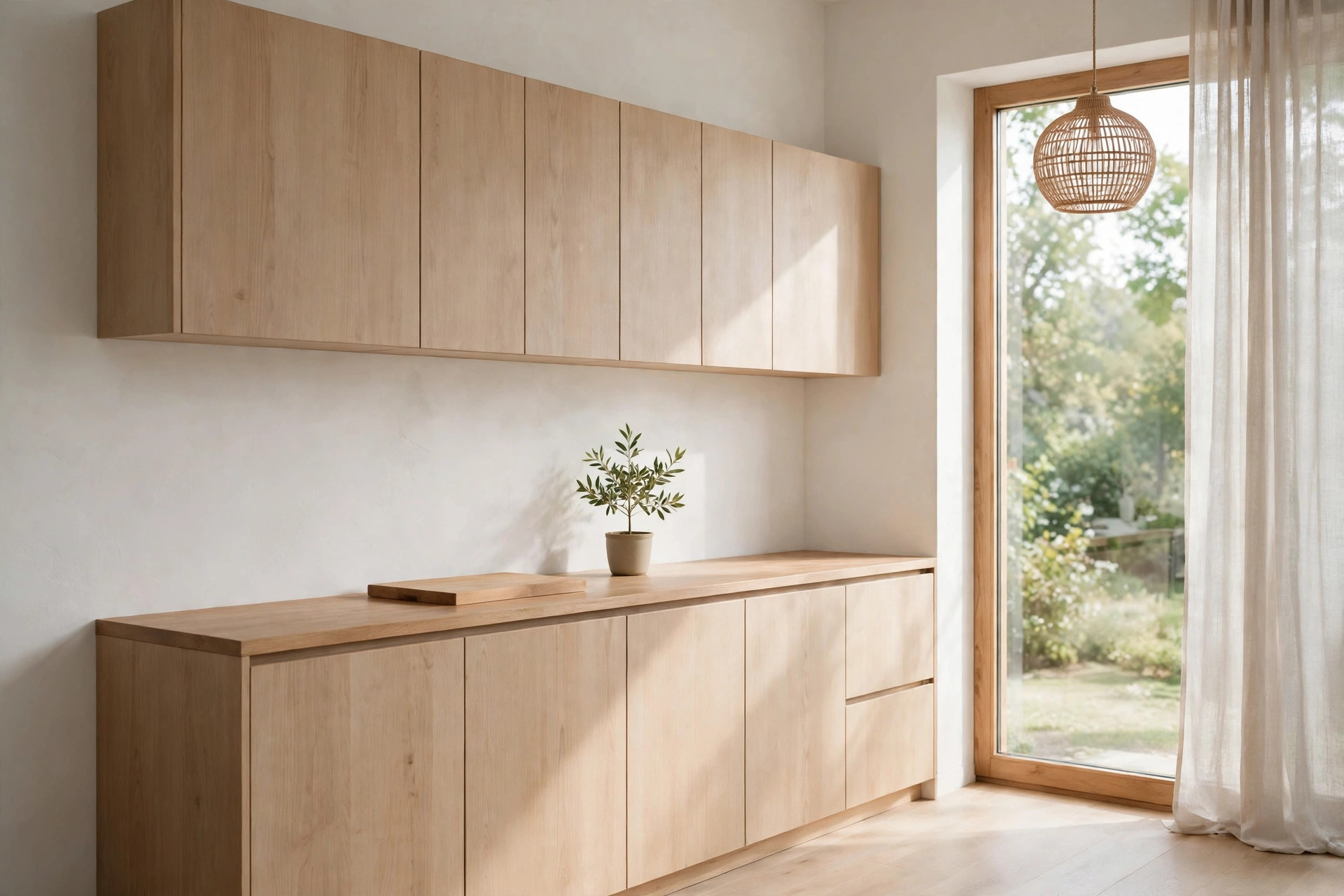
Start with the cabinets. Flat, handleless cabinets in light wood or soft white give a japandi kitchen its calm look. Open shelving can work too, but only if you keep it tidy. Show a few beautiful items — handmade bowls, wooden boards, simple glasses — and hide the rest behind closed doors.
Countertops should be mostly clear. Keep out only what you use every day, like a wooden cutting board or a small plant. This is where the decluttering principle really pays off: a clear counter makes cooking feel easier and the whole kitchen feel bigger.
Natural materials do a lot of the decorating in a japandi kitchen. A wooden dining table, bamboo utensils, linen napkins, and clay dishes add warmth without any extra decoration. Add soft lighting under cabinets or a simple pendant lamp over the table. The kitchen should feel like a calm place to start the day, not a busy workshop.
Japandi Bathroom
The japandi bathroom feels more like a quiet spa than a regular bathroom. Even a small bathroom can get this feeling with a few smart choices.
Keep the color palette soft and light — warm white tiles, light wood, and soft gray. A wooden bath mat or a small bamboo tray adds instant warmth to a tiled room. Choose simple fixtures with clean lines and avoid anything shiny or fussy.
Storage is the secret to a calm bathroom. Use closed baskets or simple boxes to hold toiletries so the counters stay clear. A single shelf with a folded towel, a small plant, and a handmade soap dish is decoration enough.
Soft lighting makes a big difference. If you can, use warm light instead of cold white light. Add a small stool in natural wood for towels or clothes. A touch of greenery — a small fern or eucalyptus in a clay pot — brings the spa feeling home. Every morning routine feels a little calmer in a space like this.

Japandi Home Office
Working from home is much easier in a calm space. A japandi home office keeps your mind clear so you can focus on your work.
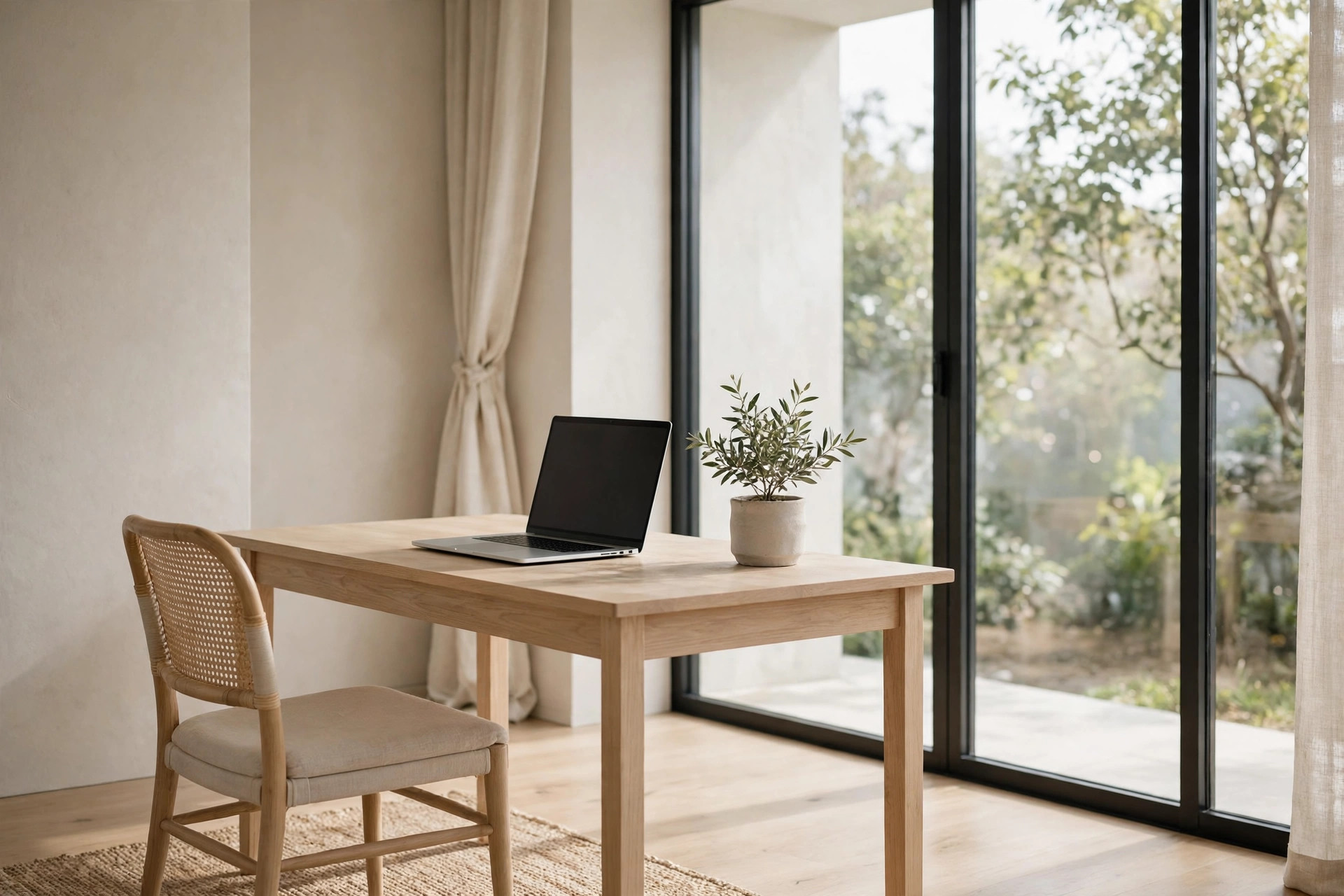
Choose a simple wooden desk with clean lines and a comfortable chair in a neutral fabric. Keep the desk surface clear: your computer, one notebook, and maybe a small plant. Everything else goes in a drawer or a simple storage box. A clear desk really does help you think more clearly.
Place your desk near a window if you can. Natural daylight is one of the best parts of japandi interior design, and it is great for your mood while you work. Use a simple desk lamp with warm light for the evening hours.
Add one or two personal touches — a handmade pen holder, a framed photo, or a small piece of art on the wall. But keep it restrained. The office should feel calm, not empty and not busy. A woven basket under the desk can hide cables and papers, keeping the room tidy with no effort.
Japandi Entryway
The entryway is the first thing you see when you come home, so it sets the mood for the whole house. In japandi interior design, the entryway is simple, tidy, and welcoming.
Keep it functional. A low wooden bench or a small console table gives you a place to sit while putting on shoes or to drop your keys. Add a woven basket underneath for shoes or bags so the floor stays clear. One mirror with a simple wooden frame can make a small entryway feel bigger and brighter.
Decorate lightly. A small plant, a handmade bowl for keys, or one quiet piece of wall art is plenty. The entryway should feel like a deep breath — the moment the busy outside world fades and your calm home begins. Good lighting matters here too: a small warm lamp or a wall light makes coming home in the evening feel welcoming.

The Japandi Color Palette
Color is one of the most important parts of japandi interior design, and the rule is simple: keep it calm and natural. The palette comes from nature — warm whites, soft beiges, light grays, and muted earth tones like clay, sand, and stone.
Start with a light, neutral base for your walls and big furniture pieces. Warm white or soft beige walls make rooms feel bright and open. Then layer in deeper natural tones: a light oak coffee table, a gray-beige sofa, a brown leather chair, or a muted green plant pot. These gentle contrasts add depth without breaking the calm.
Small touches of darker color can ground a room — a charcoal cushion, a dark wood frame, or a black metal lamp. But use dark colors sparingly. They are accents, not the main event. If you are repainting and want to see what is popular right now, these paint color trends include plenty of soft neutrals that fit the japandi look beautifully.
The key idea is harmony. All the colors in a japandi room should feel like they belong together, like stones on a quiet beach. When in doubt, choose the softer, quieter option.

Materials and Textures
If color sets the mood in japandi interior design, materials give it soul. This style is all about natural materials that feel good and age gracefully.
Wood is the star. Light woods like oak, ash, and bamboo are the most common, often with a natural or matte finish that shows the grain. Wooden floors, wooden furniture, wooden bowls — wood appears everywhere, and that is what makes a japandi home feel warm instead of cold.
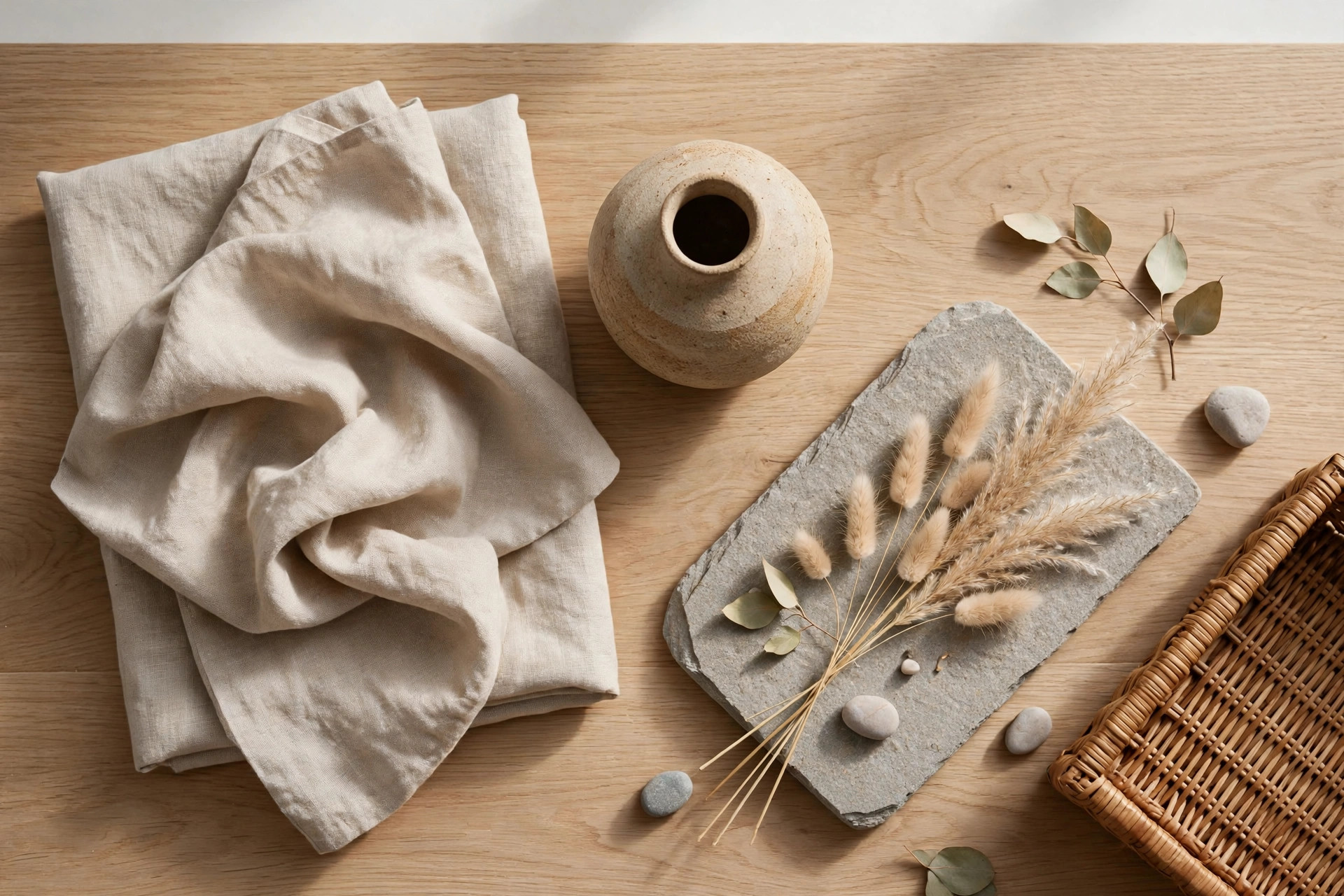
Soft fabrics come next. Linen curtains, cotton bedding, wool throws, and jute or sisal rugs add the softness that balances all the wood. These natural fibers have a gentle texture that makes you want to touch them, and they look better over time.
Then come the handmade materials: clay, ceramic, stone, rattan, and paper. A handmade clay vase, a stone tray, a rattan basket, or a paper pendant lamp each adds character. These materials connect the home to nature and to the human hands that made them. Avoid shiny plastics and glossy finishes — in japandi design, matte and natural always win.
Decluttering the Japandi Way
You cannot have a japandi home without decluttering. But japandi decluttering is not about throwing everything away — it is about choosing with care.
Start one room at a time. Take everything out of one area — a shelf, a drawer, a corner — and look at each item. Ask two simple questions: Do I use this? Do I love this? If the answer to both is no, let it go. You will be surprised how quickly a room feels calmer with fewer things in it.
Give everything a home. In japandi interior design, every item has a place. Baskets, boxes, and simple storage keep small things out of sight. When everything has a home, tidying up takes five minutes instead of an hour.
Follow the one-in, one-out rule. When something new comes into your home, something old leaves. This simple habit keeps clutter from creeping back in. And be honest about “maybe” items — the things you keep just in case. Most of them can go, and you will not miss them.
Decluttering is really a mindset, not a weekend project. A japandi home stays calm because the people in it choose less, on purpose, every day.

Frequently Asked Questions
What is japandi interior design in simple words?
Japandi interior design is a home style that mixes Japanese and Scandinavian design. It uses simple shapes, natural materials like wood and linen, calm neutral colors, and very little clutter. The goal is a home that feels peaceful, warm, and easy to live in.
What colors are used in japandi style?
Japandi uses calm, natural colors: warm white, soft beige, light gray, and muted earth tones like clay, sand, and soft green. Bright or loud colors are avoided. Small dark accents, like a charcoal cushion or dark wood frame, can be added sparingly.
Is japandi style expensive to create?
It does not have to be. The style is about simplicity, so you need fewer items, not more. Start by decluttering, then add a few key pieces in natural materials — a wooden tray, linen curtains, or a simple plant pot. Secondhand wooden furniture fits the style perfectly and keeps costs low.
What is the difference between japandi and minimalism?
Regular minimalism can feel cold and empty because it focuses only on having less. Japandi adds warmth to minimalism with natural wood, soft fabrics, handmade items, and cozy textures. A japandi room is simple, but it still feels lived-in and welcoming.
Can japandi work in a small apartment?
Yes — japandi is one of the best styles for small spaces. Light colors make rooms feel bigger, low furniture keeps sight lines open, and the decluttering habit keeps small rooms from feeling crowded. Multi-use furniture, like a bench with storage, fits the style and saves space.
What plants work best in japandi interiors?
Choose simple, sculptural plants with a calm look: a fiddle-leaf fig, a snake plant, a small olive tree, or a bonsai. Place them in handmade clay, ceramic, or woven pots. One or two well-placed plants are better than many small ones scattered around.
Conclusion
Japandi interior design is more than a trend — it is a calmer way of living. By mixing Japanese simplicity with Scandinavian warmth, it creates homes that feel peaceful without feeling empty. Start small: clear one shelf, add a plant, swap a bright cushion for a soft neutral one. Each small change moves your home closer to that quiet, grounded feeling.
Ready for more ideas? Explore our related articles on large wall art ideas for calm minimal spaces and the latest paint color trends to find the perfect soft neutrals for your japandi home. Your calm, beautiful space is closer than you think.


4 thoughts on “Japandi Interior Design: The Complete Room-by-Room Guide”