Explore graphic design jobs in the USA for 2026 real salary data, in-demand skills, and where to find remote and entry-level opportunities today.
Thinking about landing a graphic design job in the USA in 2026? You’re entering the world of graphic design jobs, a field that’s evolving faster than everwith over half a million designers already employed nationwide, salaries ranging from $40,000 to well over $85,000, and remote opportunities growing at a record pace. But here’s the catch: the graphic design job market isn’t the same as it was even two years ago. AI tools, new software demands, and shifting hiring trends mean the old playbook for landing a design job simply doesn’t work anymore. In this guide, we’ll break down exactly what graphic design jobs pay in 2026, which skills employers are actually asking for, and where to find real opportunities so you can walk into your next application with confidence instead of guesswork.
What Does a Graphic Design Job Career Look Like in 2026?
If you’re exploring graphic design jobs in 2026, you’re stepping into a field that looks very different from just a few years ago. The graphic design jobs market has grown into a $45+ billion global industry, and in the USA alone, over half a million people currently work as graphic designers. But the day-to-day reality of the job the tools, the skills, and even what companies expect from applicants has shifted significantly.
Graphic design today isn’t just about creating logos or flyers. Designers now work across websites, social media, branding, motion graphics, and product interfaces, often blending creative work with strategy and data.
How the Industry Has Changed Since 2023
The biggest shift in graphic design jobs since 2023 has been the rise of AI-assisted tools. A few years ago, AI tools were used by roughly a third of designers. Today, that number has jumped to around three-quarters of the workforce. Job listings have followed the same trend mentions of AI skills in graphic design postings have grown nearly tenfold in just a few years.
Remote work has also transformed the field. Remote graphic design roles have grown by 150% since 2020, giving designers across the USA more flexibility than ever to work with companies outside their city or state.
Example: A freelance designer in Texas can now work full-time for a marketing agency based in New York something far less common a decade ago.
Is Graphic Design Still a Good Career Choice?
Yes but with a caveat. Overall employment growth for graphic designers is fairly flat, yet the field still generates around 20,000 job openings every year in the USA, mostly from people retiring or switching careers. That means steady opportunity, especially for designers who keep their skills current.
Tip: If you’re just starting out, focus on building skills in high-demand areas like UI/UX design or motion graphics these consistently pay more and have stronger job security than general graphic design roles alone.
Types of Graphic Design Jobs You Can Pursue
One of the best things about graphic design jobs in 2026 is the sheer variety of paths available. Whether you prefer stability, flexibility, or creative independence, there’s a working style that fits. Understanding these options early helps you target the right skills and job search strategy from the start.

In-House vs. Agency Design Roles
In-house designers work directly for one company, focusing on that brand’s visual identity, marketing materials, and ongoing campaigns.These graphic design jobs usually offer more stability, consistent hours, and a deeper understanding of a single brand over time.
Agency designers, on the other hand, work across multiple clients at once. This role suits people who enjoy variety and fast-paced work, since projects and industries can change every few weeks. Agencies are also a great place to build a diverse portfolio quickly.
Example: An in-house designer at a retail company might spend months refining one consistent brand look, while an agency designer could work on a restaurant’s branding one week and a tech startup’s website the next.
Freelance and Remote Graphic Design Work
Freelancing has become one of the most popular entry points into graphic design, especially as remote opportunities continue to expand across the USA. Freelancers set their own schedules, choose their clients, and often work with businesses in completely different states or industries.
The trade-off is less predictability income can fluctuate, and freelancers are responsible for finding their own clients and managing contracts.
Tip: Many designers start freelancing part-time while working another job, then transition to full-time freelance once they build a steady client base.

Specialized Roles (UI/UX, Motion, Branding)
As the industry evolves, specialization has become increasingly valuable. Instead of being a generalist, many designers now focus on one high-demand area:
- UI/UX Design : designing user interfaces and experiences for apps and websites, currently among the highest-paying design specialties
- Motion Design : creating animated graphics and video content, now required in a large share of senior-level design roles
- Branding Design : developing complete visual identities, including logos, color systems, and brand guidelines
Example: A designer who specializes in UI/UX for mobile apps often earns significantly more than a general graphic designer, simply because the skill set is narrower and in higher demand.
Graphic Design Salaries in the USA (2026 Data)
Salary is one of the biggest questions people have before pursuing graphic design jobs, and the honest answer is: it depends heavily on experience, specialization, and location. Here’s a realistic breakdown based on current 2026 data.
Entry-Level vs. Mid-Level vs. Senior Salaries
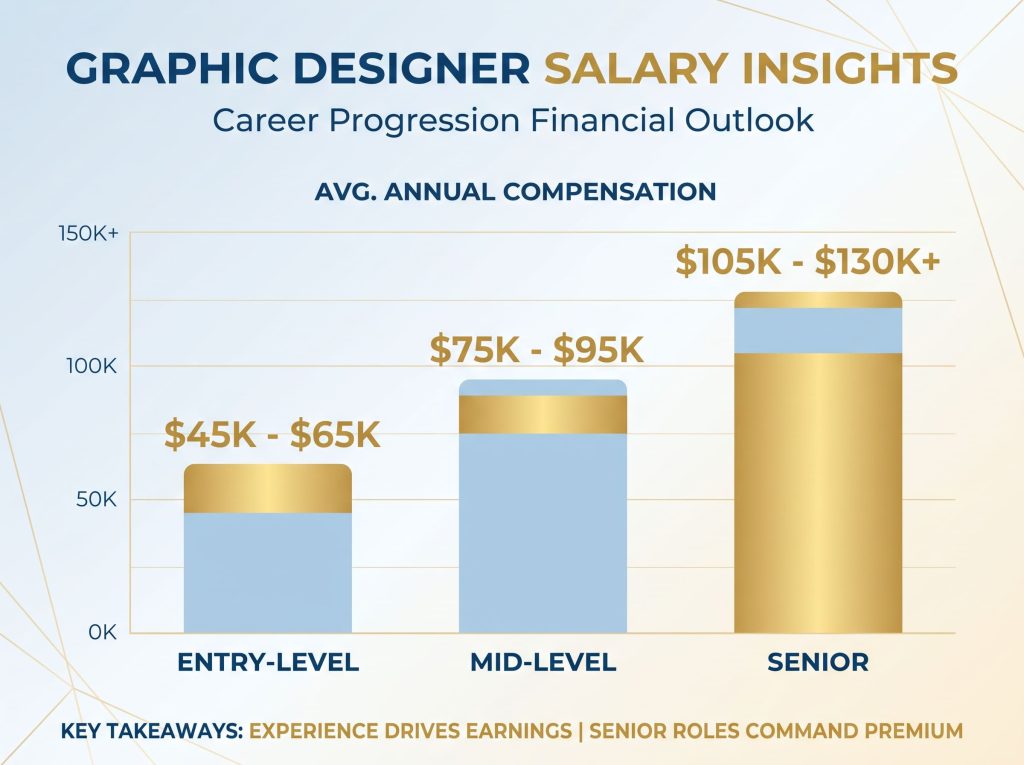
According to Robert Half’s 2026 Salary Guide, starting salaries for graphic designers typically range from $52,000 to $79,500, depending on experience and skill level. Some entry-level positions, especially internships or junior roles, can start lower often in the $38,000–$44,000 range. Robert Half
Mid-level graphic design jobs typically pay designers with a few years of experience tend to earn somewhere between $55,000 and $75,000 annually, while senior designers particularly those with specialized skills like UI/UX or motion design can earn $85,000 or more.
Across the US, the median graphic designer salary sits around $58,910, with the top 10% of earners making $98,260 or more. Colorlib
Example: A junior designer working in-house at a small company might start around $45,000, while a senior UI/UX designer at a tech company in a major city could easily clear $90,000+.
What Affects Your Earning Potential
Several factors influence how much graphic design jobs pay in the USA :
- Location : designers in major cities and tech hubs typically earn more due to higher demand and cost of living
- Specialization : UI/UX, motion design, and branding specialists usually out-earn generalists
- Employment type : in-house and agency roles often provide more predictable pay, while freelance income varies based on client load
- Software and AI skills : designers fluent in tools like Figma and AI-assisted design platforms are increasingly commanding higher pay, since these skills now appear in a majority of job listings
Tip: If you want to increase your earning potential quickly, focus on learning one in-demand specialty rather than trying to be good at everything. Employers consistently pay more for depth in a specific skill than broad, general knowledge.
Skills You Need to Succeed in Graphic Design Today
Landing graphic design jobs in 2026 isn’t just about creativity anymore employers expect a specific mix of technical tools, adaptability, and communication skills. Here’s what actually matters right now.
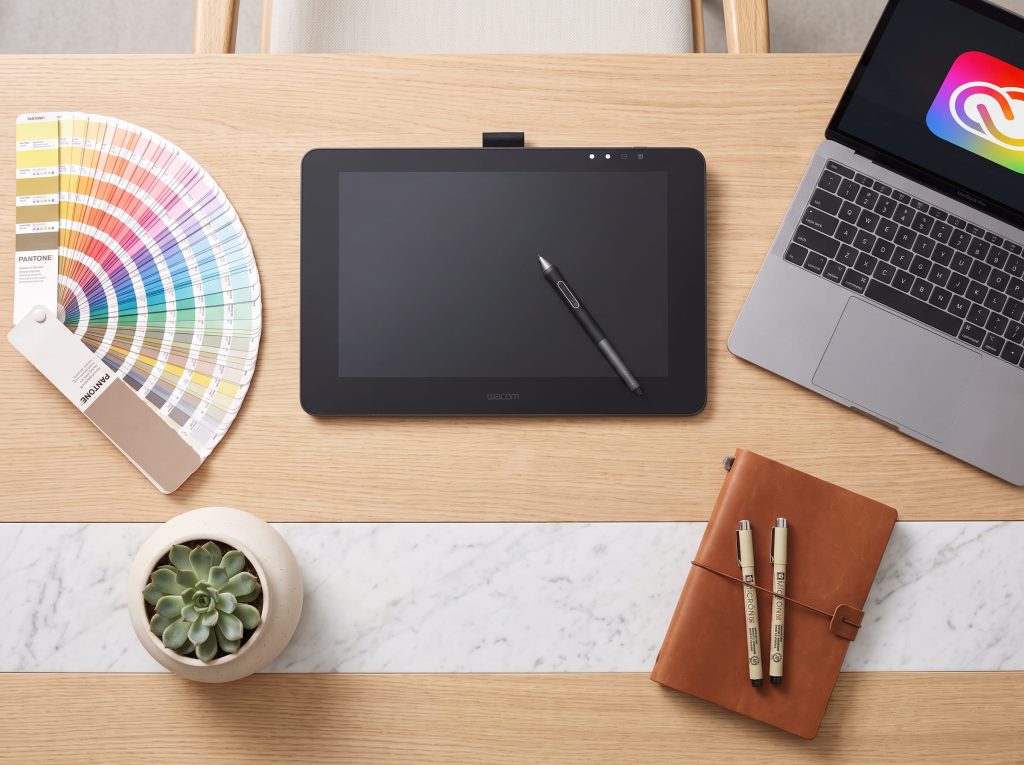
Must-Know Design Software (Figma, Adobe, Canva)
Figma has become one of the most requested tools in graphic design job listings, especially for roles involving web or app design. Adobe’s Creative Suite (Photoshop, Illustrator, InDesign) remains a core requirement for most print and branding roles, while Canva has become popular for faster, simpler design work especially in social media and marketing teams.
Example: A graphic design jobs posting for a marketing role might require Adobe Illustrator for print materials but also expect basic Figma skills for digital assets.
Tip: If you can only learn one tool right now, prioritize Figma it’s increasingly required across UI/UX, web, and even general design roles.
Why AI Tools Are Now a Core Skill
AI has moved from “nice to have” to a genuine job requirement. A majority of designers now use AI tools regularly, Graphic design jobs listings mentioning AI skills have grown dramatically in just a few years.
This doesn’t mean AI is replacing designers it means designers who can use AI to speed up tasks like mockups, image generation, or content variations are becoming more valuable to employers.
Example: A designer who can use AI tools to quickly generate multiple logo concepts for client review often works faster and lands more projects than one who doesn’t.
Soft Skills Employers Look For
Technical skills get you noticed, but soft skills often decide who gets hired. Employers consistently look for:
- Communication : explaining design choices clearly to clients or non-design teams
- Time management : juggling multiple projects and deadlines
- Feedback handling : revising work based on client or manager input without frustration
- Collaboration : working smoothly with marketers, developers, and other stakeholders
Tip: During interviews, be ready to talk about a time you handled difficult feedback or a tight deadline employers care as much about how you work as what you can design.
How to Build a Portfolio That Gets Noticed
No matter how many graphic design jobs you apply for, your portfolio is what actually gets you hired. Employers often spend just a few seconds scanning a portfolio before deciding whether to look closer so it needs to make an immediate impression.

What to Include as a Beginner
If you’re just starting to apply for graphic design jobs and don’t have client work yet, that’s okay. A strong beginner portfolio can still stand out with the right approach.
- Personal projects : redesign a real brand’s logo or website as a practice exercise
- Concept work : create packaging, social media graphics, or app interfaces for imaginary products
- Variety : show 4-6 strong pieces across different styles rather than 20 mediocre ones
- Process : briefly explain your thinking behind a design, not just the final result
Example: Redesigning the branding for a local coffee shop (even without being hired to do it) shows initiative and real-world thinking something employers notice immediately.
Tip: Quality always beats quantity. A portfolio with 5 excellent pieces will outperform one with 20 average ones every time.
Common Portfolio Mistakes to Avoid
Even talented designers lose opportunities because of simple portfolio mistakes:
- Too much unrelated work : including every project you’ve ever made instead of your best, most relevant pieces
- No context : showing final designs without explaining the problem they solved
- Outdated software use : using clearly dated design trends or tools that signal you haven’t kept up with the industry
- Poor organization : a messy or hard-to-navigate portfolio site can cost you the job before anyone even reviews your work
Tip: Ask a designer friend or mentor to review your portfolio before applying a fresh set of eyes often catches issues you’ve stopped noticing.
Where to Find Graphic Design Jobs in the USA ?
Once your skills and portfolio are ready, the next step for landing graphic design jobs is knowing exactly where to look. Different platforms work better depending on whether you want full-time employment or freelance clients.
Best Platforms for Job Listings
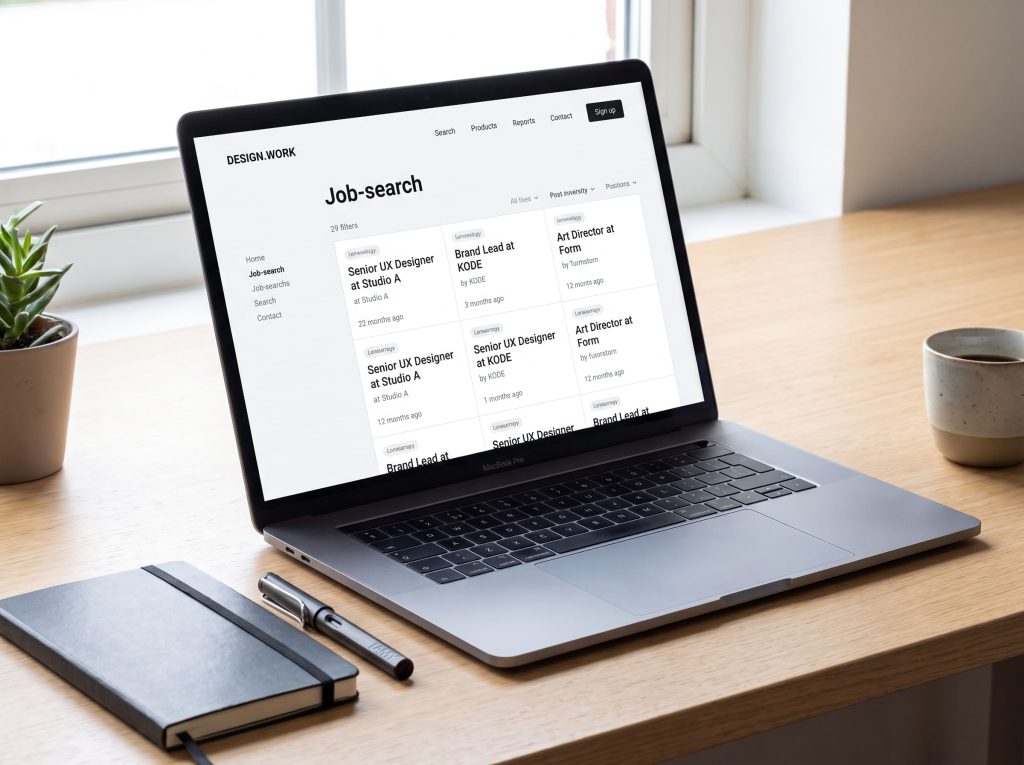
For traditional in-house or agency graphic design jobs, a few platforms consistently lead the way:
- LinkedIn : ideal for networking and finding roles at established companies, plus direct connections with hiring managers
- Indeed : one of the largest job boards, useful for comparing salaries and reading real employee reviews
- Behance and Dribbble :not just portfolio platforms, but also places where companies actively scout and post design-specific job openings
- Company career pages : many mid-size and large companies post openings directly on their own site before listing elsewhere
Example: A company hiring for an in-house branding designer might post first on LinkedIn and their own careers page, while listing more general roles on Indeed for wider reach.
Tip: Set up job alerts on 2-3 platforms instead of manually checking daily this saves time and ensures you don’t miss new postings.
Where Freelancers Find Clients
Freelancers looking for graphic design jobs typically rely on a different set of platforms and strategies:
- Upwork and Fiverr : good starting points for building a client base, though competition is high
- Referrals and word of mouth : often the most reliable source of long-term freelance work once you’ve completed a few projects
- Social media presence : showcasing work on Instagram or Pinterest can attract small business owners looking to hire directly
- Local business outreach : reaching out to local shops, restaurants, or startups that may need branding or marketing materials
Example: Many freelancers land their first few clients through freelance platforms, then transition to referral-based work once they’ve built a reputation.
Tip: Don’t rely on just one platform. Combining a freelance marketplace with direct outreach and a strong social presence creates a more stable stream of client work.
Breaking Into Graphic Design With No Experience
One of the most common questions about graphic design jobs is whether you can start a career without formal training or a design degree. The good news: yes, especially in 2026, when skills and portfolio quality often matter more than credentials.

Free and Low-Cost Ways to Learn
ou don’t need an expensive degree to start applying for graphic design jobs to start learning graphic design. Several accessible options exist:
- YouTube tutorials : countless free lessons on Adobe, Figma, and design fundamentals
- Free tools : Canva and Figma both offer free versions powerful enough to build real projects
- Online courses : platforms like Coursera or Skillshare offer affordable, structured learning paths
- Design communities : forums and groups like Reddit’s design communities or Discord servers where beginners get feedback
Example: Many self-taught designers build their entire foundational skill set using free YouTube tutorials combined with practice projects, without ever taking a formal course.
Tip: Focus on learning one tool deeply before jumping to the next. Trying to learn Figma, Photoshop, and Illustrator all at once often slows progress rather than speeding it up.
How to Gain Real-World Experience Fast
Once you have basic skills, the next challenge before landing graphic design jobs is is building real experience without a job history. A few practical approaches:
- Volunteer design work : offer to design materials for a local nonprofit or small business in exchange for portfolio pieces
- Spec projects : redesign existing brands or products as practice, clearly labeled as concept work
- Small freelance gigs : even low-paying first projects help build both experience and client testimonials
- Design challenges : platforms host regular design prompts that push you to solve real problems quickly
Example: A beginner might design a new menu layout for a local restaurant for free, then use that real, tangible project as a strong portfolio piece when applying for paid work.
Tip: Your first few projects don’t need to pay well treat them as investments in your portfolio and experience, not your income

The Future of Graphic Design Careers Beyond 2026
As you plan a long-term career in graphic design jobs, it’s worth looking beyond just this year. The industry is shifting quickly, and understanding where it’s headed can help you stay relevant instead of playing catch-up later.
How AI Is Reshaping the Industry
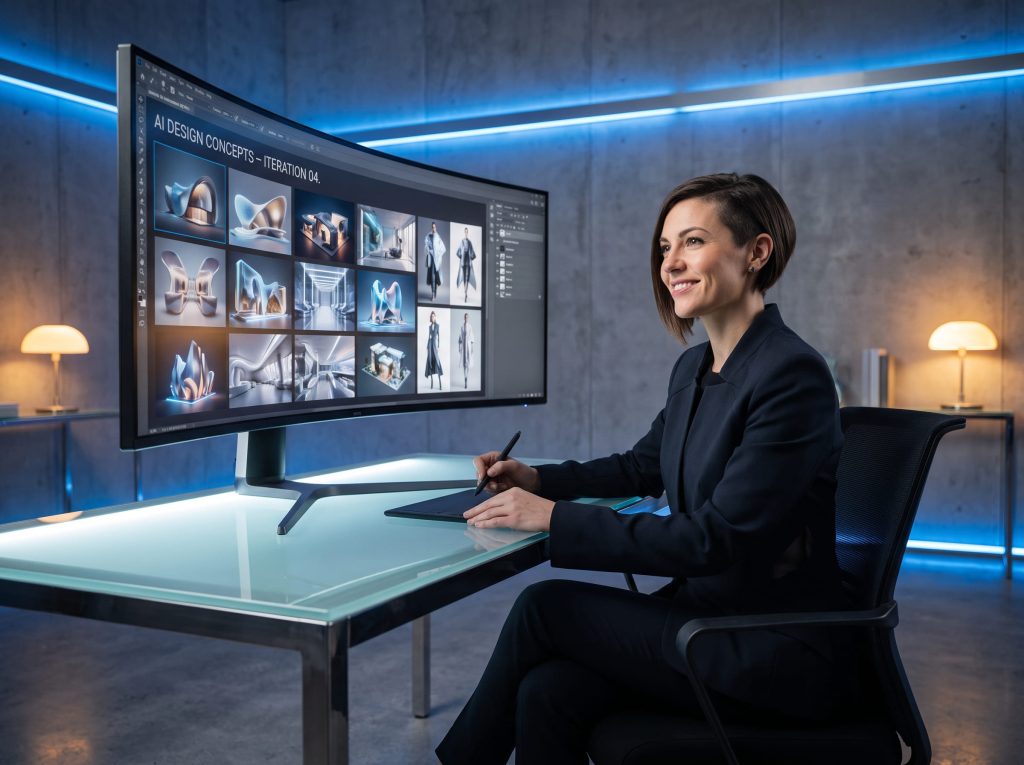
AI isn’t just a trending tool for graphic design jobs anymore it’s becoming a permanent part of how graphic designers work. Tasks like generating initial concepts, creating image variations, or speeding up repetitive design work are increasingly handled with AI assistance, freeing designers to focus more on strategy, creativity, and client-specific problem solving.
This shift also means some traditional freelance work, especially simple or repetitive design tasks, may become more competitive as AI tools lower the barrier to entry for basic design needs.
Example: A designer who once spent hours creating multiple logo drafts by hand can now generate several AI-assisted concepts in minutes, then refine the strongest one cutting production time significantly.
Tip: Instead of viewing AI as competition, treat it as a productivity tool. Designers who learn to work alongside AI tools are likely to stay more competitive than those who avoid them.
Emerging Niches Worth Watching
A few specialized areas are growing faster than general graphic design roles, making them worth watching for anyone planning their next few years in the field:
- UI/UX Design : continues to be one of the highest-paying and most in-demand specialties
- Motion Design : increasingly required, especially for senior-level and video-heavy roles
- AI-Assisted Design : designers who can effectively prompt and refine AI-generated content are becoming more valuable
- Sustainable and Ethical Branding : a growing number of companies want designers who understand eco-conscious and socially responsible visual branding
Example: A designer who develops strong motion design skills alongside traditional graphic design is often better positioned for senior roles than one who sticks to static design work alone.
Frequently Asked Questions
Is graphic design a good career in 2026?
Yes, graphic design remains a solid career choice in 2026, especially for those who specialize in high-demand areas like UI/UX or motion design. While overall employment growth is modest, the field still generates around 20,000 job openings every year in the USA, mostly due to workers retiring or switching careers. Designers who stay current with tools like Figma and AI-assisted design platforms tend to have the strongest job prospects and earning potential.
Do graphic designers need a college degree?
No, a college degree is not strictly required to work in graphic design, though some employers, especially larger companies, may still prefer or require one for certain roles. What matters most in 2026 is a strong portfolio and demonstrated skills. Many successful designers are self-taught or learned through online courses, free tutorials, and hands-on practice rather than a formal degree program.
How much do graphic designers make in the USA?
Graphic designer salaries in the USA typically range from around $45,000 for entry-level positions to $85,000 or more for senior and specialized roles. The median salary sits at approximately $58,910, with top earners making $98,260 or more annually. Pay varies based on experience, specialization (like UI/UX or motion design), location, and whether the designer works in-house, at an agency, or freelance.
What software should a beginner graphic designer learn first?
Beginners applying for graphic design jobs should start with either Figma or Canva, depending on their goals. Figma is ideal for those interested in UI/UX or web design, since it’s increasingly required across digital design roles. Canva is a good starting point for simpler projects like social media graphics and marketing materials. Once comfortable with the basics, learning Adobe Photoshop and Illustrator will open up more traditional graphic design and branding opportunities.
Can you become a graphic designer without experience?
Yes, it’s entirely possible to land graphic design jobs without prior professional experience without prior professional experience. The most effective approach is building a portfolio through personal projects, spec work, or low-cost freelance gigs, such as designing materials for a local business or nonprofit. Combining free online learning resources with consistent practice allows beginners to develop real, demonstrable skills that employers and clients can evaluate, even without a formal job history.
Conclusion
Graphic design jobs in 2026 offer real opportunity for anyone willing to build the right skills and stay adaptable. From understanding salary expectations and choosing the right specialization, to building a strong portfolio and knowing where to search, every step in this guide is designed to help you move forward with clarity instead of guesswork.
The industry is changing quickly, especially with AI tools becoming a core part of everyday design work, but that also means there’s room for new designers to enter the field with fresh skills and a modern approach. Whether you’re starting completely from scratch or looking to sharpen your existing abilities, the path into graphic design is more accessible than ever for those ready to put in the work.The industry is changing quickly, especially with AI tools becoming a core part of everyday design work, but that also means there’s room for new designers to enter the field with fresh skills and a modern approach. Whether you’re starting completely from scratch or looking to sharpen your existing abilities, The path into graphic design is more accessible than ever for those ready to put in the work.