
Vintage Home Decor: How to Mix Old and New Pieces
There is something special about a home that feels collected over time. A vintage home decor style does not mean living in a museum. It means mixing pieces with history, warmth, and character with clean modern pieces that keep your home comfortable and easy to live in. When you get the mix right, your home feels personal, calm, and full of stories.
Many people love the look of vintage home decor but worry that it will feel old, dark, or cluttered. The good news is that you do not need a big budget or a house full of antiques. You just need a simple plan: choose a few old pieces you love, balance them with newer items, and repeat colors and materials so everything feels connected. In this guide, you will learn how to mix old and new pieces room by room, how to shop for thrifted finds with confidence, and how to avoid the most common mistakes.
Think of vintage style as a feeling, not a rulebook. A worn wooden table, a brass lamp, an old mirror, or a soft floral cushion can all bring warmth into a modern room. The modern pieces around them — a simple sofa, clean curtains, or a light rug — give your eyes a place to rest. Together, they create a home that looks interesting without feeling busy.
What Vintage Home Decor Really Means

Vintage home decor is about pieces from an earlier time, or new pieces made in an older style. It can include furniture, lighting, art, mirrors, textiles, and small accessories. Vintage does not mean broken, dusty, or out of date. A good vintage piece has solid quality, honest materials, and a shape that still works in a modern home.
The best vintage rooms feel layered. They have a mix of textures, like smooth wood, soft linen, warm brass, and cool glass. They also have a mix of ages. For example, a new sofa can sit next to an old side table, and both can look right because they share a similar color or finish. This is what makes a room feel collected rather than decorated all at once.
The 80/20 Idea for Mixing Old and New
A simple way to start is the 80/20 idea. Let about 80 percent of a room feel current and simple, and let about 20 percent bring in vintage character. You do not need to measure this exactly. Just use it as a guide. If a room starts to feel heavy or crowded, you probably have too many old, dark, or detailed pieces. If it feels cold or plain, add one or two vintage items for warmth.
This balance also helps with comfort. Modern sofas, beds, and chairs are often made for daily use. Vintage tables, mirrors, lamps, and storage pieces can add beauty without taking away comfort. When you mix them well, you get the best of both worlds: style and comfort.
Start With One Hero Piece
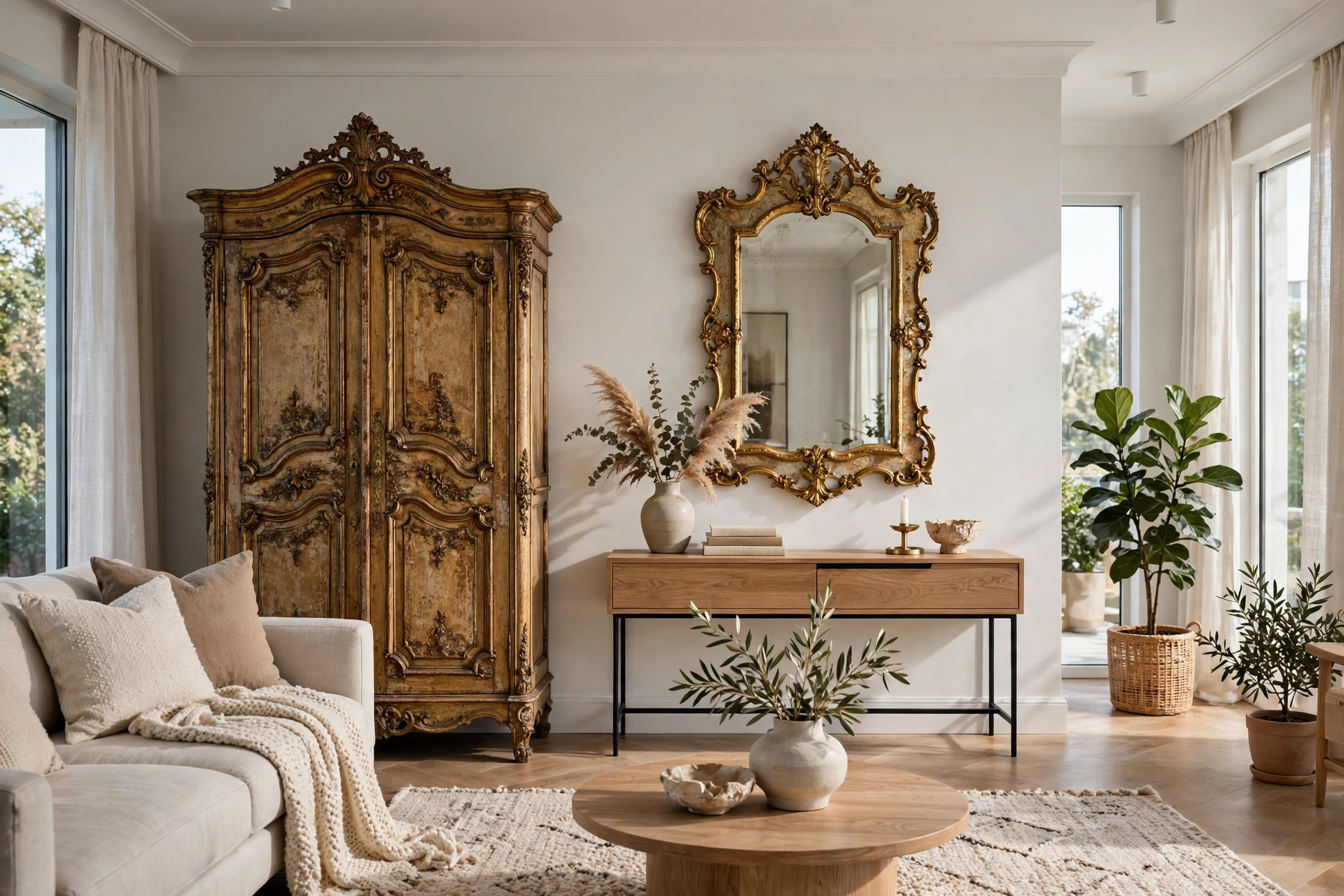
If you are not sure where to begin, start with one hero piece. A hero piece is one vintage item that you truly love and want to notice when you walk into the room. It could be an antique mirror, a carved wooden dresser, a beautiful old rug, or a set of vintage dining chairs.
Choose your hero piece first, then build the rest of the room around it. Keep the other pieces simpler so the hero piece can shine. For example, if you have a detailed antique mirror, pair it with a plain console table and a simple vase. If you have a bold vintage rug, choose calm, solid-color furniture so the rug does not compete with everything else.
A hero piece also helps you make faster decisions. When you shop, ask yourself a simple question: does this new item support my hero piece, or does it fight with it? If it fights with it, leave it behind. Your home will feel calmer when every room has a clear star and a quiet supporting cast.
For ideas on choosing a mirror that works as a focal point, see these arched mirror ideas for living rooms, bedrooms, and entryways.
Vintage in the Living Room

The living room is often the easiest place to mix old and new. Most living rooms already have a modern sofa or television, so a few vintage pieces can quickly add warmth. Try an old coffee table, a vintage side table, a pair of retro lamps, or a gallery wall with old frames.
Keep your largest pieces modern and comfortable. A simple sofa in a neutral color is a great base. Then add vintage character in smaller doses: a wooden tray on the coffee table, a woven basket, an old book stack, or a soft throw with a classic pattern. These small touches make the room feel warm without making it hard to clean or use.
Art is another easy way to bring in vintage style. Old prints, landscape paintings, or black-and-white photos in simple frames can soften a modern wall. If your wall art feels too busy, try grouping similar frames together and leaving some empty wall space. Empty space is not wasted space. It helps your vintage pieces stand out.
If you want more living room inspiration, explore these living room interior design ideas and notice how simple layouts can still feel warm and layered.
Vintage in the Bedroom

A vintage bedroom should feel calm, soft, and restful. Start with bedding in light, simple colors, then add vintage charm through furniture and lighting. An antique dresser, a wooden nightstand, or a vintage mirror can make the room feel special without making it feel old-fashioned.
Lighting matters a lot in a bedroom. A brass table lamp, a small vintage wall light, or a soft fabric shade can make the room glow in the evening. Pair vintage lighting with modern bedding and clean curtains, and the room will feel both cozy and fresh.
Textiles are your best friend in a bedroom. A simple white or cream bedspread can be layered with a vintage-style quilt, a knitted throw, or cushions in soft patterns. Choose two or three colors and repeat them across the bed, curtains, and art. This repetition keeps the room peaceful, even when you mix old and new pieces.
Vintage in the Kitchen

A kitchen needs to be practical, so vintage style works best in small, useful touches. Open shelves are a great place to display vintage dishes, glass jars, old bowls, or a classic teapot. A vintage stool, a wooden cutting board, or an old clock can also add character without getting in the way of cooking.
If your kitchen is very modern, try warming it up with wood. A wooden tray, a butcher block board, or a vintage-style rug runner can soften white cabinets and steel appliances. Keep counters mostly clear, and choose just a few vintage items to display. A kitchen that is easy to clean will always feel better than a kitchen that looks perfect in a photo but is hard to use.
Color can help too. Soft cream, sage green, warm white, and pale blue all work well with vintage kitchen pieces. These colors feel fresh and calm, and they let wooden and brass details stand out without making the kitchen feel dark.
Vintage in the Dining Room
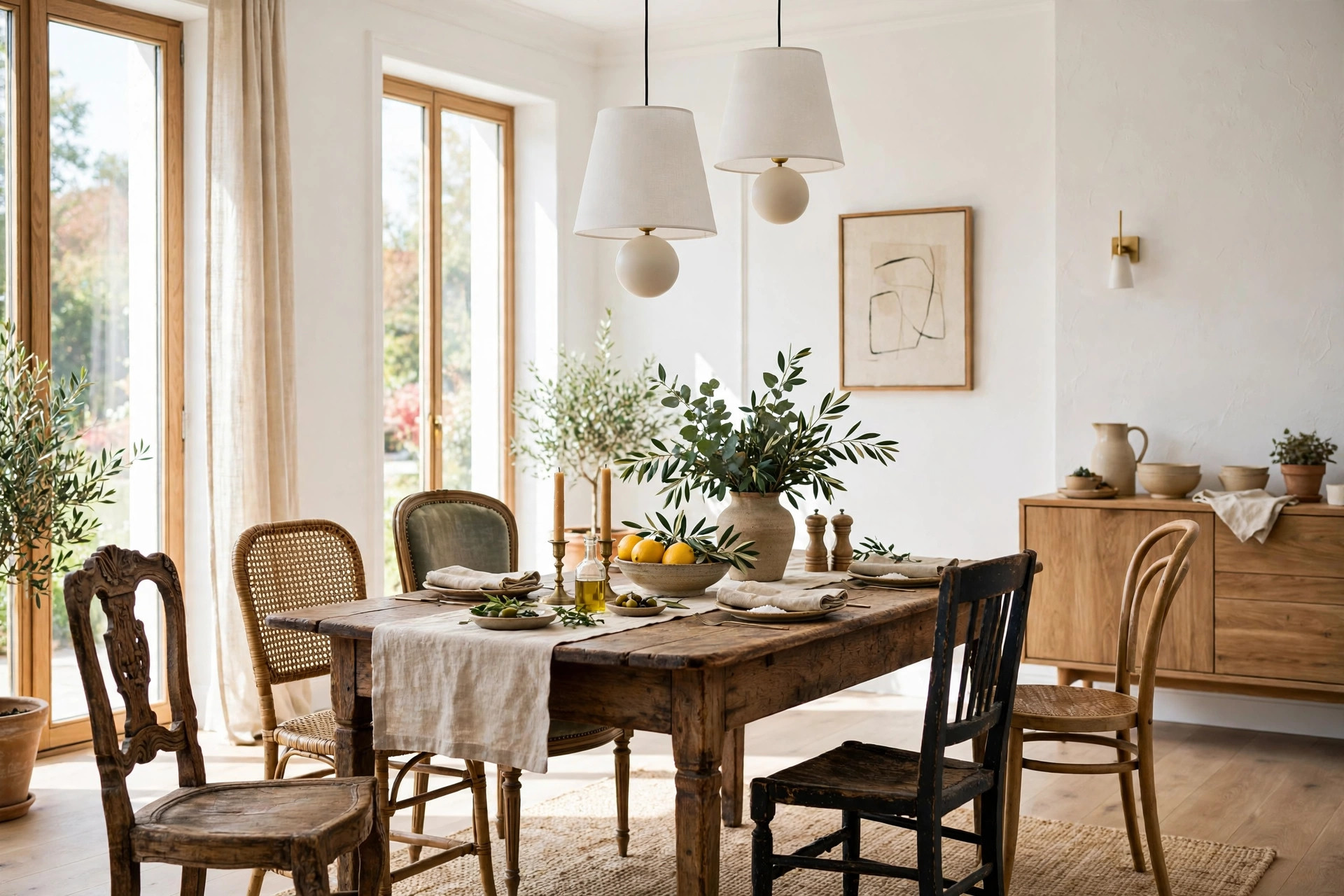
A dining room is a wonderful place for vintage style because it is made for gathering. A vintage wooden table can be the heart of the room, even if the chairs are new. In fact, mixing chairs is one of the easiest vintage tricks. You can pair a long wooden bench on one side with simple modern chairs on the other side.
Keep the table setting simple. A plain tablecloth or a natural linen runner, simple plates, and one centerpiece — like a vase with fresh flowers or a bowl of fruit — are enough. When the table is not too crowded, people can talk, eat, and enjoy the room.
A vintage sideboard or buffet can also be very useful in a dining room. It gives you storage for plates and glasses, and it gives you a surface for a mirror, candles, or a small plant. Choose a piece with clean lines if your room is small, and a more detailed piece if your room is large and can handle it.
Thrifted Finds and Where to Look for Them
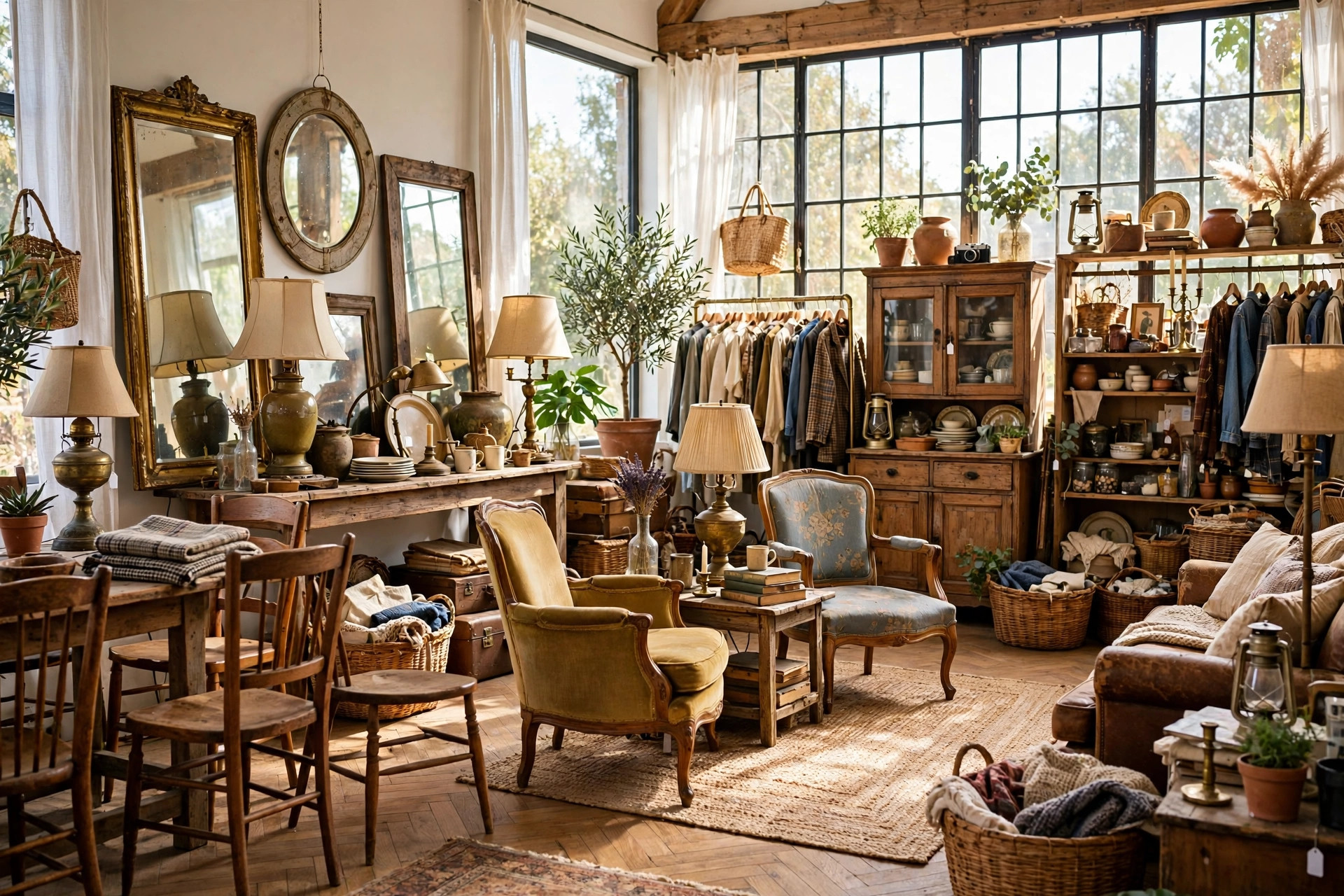
Thrifted home decor is one of the most affordable ways to add vintage style. Thrift shops, flea markets, estate sales, and online second-hand shops are full of pieces with character. The key is to shop slowly and with a short list. When you know what you need — for example, a side table, a lamp, or a mirror — it is easier to spot a good find and walk past the rest.
Before you buy, check the basics. Is the piece solid? Do drawers open and close? Is there damage that will be hard to fix? Small marks and light wear are normal for vintage pieces, and they often add charm. But avoid pieces with a strong smell, broken joints, or damage that makes them unsafe to use.
Easy Thrifted Pieces for Beginners
Some vintage pieces are easier to use than others. Good starter finds include solid wooden side tables, brass lamps, picture frames, glass vases, ceramic bowls, baskets, and old books. These items are small, affordable, and easy to move if you change your mind. They also work in almost any room.
Larger pieces, like sofas and upholstered chairs, need more care. Check the frame, cushions, and fabric closely, and think about cleaning costs before you buy. It is often better to buy a vintage table or dresser than a vintage sofa if you are just starting out.
When you bring a thrifted piece home, give it a good clean and a simple place to live. Do not try to fill every corner at once. Let one new find settle in your home for a few days, and see how it feels before you add the next one.
Mixing Wood Tones, Metals, and Patterns

One of the biggest worries with vintage home decor is mixing too many different finishes. Can you mix light oak with dark walnut? Can you mix brass with black metal? Yes — if you do it with a plan. The trick is to repeat each finish at least twice in a room, so nothing looks like a mistake.
For wood, choose one main wood tone and one accent wood tone. For example, a warm oak table can work with a darker walnut frame if both tones appear in more than one place. A wooden tray, a picture frame, or a small stool can help connect the two tones.
For metals, the same rule works. If you have brass lamps, add a small brass tray or a brass picture frame somewhere else in the room. If you have black metal in a light fixture, repeat black in a frame or a chair leg. When a finish appears more than once, it looks intentional.
Patterns need the same care. Mix one bold pattern with one or two quiet patterns. A floral cushion can work with a striped throw if they share a color. A busy rug can work with solid curtains. If every pattern is loud, the room will feel restless. If every pattern is quiet, the room may feel flat. Aim for one star pattern and a few calm partners.
Color Palettes That Make Vintage Feel Fresh

Color is what keeps vintage home decor from feeling dark or dated. Light, warm colors are a great base for vintage pieces. Cream, warm white, soft beige, and pale gray let wooden furniture and brass details shine. They also reflect natural light, which makes a room feel larger and fresher.
Once you have a light base, add one or two accent colors. Sage green, dusty blue, terracotta, mustard yellow, and soft blush all work beautifully with vintage style. These colors feel warm and classic, but they still look current when paired with modern furniture.
Try this simple method: pick a base color, a wood tone, and one accent color. Repeat those three across the room — in the rug, cushions, art, and curtains. When colors repeat, even very different pieces start to feel like they belong together. This is one of the easiest ways to make a mixed room feel calm and complete.
Avoid using too many dark colors in a small room. Dark wood, dark walls, and dark furniture together can make a space feel heavy. If you love a dark vintage piece, balance it with light walls, a light rug, and bright curtains.
Styling Small Details: Lamps, Art, and Textiles
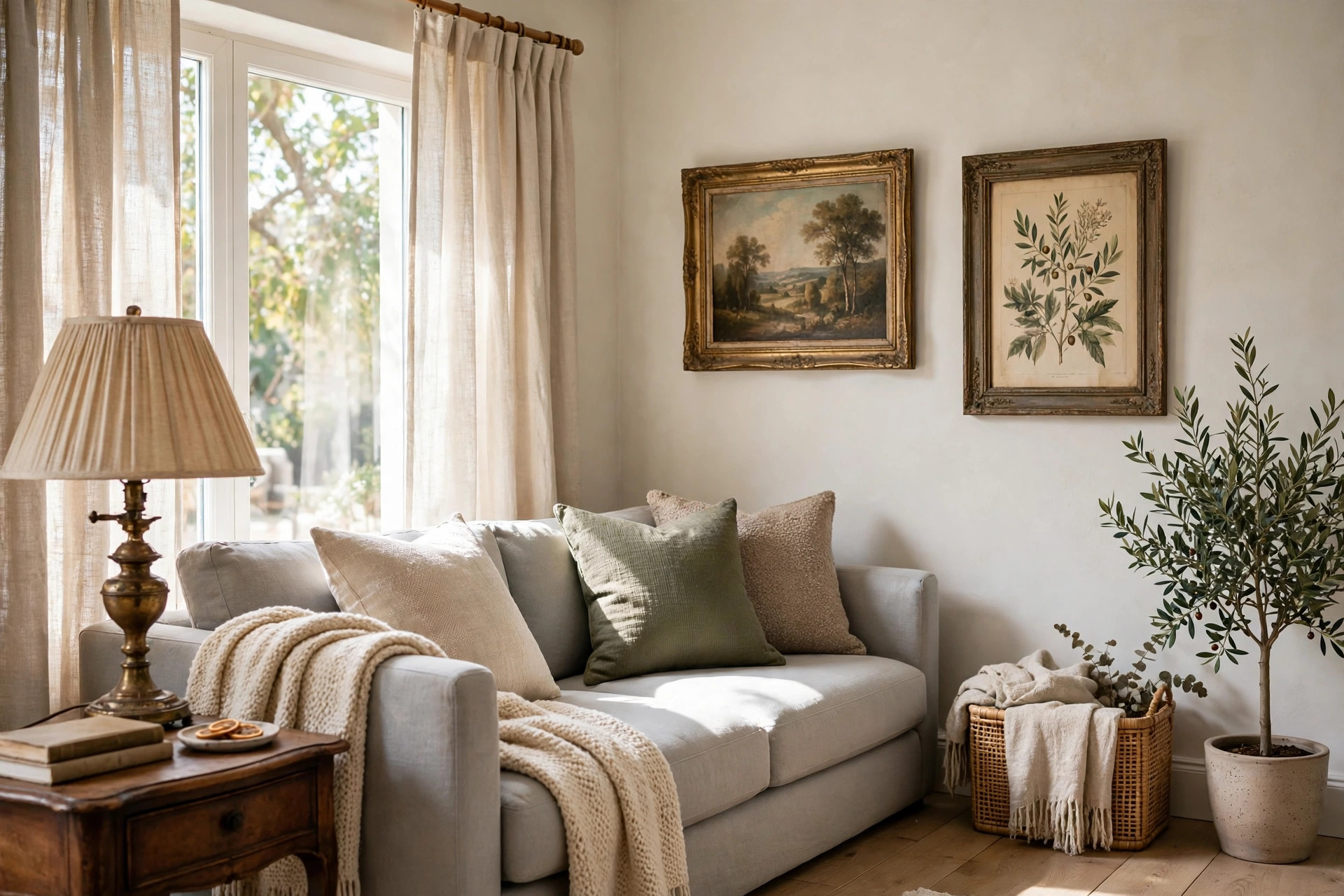
Small details often make the biggest difference in vintage home decor. A lamp, a piece of art, or a textile can change the whole feeling of a room without a big change or a big cost. Start with lighting, because it affects how everything else looks.
Vintage lamps are easy to love. A brass table lamp, a ceramic lamp, or a lamp with a simple fabric shade can add warmth in the evening. Place lamps at different heights — one on a side table, one on a dresser, and one on the floor — so light spreads softly around the room instead of coming from one harsh ceiling light.
Art should feel personal. Choose pieces you enjoy looking at, not just pieces that match the sofa. A mix of old and new art can work well if the frames are similar or the colors repeat. Try hanging art at eye level, and leave some breathing space around each piece.
Textiles tie everything together. Curtains, rugs, throws, and cushions soften hard furniture and add color. Choose natural fabrics like cotton and linen for a relaxed vintage feel. Washable fabrics are also a smart choice for busy homes, because vintage style should be lived in, not just looked at.
How to Avoid a Cluttered Look
Vintage rooms can quickly become cluttered if every surface is full. A good rule is to leave some surfaces empty. A clear coffee table, an empty shelf, or a plain wall can make the whole room feel calmer. Group small items together in trays or baskets, instead of spreading them across every surface. When items are grouped, they look like a thoughtful collection, not clutter.
First Impressions: Vintage in the Entryway
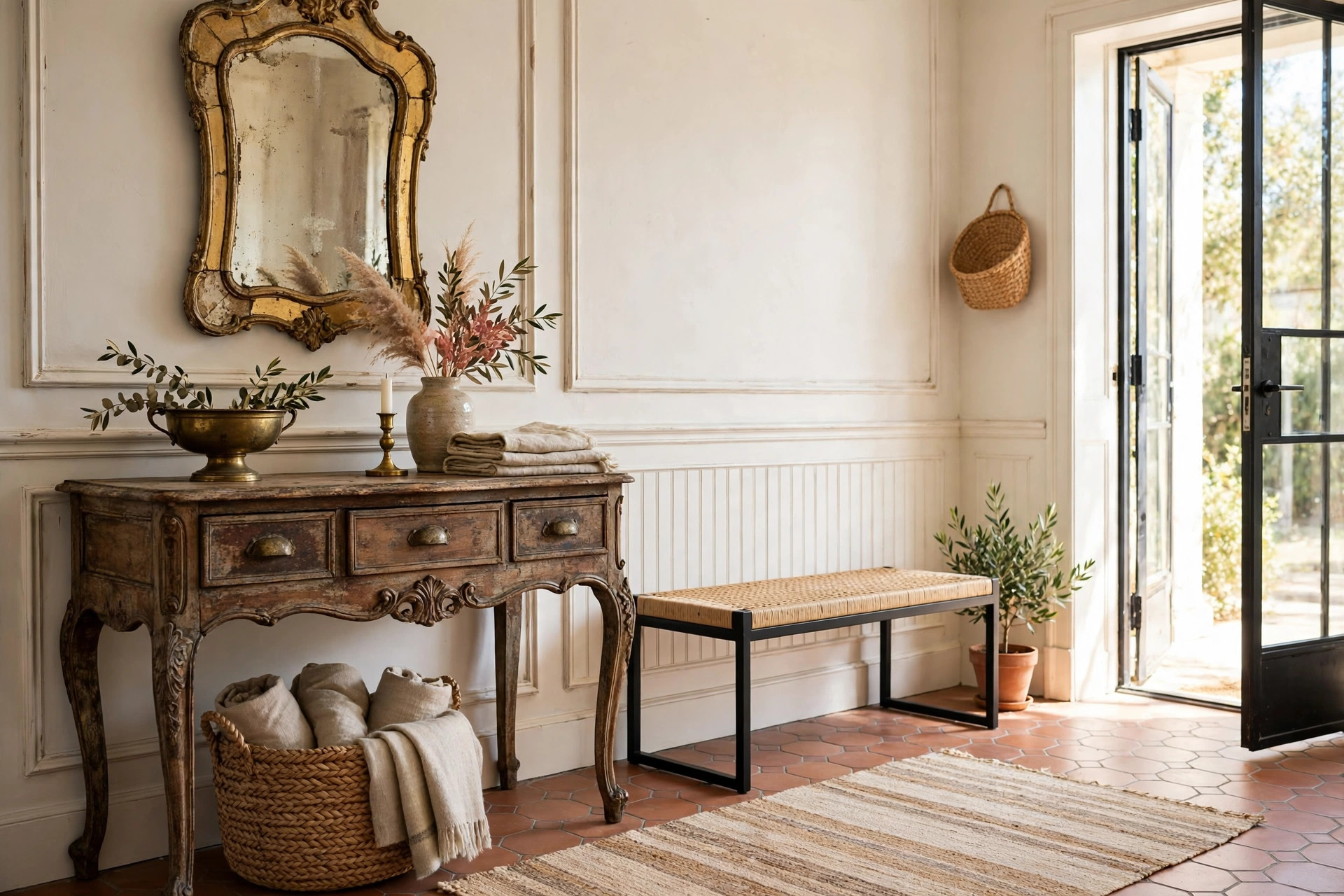
Your entryway is the first place guests see, and it is a perfect spot for vintage home decor. An antique console table, a vintage mirror, and a small basket for keys can make a big impact in a small space. Because an entryway is small, you only need two or three pieces to make it feel special.
Keep the entryway practical. A mirror helps you check your look before you leave. A small tray or bowl keeps keys in one place. A bench or a sturdy stool gives you a spot to sit while you put on shoes. When vintage pieces are also useful, they feel natural in a modern home.
Light is important in an entryway, especially if it has no window. A small lamp or a warm wall light can make the space feel welcoming. A light-colored wall and a simple rug can also help a narrow entryway feel wider and brighter.
Finally, remember that vintage style should grow with you. You do not need to finish a room in one weekend. Add one piece at a time, live with it, and see what your home needs next. Over time, your home will tell your story — a mix of old finds, new favorites, and pieces that simply make you happy.
Frequently Asked Questions About Vintage Home Decor
What is vintage home decor?
Vintage home decor uses pieces from an earlier time, or new pieces made in an older style, to add warmth and character to a home. It often includes wooden furniture, brass lighting, classic patterns, and handmade details.
How do I mix old and new decor without making my home look messy?
Keep most of the room simple and modern, and add a few vintage pieces as accents. Repeat colors and finishes, leave some empty space, and choose one hero piece per room so the eye has a clear focal point.
Is vintage decor expensive?
It does not have to be. Thrift shops, flea markets, and second-hand shops offer many affordable vintage pieces. Start with small items like lamps, frames, vases, and side tables, and add larger pieces slowly over time.
Can vintage decor work in a small home?
Yes. In a small home, choose lighter colors, smaller vintage pieces, and pieces that offer storage. A vintage mirror can also make a small room feel larger by reflecting light.
What colors go best with vintage home decor?
Warm neutrals like cream, beige, and soft white work well as a base. Sage green, dusty blue, terracotta, and soft blush are beautiful accent colors that keep vintage style feeling fresh and modern.
Should all my vintage pieces match?
No. Vintage style looks best when pieces are related, not identical. Shared colors, similar wood tones, or repeated finishes are enough to connect different pieces and make the room feel intentional.
Conclusion: Make Vintage Style Work for Your Home
Vintage home decor is not about copying an old room exactly. It is about choosing pieces you love, mixing them with modern comfort, and creating a home that feels warm, personal, and easy to live in. Start with one hero piece, keep your base simple, repeat colors and finishes, and add thrifted finds slowly over time.
Your home does not need to be perfect to be beautiful. It just needs to feel like yours. Try one idea from this guide this week — a vintage lamp, an old mirror, or a thrifted side table — and see how much warmth it brings to your space.
Want more ideas for a warm, layered home? Browse our other home decor guides, save your favorite ideas, and start with the room you use most. A few thoughtful vintage touches can transform a plain modern room into a home full of character.


One thought on “Vintage Home Decor: How to Mix Old and New Pieces”